
 EN
EN
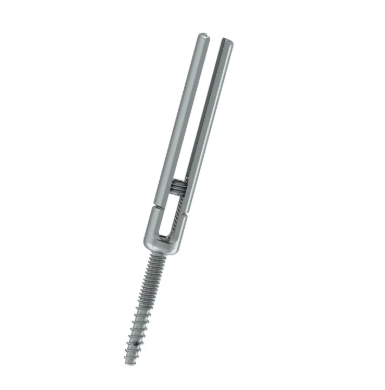
Understanding the intricate mechanisms of orthopedic hardware is crucial for healthcare professionals and patients alike. When surgical intervention becomes necessary for fractures, spinal deformities, or bone reconstructions, the collaboration between bone screws and supporting structures like plates or rods represents a cornerstone of modern orthopedic surgery. These sophisticated medical devices work in harmony to provide the structural integrity and stability required for optimal healing outcomes. The synergistic relationship between these components creates a biomechanical framework that mimics and supports the natural bone healing process while maintaining proper alignment and reducing complications.
Fundamental Mechanics of Bone Screw Integration
Primary Fixation Principles
The mechanical foundation of bone screw functionality relies on the principle of threaded engagement with cortical and cancellous bone tissue. When a bone screw is inserted through pre-drilled pilot holes, the helical thread pattern creates microscopic interlocking with the bone matrix, establishing immediate purchase and resistance to pull-out forces. This threaded interface distributes loading forces across a larger surface area compared to smooth pins or wires, significantly enhancing the construct's overall stability. The thread pitch, depth, and profile are specifically engineered to optimize engagement while minimizing the risk of bone splitting or thread stripping during insertion.
The biomechanical advantages of threaded fixation become particularly evident when considering the various loading scenarios encountered in clinical applications. Axial loading, bending moments, and torsional forces all act upon the screw-bone interface, requiring robust mechanical properties to maintain fixation integrity throughout the healing period. Advanced screw designs incorporate features such as self-tapping capabilities, differential thread pitches, and specialized tip geometries to enhance insertion characteristics and optimize bone engagement across different bone densities and anatomical locations.
Material Properties and Biocompatibility
Modern bone screws are manufactured from biocompatible materials that possess the necessary mechanical strength while maintaining compatibility with human tissue. Titanium alloys, particularly Ti-6Al-4V, represent the gold standard for orthopedic implants due to their excellent strength-to-weight ratio, corrosion resistance, and osseointegration properties. The surface characteristics of these materials can be further enhanced through various treatments such as anodization, plasma spraying, or hydroxyapatite coating to promote bone ingrowth and improve long-term fixation stability.
The elastic modulus of the screw material plays a critical role in load sharing between the implant and surrounding bone tissue. Materials with modulus values closer to that of natural bone help prevent stress shielding effects that could lead to bone resorption around the implant. Additionally, the biocompatibility ensures minimal inflammatory response, reducing the risk of implant rejection or adverse tissue reactions that could compromise the healing process and overall surgical success.
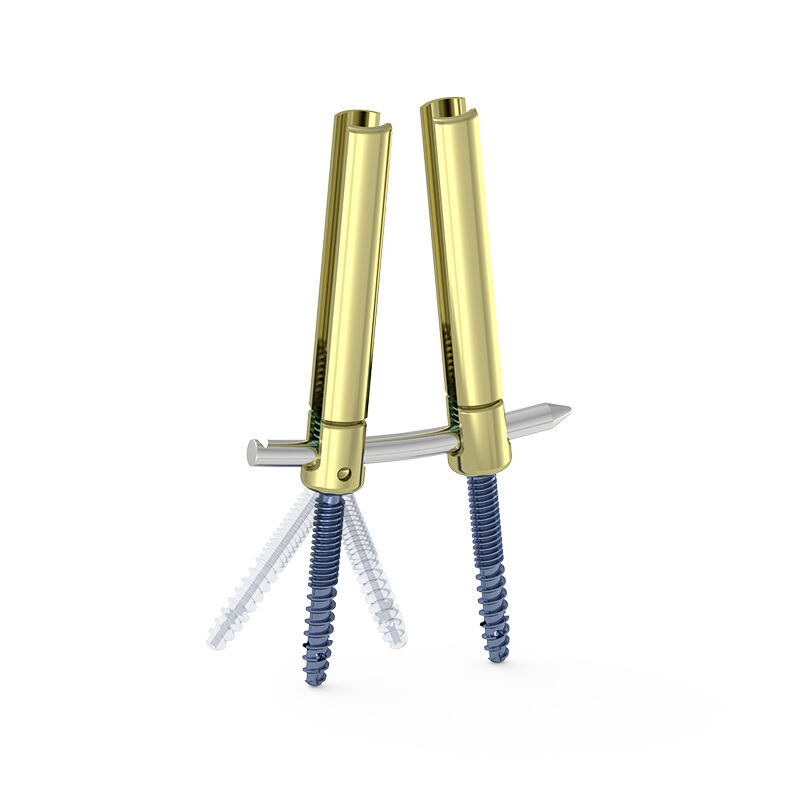
Plate-Screw Construct Dynamics
Load Distribution Mechanisms
When bone screws are utilized in conjunction with plates, the resulting construct creates a sophisticated load-sharing system that distributes mechanical forces across multiple points of fixation. The plate serves as a bridge spanning the fracture or osteotomy site, while individual screws provide discrete anchoring points that transfer loads from the plate to the surrounding bone tissue. This distributed loading pattern reduces stress concentrations that might otherwise occur at single fixation points, thereby minimizing the risk of implant failure or bone damage around the hardware.
The geometric relationship between screw placement and plate design directly influences the mechanical performance of the overall construct. Strategic screw positioning, including considerations of working length, screw density, and angulation, allows surgeons to optimize the balance between construct rigidity and flexibility. Excessive rigidity can impede natural bone healing processes, while insufficient stability may result in malunion or nonunion complications. The optimal configuration depends on factors such as bone quality, fracture pattern, patient activity level, and expected loading conditions during the healing period.
Compression and Neutralization Functions
The interaction between plates and screws enables sophisticated mechanical functions that facilitate optimal fracture healing. Compression plating techniques utilize the bone screw insertion sequence and plate geometry to generate controlled interfragmentary compression forces. This compression promotes primary bone healing by maintaining intimate contact between fracture surfaces while providing the stability necessary for cellular healing processes to proceed unimpeded. The magnitude and distribution of compression forces can be precisely controlled through careful attention to screw insertion technique and plate contouring.
Neutralization plating represents an alternative approach where the plate-screw construct protects other fixation methods, such as interfragmentary screws or bone grafts, from excessive loading forces. In these applications, the plate acts as a load-sharing device that reduces stress on the primary fixation elements while maintaining overall construct stability. This technique is particularly valuable in complex fracture patterns where multiple fixation strategies must work in concert to achieve optimal outcomes.
Rod-Screw System Integration
Spinal Stabilization Applications
The combination of rods and screws represents the foundation of modern spinal instrumentation systems, providing three-dimensional stability for various spinal pathologies. Pedicle screws anchor into the posterior vertebral elements, while connecting rods span multiple spinal segments to create a rigid or semi-rigid construct. This configuration allows for correction of spinal deformities, stabilization of unstable segments, and maintenance of proper spinal alignment during the fusion process. The modular nature of these systems enables customization for individual patient anatomy and pathology.
The biomechanical principles governing rod-screw constructs involve complex interactions between multiple components working in three-dimensional space. Rod material properties, including elastic modulus, yield strength, and fatigue resistance, must be carefully matched to the clinical application and expected loading conditions. Titanium and cobalt-chromium alloys are commonly employed, with each material offering distinct advantages in terms of stiffness, strength, and imaging compatibility. The rod diameter, cross-sectional geometry, and surface finish all contribute to the overall mechanical performance of the construct.
Multi-Segmental Construct Considerations
Extended spinal constructs spanning multiple vertebral levels require careful consideration of biomechanical factors that influence long-term performance and patient outcomes. The transition zones at the proximal and distal ends of the construct experience elevated stress concentrations due to the stiffness mismatch between the instrumented and adjacent mobile segments. Strategic screw placement and rod contouring techniques help minimize these stress concentrations while maintaining the necessary corrective forces and stability.
The concept of construct modularity allows for staged procedures and revision strategies when complications arise or when patient anatomy changes over time. Individual components can be modified, replaced, or extended without necessarily requiring complete construct revision. This flexibility is particularly important in pediatric applications where growth accommodation may be necessary, or in degenerative conditions where adjacent segment pathology might develop requiring construct extension.
Clinical Applications and Surgical Techniques
Fracture Fixation Strategies
The selection of appropriate bone screw and plate or rod configurations depends on numerous factors including fracture location, pattern complexity, bone quality, and patient-specific considerations. Simple transverse fractures may require basic compression plating techniques, while complex comminuted fractures might necessitate bridge plating approaches that span the fracture zone without direct manipulation of small fragments. The surgical approach must balance the need for adequate exposure with the goal of preserving soft tissue attachments and blood supply to bone fragments.
Minimally invasive techniques have revolutionized the application of bone screw and plate systems, allowing for reduced surgical exposure while maintaining fixation quality. Percutaneous screw insertion techniques, guided by fluoroscopic or navigation systems, enable precise hardware placement with minimal soft tissue disruption. These approaches often result in reduced operative time, decreased blood loss, and faster patient recovery while achieving equivalent or superior mechanical fixation compared to traditional open techniques.
Revision and Salvage Procedures
When primary fixation fails or complications arise, revision procedures may require creative solutions utilizing bone screw and plate or rod systems in challenging circumstances. Bone loss around failed implants, infection, or hardware loosening present unique technical challenges that demand thorough understanding of construct mechanics and alternative fixation strategies. Bone grafting, cement augmentation, or specialized revision implants may be necessary to achieve adequate fixation in compromised bone stock.
The management of periprosthetic fractures represents a particularly complex application where bone screws must provide fixation adjacent to existing implants or prostheses. These scenarios require specialized plates with features such as cable passage holes, locking screw options, and compatibility with existing hardware geometries. The mechanical interaction between new and existing implants must be carefully considered to prevent stress concentration and ensure construct longevity.
Biomechanical Optimization and Innovation
Advanced Screw Design Features
Contemporary bone screw designs incorporate sophisticated features that enhance fixation quality and surgical efficiency. Variable pitch threads optimize engagement in both cortical and cancellous bone regions, while cannulated designs allow for guidewire-assisted insertion and precise placement verification. Self-drilling and self-tapping capabilities reduce insertion time and trauma while maintaining thread engagement quality. Specialized head designs accommodate various plate geometries and allow for polyaxial angulation in some applications.
Locking screw technology represents a significant advancement in bone screw design, creating a fixed-angle construct that functions as an internal fixator rather than relying solely on plate-bone compression for stability. This technology is particularly advantageous in osteoporotic bone or situations where plate contouring is challenging. The threaded interface between screw head and plate creates a mechanically robust connection that resists loosening and maintains angular stability throughout the healing process.
Smart Materials and Future Developments
Emerging technologies in orthopedic implant design include smart materials that can respond to physiological conditions or provide therapeutic benefits beyond mechanical fixation. Shape memory alloys offer the potential for implants that can change configuration in response to body temperature, while bioactive coatings may enhance osseointegration and reduce infection risk. Drug-eluting implants represent another frontier where local antibiotic or growth factor delivery could improve healing outcomes while maintaining mechanical function.
The integration of sensors and wireless communication technology into orthopedic implants opens possibilities for real-time monitoring of healing progress and implant performance. These smart implant systems could provide valuable data regarding loading patterns, bone healing status, and early detection of complications such as loosening or infection. Such technologies may revolutionize postoperative care and enable more personalized rehabilitation protocols based on objective implant performance data.
FAQ
What determines the optimal screw length when used with plates
The optimal screw length depends on several factors including cortex thickness, plate thickness, desired thread engagement, and anatomical constraints. Generally, screws should engage both cortices when possible, with thread length extending approximately 2-3 thread pitches beyond the far cortex. However, in areas with critical structures nearby, unicortical fixation may be preferable. Preoperative imaging and intraoperative measurements help determine appropriate screw lengths for each specific location.
How do locking screws differ from conventional screws in plate applications
Locking screws create a threaded interface with the plate itself, forming a fixed-angle construct that doesn't rely on compression between the plate and bone for stability. This design provides superior holding power in osteoporotic bone and eliminates the risk of screw loosening due to loss of plate-bone compression. Conventional screws rely on friction between the plate and bone surface, which can be compromised if the bone quality is poor or if the plate lifts away from the bone surface.
What are the main advantages of rod-screw systems over plate-screw constructs
Rod-screw systems offer superior three-dimensional stability and are particularly advantageous for spinal applications or long bone fractures requiring extensive stabilization. The cylindrical geometry of rods provides excellent resistance to bending and torsional forces, while the modular design allows for easy construct modification and extension. Additionally, rod systems often require smaller surgical approaches and can be inserted through minimally invasive techniques more easily than large plates.
How does bone quality affect screw-plate or screw-rod construct performance
Bone quality significantly impacts construct performance, with osteoporotic or compromised bone requiring modifications to standard techniques. In poor quality bone, longer screws, augmentation with bone cement, or specialized screw designs with enhanced thread geometry may be necessary. The construct may also need to be made more rigid with closer screw spacing or larger diameter rods to compensate for reduced individual screw holding power. Bone density assessment through preoperative imaging helps guide these technical decisions.