
 EN
EN
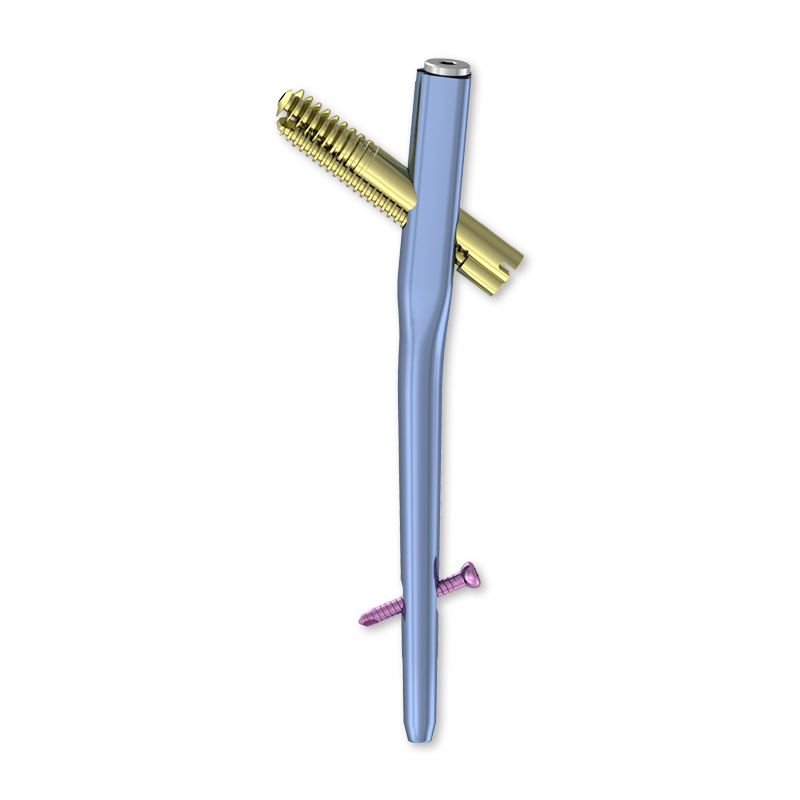
The medical device industry is undergoing rapid transformation, and nowhere is this change more consequential than in the field of orthopedic surgery. For orthopedic implants suppliers, staying competitive is no longer simply a matter of offering reliable products at attractive price points. In an era defined by advancing surgical techniques, increasingly discerning hospital procurement teams, and patients who expect faster recovery and better outcomes, innovation has become the central axis around which market position revolves. Suppliers who fail to invest in continuous product and process innovation risk being displaced by more agile competitors who better serve the evolving demands of modern orthopedic care.
Understanding why innovation matters for orthopedic implants suppliers requires looking beyond surface-level product upgrades. It means examining how technological advancement reshapes buyer expectations, how regulatory environments reward design progress, and how differentiated product portfolios determine long-term commercial viability. This article explores the core reasons why innovation is not optional but essential for any supplier seeking a durable competitive position in the orthopedic implants market.
The Competitive Landscape Facing Orthopedic Implants Suppliers Today
A Market Defined by Increasing Complexity
The global orthopedic device market has grown considerably more complex over the past decade. Hospitals and surgical centers now operate under tighter budgets while simultaneously demanding higher performance from the implants they procure. This creates a challenging environment for orthopedic implants suppliers who must balance cost efficiency with ongoing investment in product quality and clinical relevance. The result is a market where standing still is effectively moving backward.
Procurement teams at healthcare institutions are increasingly sophisticated. They evaluate suppliers not only on unit pricing but on the total clinical value delivered — which includes implant longevity, instrumentation precision, and the supplier's ability to support evolving surgical workflows. Orthopedic implants suppliers that bring innovative solutions to these evaluations consistently earn preferred vendor status and longer-term contracts.
Furthermore, global competition among orthopedic implants suppliers has intensified. Suppliers from multiple regions are now capable of meeting international quality standards, which means that product quality alone is no longer a strong differentiator. Innovation — in design, materials, instrumentation, and service — has emerged as the primary factor that separates leading suppliers from commoditized competitors.
Surgeon and Hospital Expectations Are Evolving
Orthopedic surgeons are among the most technically demanding end-users of any medical product. They require implants and instruments that perform predictably under varying anatomical conditions, that minimize intraoperative complications, and that support faster patient recovery. When orthopedic implants suppliers demonstrate a consistent pipeline of improvements — whether in locking plate geometry, screw angulation flexibility, or modular instrumentation — they build credibility with the surgical community that translates directly into procurement decisions.
Hospitals, meanwhile, are under pressure from health systems and payers to reduce costs associated with surgical complications and revision procedures. Orthopedic implants suppliers who innovate in ways that reduce complication rates or shorten operating times directly address these institutional priorities. This alignment between supplier innovation and hospital operational goals creates genuine commercial pull that non-innovative suppliers simply cannot replicate.
How Innovation Drives Product Differentiation for Orthopedic Implants Suppliers
Materials Science and Implant Performance
One of the most impactful innovation domains for orthopedic implants suppliers is materials science. Advances in titanium alloy compositions, surface coating technologies, and biocompatible materials have significantly improved implant osseointegration, corrosion resistance, and load-bearing capacity. Suppliers who invest in materials research can offer products that deliver measurably better long-term outcomes for patients undergoing fracture fixation, joint reconstruction, or spinal procedures.
Surface treatment innovations, for example, have enabled implants to promote faster and more reliable bone ingrowth. For orthopedic implants suppliers focused on trauma and fixation products, this kind of innovation directly influences clinical adoption rates. Surgeons who observe consistent healing outcomes are far more likely to become loyal users of a supplier's product line and to advocate for that supplier within their institutions.
Beyond biological performance, materials innovation also affects the mechanical reliability of orthopedic implants across diverse patient populations. As surgical treatment expands to cover more complex fracture patterns and older or osteoporotic bone, orthopedic implants suppliers must continually develop implant solutions that perform reliably across this widened clinical spectrum.
Instrumentation and Surgical Workflow Innovation
Implant design and surgical instrumentation are inseparable in orthopedic surgery. Even a well-designed implant loses clinical value if the accompanying instrumentation is cumbersome, imprecise, or time-consuming to use. Leading orthopedic implants suppliers recognize this and invest substantially in the co-development of implants and their associated instrument sets. This integrated approach produces systems that are intuitive to use, reduce intraoperative steps, and minimize the risk of surgical error.
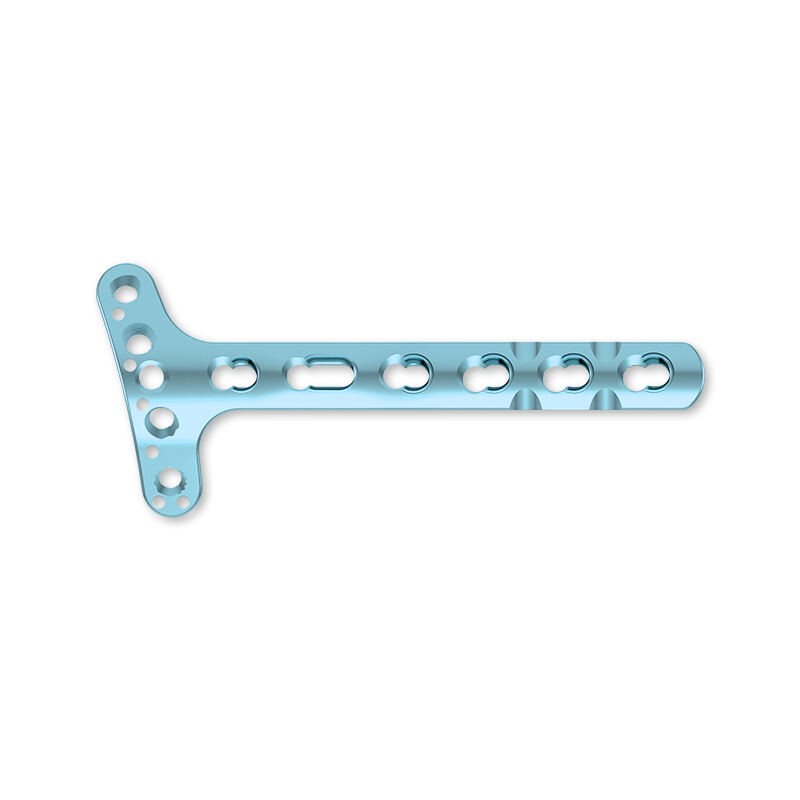
Innovations in instrumentation — such as more ergonomic handle designs, universal drill guides compatible with multiple implant configurations, or color-coded instrument sets that reduce the risk of intraoperative mix-ups — have a direct and measurable impact on surgical efficiency. Hospitals track operating room time as a significant cost driver, and orthopedic implants suppliers whose systems demonstrably reduce procedure times earn meaningful competitive advantage in procurement discussions.
A compelling example of integrated product and instrument innovation can be found in locking plate systems designed for small fragment fixation. The orthopedic implants suppliers who design these systems as comprehensive sets — with carefully matched screws, plates, and instruments — demonstrate the kind of systems thinking that reduces surgical complexity and supports consistent outcomes across different anatomical sites.
Regulatory and Quality System Innovation as a Competitive Advantage
Navigating Regulatory Complexity Through Systematic Innovation
Regulatory requirements for orthopedic implants have grown substantially more rigorous in major markets. Meeting standards such as ISO 13485, CE marking requirements under the EU Medical Device Regulation, and FDA 510(k) clearance demands requires not just quality assurance systems but a culture of systematic, documented innovation. Orthopedic implants suppliers that treat regulatory compliance as a driver of innovation — rather than merely a barrier — develop internal capabilities that support faster, more reliable market entry for new products.
Suppliers who excel at regulatory navigation can bring innovative products to market more quickly than competitors who treat compliance as a bottleneck. This speed-to-market advantage compounds over time, allowing forward-thinking orthopedic implants suppliers to capture early adoption cycles in new clinical indications and build surgeon familiarity before competitors arrive with comparable solutions.
Moreover, a strong regulatory track record signals product quality and process discipline to institutional buyers. Hospitals and group purchasing organizations routinely conduct supplier audits and request regulatory documentation as part of procurement qualification. Orthopedic implants suppliers with clean regulatory histories and documented quality management systems consistently score higher in these evaluations, reinforcing the link between innovation culture and competitive market access.
Quality as a Continuous Innovation Process
Quality in medical device manufacturing is not a fixed target — it is a dynamic standard that evolves with clinical knowledge, patient demographics, and manufacturing technology. Orthopedic implants suppliers who treat quality as an ongoing innovation challenge rather than a static checklist consistently outperform those who adopt a minimum-compliance mindset. Continuous improvement in precision machining tolerances, sterilization validation, and packaging integrity all contribute to products that perform more reliably in clinical settings.
Post-market surveillance data is also increasingly being used by leading orthopedic implants suppliers to drive product refinements. By systematically collecting and analyzing clinical feedback, forward-thinking suppliers identify failure modes early, implement design corrections, and communicate product improvements transparently to their hospital customers. This closed-loop approach to quality innovation builds the trust that sustains long-term supply relationships.
Innovation as a Growth Engine for Orthopedic Implants Suppliers in Emerging Markets
Expanding Access Through Affordable Innovation
Emerging markets represent one of the fastest-growing opportunity segments for orthopedic implants suppliers. Increasing rates of road trauma, workplace injury, and age-related musculoskeletal conditions in developing economies are driving demand for orthopedic fixation and reconstruction products. However, these markets also present significant pricing constraints that make standard high-income-market product pricing strategies unsustainable.
Innovation plays a critical role in enabling orthopedic implants suppliers to develop product lines that meet the performance requirements of emerging market clinical environments while remaining accessible at local price points. This is not a matter of simply reducing product quality — it requires genuine engineering creativity to maintain clinical efficacy while optimizing manufacturing costs. Suppliers who achieve this balance unlock market segments with substantial volume potential.
Simplified instrument sets designed for settings with less surgical infrastructure, or implant designs compatible with locally available bone screws, represent the kind of context-sensitive innovation that resonates in emerging markets. Orthopedic implants suppliers who invest in understanding local clinical realities and designing accordingly are far better positioned to build durable market presence than those who simply export unchanged high-income-market product lines.
Building Long-Term Relationships Through Continuous Value Delivery
In both established and emerging markets, the relationship between orthopedic implants suppliers and their hospital and surgeon customers is built over time through consistent value delivery. Innovation is the mechanism through which this value is renewed and reinforced. Every product improvement, every new instrument addition, and every expanded clinical indication represents an opportunity to deepen the commercial relationship and reduce the risk of customer attrition.
Suppliers who maintain an active innovation pipeline signal to their customers that they are committed to long-term partnership rather than transactional sales. This perception significantly influences renewal decisions for supply agreements, particularly in institutions that prefer to minimize the number of implant system suppliers they manage. Orthopedic implants suppliers with strong innovation track records are consistently favored in these consolidation decisions.
Training and surgical education are also areas where innovation creates competitive differentiation. Suppliers who invest in cadaveric training programs, digital surgical technique guides, or simulation-based learning tools provide value well beyond the physical product. This broadened definition of innovation — encompassing clinical education and customer support — is increasingly what separates premier orthopedic implants suppliers from commodity-level competitors.
FAQ
Why do orthopedic implants suppliers need to innovate continuously rather than just maintaining existing products?
The orthopedic market evolves constantly due to advances in surgical technique, changes in patient demographics, and rising clinical standards. Orthopedic implants suppliers that rely solely on existing products face growing risk of displacement by competitors who offer clinically superior or more cost-effective solutions. Continuous innovation ensures that a supplier's portfolio remains relevant and competitive as market requirements shift over time.
How does innovation in instrumentation affect the competitiveness of orthopedic implants suppliers?
Instrumentation innovation directly affects surgical efficiency, operating room time, and the ease of training new users. Orthopedic implants suppliers who offer well-designed, intuitive instrument sets alongside their implants reduce procedural complexity for surgeons and lower the total cost of surgical procedures for hospitals. These benefits create strong commercial incentives for hospitals to favor innovative suppliers during procurement decisions.
Can smaller orthopedic implants suppliers compete through innovation against larger market participants?
Yes, and in many cases smaller orthopedic implants suppliers have successfully used focused innovation strategies to compete effectively against larger organizations. By concentrating innovation efforts on specific clinical indications or anatomical regions — such as small fragment fixation or extremity trauma — smaller suppliers can achieve deep clinical credibility in targeted segments without requiring the broad R&D investment of larger competitors. Focused innovation often produces more clinically relevant and surgeon-preferred products than broad, generalized portfolios.
How does regulatory innovation capability influence the market position of orthopedic implants suppliers?
A supplier's ability to navigate regulatory pathways efficiently is a direct reflection of its quality management and documentation culture. Orthopedic implants suppliers with strong regulatory innovation capabilities bring products to market faster, access more geographic markets, and score higher in hospital supplier qualification processes. Over time, this regulatory capability becomes a structural competitive advantage that is difficult for less disciplined competitors to replicate quickly.
Table of Contents
- The Competitive Landscape Facing Orthopedic Implants Suppliers Today
- How Innovation Drives Product Differentiation for Orthopedic Implants Suppliers
- Regulatory and Quality System Innovation as a Competitive Advantage
- Innovation as a Growth Engine for Orthopedic Implants Suppliers in Emerging Markets
-
FAQ
- Why do orthopedic implants suppliers need to innovate continuously rather than just maintaining existing products?
- How does innovation in instrumentation affect the competitiveness of orthopedic implants suppliers?
- Can smaller orthopedic implants suppliers compete through innovation against larger market participants?
- How does regulatory innovation capability influence the market position of orthopedic implants suppliers?