
 EN
EN
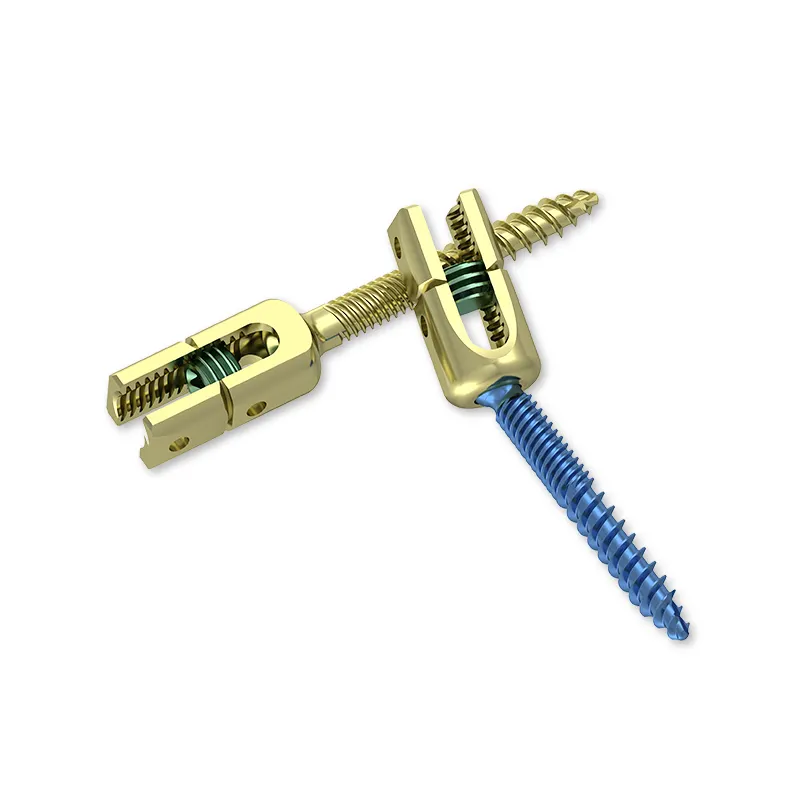
Modern spinal surgery has witnessed remarkable advancements in surgical instrumentation, particularly in the development of sophisticated fixation systems. Among these innovations, the cervical pedicle screw system stands out as a revolutionary approach that has transformed how surgeons address complex cervical spine conditions. These advanced systems offer unparalleled stability and precision, enabling surgeons to achieve optimal patient outcomes while minimizing surgical complications. The evolution from traditional fixation methods to modern customizable systems represents a significant leap forward in spinal care technology.
Understanding Cervical Pedicle Screw Technology
Fundamental Design Principles
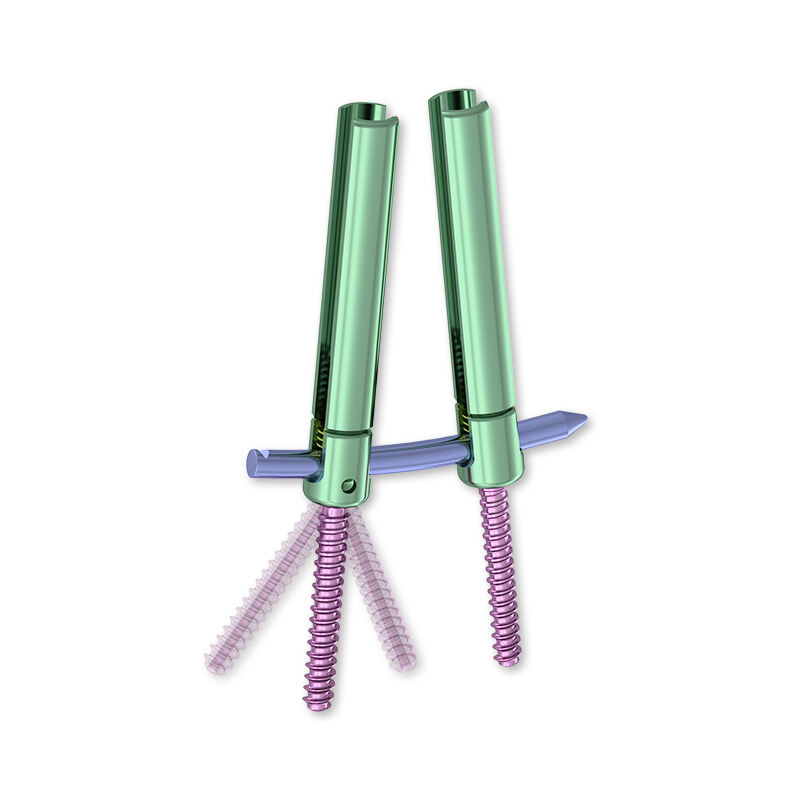
The engineering behind cervical pedicle screw systems incorporates sophisticated biomechanical principles designed to optimize spinal stability. These systems utilize advanced materials such as titanium alloys and stainless steel, which provide exceptional strength-to-weight ratios while maintaining biocompatibility. The screw design features precise threading patterns that enhance bone purchase and minimize the risk of loosening over time. Modern systems also incorporate polyaxial head designs that allow for multi-directional angulation, accommodating individual anatomical variations and surgical preferences.
Contemporary cervical pedicle screw systems feature modular components that can be customized according to specific patient anatomy and surgical requirements. The modularity extends to screw diameters, lengths, and head configurations, enabling surgeons to select optimal components for each unique case. This flexibility is particularly crucial in cervical spine surgery, where anatomical constraints and proximity to critical structures demand precise instrumentation choices.
Advanced Material Science Applications
The materials used in modern cervical pedicle screw systems undergo rigorous testing and quality control processes to ensure long-term performance and patient safety. Titanium alloys, particularly Ti-6Al-4V, offer excellent corrosion resistance and osseointegration properties that promote bone healing around the implant. Surface treatments such as plasma spraying or hydroxyapatite coating further enhance the biological response and improve fixation strength over time.
Manufacturers also incorporate advanced manufacturing techniques such as precision machining and computer-controlled production processes to ensure consistent quality and dimensional accuracy. These manufacturing standards are essential for maintaining the tight tolerances required for optimal screw performance and long-term reliability in the demanding cervical spine environment.
Clinical Applications and Surgical Techniques
Indications for Cervical Pedicle Screw Implementation
Surgeons utilize cervical pedicle screw system technology in various clinical scenarios, including degenerative disc disease, cervical spondylosis, traumatic injuries, and spinal deformities. The versatility of these systems makes them particularly valuable in revision surgeries where previous fixation methods have failed or where complex anatomical reconstruction is required. The ability to achieve rigid fixation while preserving surrounding tissue integrity makes these systems ideal for challenging cases.
Complex cervical pathologies such as multilevel degenerative disease, cervical kyphosis, and post-traumatic instability benefit significantly from the enhanced fixation capabilities of modern screw systems. The three-dimensional stability provided by these systems allows for effective correction of deformities while maintaining proper cervical lordosis and sagittal balance. This comprehensive approach to spinal reconstruction often results in improved patient outcomes and reduced revision rates.
Surgical Planning and Execution Strategies
Successful implementation of cervical pedicle screw systems requires meticulous preoperative planning and advanced imaging studies. Surgeons utilize computed tomography scans with three-dimensional reconstruction to assess pedicle morphology and plan optimal screw trajectories. This detailed analysis helps identify potential anatomical variations or contraindications that might affect surgical safety or outcome.
Intraoperative navigation systems and fluoroscopic guidance enhance surgical precision and safety during screw placement procedures. These technologies allow real-time verification of screw position and trajectory, reducing the risk of neural or vascular injury. The combination of advanced planning tools and intraoperative guidance systems has significantly improved the safety profile and accuracy of cervical pedicle screw placement procedures.
Biomechanical Advantages and Performance Characteristics
Enhanced Stability and Load Distribution
The biomechanical properties of cervical pedicle screw systems provide superior stability compared to traditional fixation methods such as lateral mass screws or anterior plating systems. The three-column fixation achieved through pedicle screw placement offers enhanced resistance to flexion, extension, lateral bending, and axial rotation forces. This comprehensive stability is particularly important in the cervical spine, where maintaining proper alignment is crucial for neurological protection and functional recovery.
Load distribution characteristics of these systems help minimize stress concentrations at individual fixation points, reducing the risk of hardware failure or adjacent segment degeneration. The ability to distribute forces across multiple levels and fixation points creates a more physiologically appropriate loading environment that promotes fusion while protecting surrounding structures.
Fusion Enhancement and Biological Integration
Modern cervical pedicle screw systems are designed to promote optimal fusion environments through various mechanisms. The rigid fixation provided by these systems creates an ideal mechanical environment for bone healing by minimizing micromotion at the fusion site. This stability is essential for achieving solid arthrodesis and preventing pseudoarthrosis formation.
The biocompatible materials and surface treatments used in these systems actively promote osseointegration and bone ingrowth around the implant components. This biological integration enhances long-term fixation strength and reduces the risk of loosening or migration over time. The combination of mechanical stability and biological integration creates an optimal environment for successful spinal fusion.
Customization Options and System Versatility
Modular Component Selection
The modular nature of contemporary cervical pedicle screw systems allows surgeons to customize instrumentation based on specific patient anatomy and surgical objectives. Component options typically include various screw diameters ranging from 3.5mm to 5.5mm, with lengths extending from 12mm to 30mm or more. This extensive range ensures appropriate sizing for diverse patient populations and anatomical variations.
Rod systems accompanying these screws offer similar customization options, with various diameters, materials, and curvature options available. Surgeons can select straight rods for simple fixation cases or pre-contoured rods that match physiological cervical lordosis. The ability to customize rod configuration helps maintain proper spinal alignment while achieving optimal fixation strength.
Advanced Connection Mechanisms
Modern cervical pedicle screw systems incorporate sophisticated connection mechanisms that enhance ease of use while maintaining secure fixation. Polyaxial head designs allow for angular adjustment during rod placement, accommodating slight variations in screw placement while maintaining optimal construct geometry. These connection systems often feature positive locking mechanisms that prevent inadvertent loosening during patient activity.
Some systems also incorporate compression and distraction capabilities that allow surgeons to fine-tune construct tension and achieve optimal segmental alignment. These advanced features provide surgeons with greater control over construct mechanics and enable more precise correction of spinal deformities or instability patterns.
Safety Considerations and Risk Management
Anatomical Safety Protocols
The proximity of critical neurovascular structures in the cervical spine necessitates stringent safety protocols when utilizing pedicle screw systems. Surgeons must thoroughly understand the three-dimensional anatomy of cervical pedicles and their relationship to surrounding structures such as the vertebral artery, nerve roots, and spinal cord. This anatomical knowledge is essential for safe screw placement and complication avoidance.
Preoperative imaging studies play a crucial role in identifying anatomical variants or pathological conditions that might contraindicate pedicle screw placement. Conditions such as pedicle dysplasia, severe osteoporosis, or vascular anomalies require careful evaluation and may necessitate alternative fixation strategies. Proper patient selection based on comprehensive anatomical assessment is fundamental to achieving safe and effective outcomes.
Complication Prevention and Management
Modern cervical pedicle screw systems incorporate design features that help minimize common complications such as screw loosening, breakage, or malposition. Advanced thread designs and surface treatments enhance bone purchase and reduce the likelihood of loosening over time. Quality control measures during manufacturing ensure consistent material properties and dimensional accuracy that contribute to long-term reliability.
Surgical technique refinements and the use of advanced imaging guidance have significantly reduced the incidence of serious complications such as vertebral artery injury or nerve root damage. Continuous education and training programs help surgeons maintain proficiency in these techniques and stay current with evolving best practices in cervical spine instrumentation.
Future Developments and Innovation Trends
Emerging Technologies and Materials
The future of cervical pedicle screw systems lies in the integration of smart materials and advanced manufacturing techniques such as 3D printing and nanotechnology. Researchers are exploring bioactive materials that can actively promote bone healing and integration while providing the necessary mechanical strength for spinal fixation. These innovations may lead to screws with enhanced osseointegration properties and improved long-term performance.
Additive manufacturing technologies are enabling the production of patient-specific implants with customized geometry and porosity patterns. These personalized devices can be designed to match individual anatomy perfectly while incorporating features that promote optimal biological response. The ability to customize implants at the individual patient level represents a significant advancement in personalized spine care.
Integration with Digital Health Technologies
Future cervical pedicle screw systems may incorporate sensor technologies that can monitor construct performance and fusion progress in real-time. These smart implants could provide valuable data about loading patterns, fusion status, and potential complications, enabling more proactive patient management and improved outcomes. The integration of digital health technologies with implant systems represents an exciting frontier in spinal care.
Artificial intelligence and machine learning algorithms are being developed to optimize surgical planning and predict patient outcomes based on individual characteristics and implant parameters. These technologies may help surgeons select optimal instrumentation strategies and anticipate potential complications before they occur, further improving the safety and efficacy of cervical spine surgery.
FAQ
What makes cervical pedicle screw systems more effective than traditional fixation methods
Cervical pedicle screw systems provide superior biomechanical stability through three-column fixation, offering enhanced resistance to all planes of motion compared to traditional lateral mass screws or anterior plates. The direct purchase into the vertebral body through the pedicle creates stronger fixation and better load distribution, leading to higher fusion rates and reduced hardware complications.
How do surgeons determine the appropriate screw size and placement for individual patients
Surgeons utilize advanced imaging techniques including CT scans with three-dimensional reconstruction to assess individual pedicle anatomy and plan optimal screw trajectories. Preoperative measurements determine appropriate screw length and diameter, while intraoperative navigation systems and fluoroscopy ensure accurate placement according to the predetermined surgical plan.
What are the typical recovery expectations following cervical pedicle screw surgery
Recovery timelines vary based on individual factors and surgical complexity, but most patients can expect initial mobility within 24-48 hours post-surgery with appropriate bracing. Full fusion typically occurs within 3-6 months, during which patients gradually return to normal activities under medical supervision. Long-term outcomes generally show excellent stability and symptom resolution in appropriately selected cases.
Are there specific patient populations who should avoid cervical pedicle screw systems
Patients with severe osteoporosis, active infections, or significant anatomical variants such as pedicle dysplasia may not be suitable candidates for cervical pedicle screws. Additionally, patients with vertebral artery anomalies or certain metabolic bone diseases require careful evaluation and may benefit from alternative fixation strategies. Thorough preoperative assessment helps identify these contraindications and guide appropriate treatment selection.
Table of Contents
- Understanding Cervical Pedicle Screw Technology
- Clinical Applications and Surgical Techniques
- Biomechanical Advantages and Performance Characteristics
- Customization Options and System Versatility
- Safety Considerations and Risk Management
- Future Developments and Innovation Trends
-
FAQ
- What makes cervical pedicle screw systems more effective than traditional fixation methods
- How do surgeons determine the appropriate screw size and placement for individual patients
- What are the typical recovery expectations following cervical pedicle screw surgery
- Are there specific patient populations who should avoid cervical pedicle screw systems