
 EN
EN
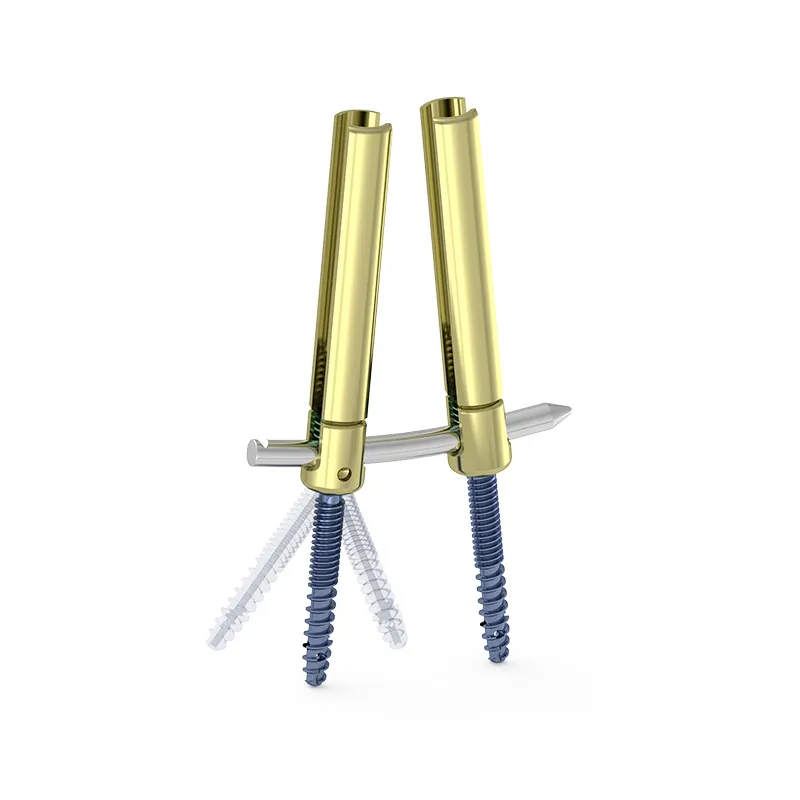
Spinal fusion surgery represents a critical intervention for patients suffering from degenerative disc disease, scoliosis, and various spinal instabilities that compromise quality of life. The success of these complex procedures relies heavily on advanced fixation technologies that provide stability during the healing process. Modern orthopedic innovations have revolutionized surgical outcomes through sophisticated hardware systems designed to optimize bone integration and patient recovery. Understanding how these specialized implants function within the biomechanical framework of spinal reconstruction helps both medical professionals and patients make informed decisions about treatment options.
Biomechanical Foundation of Spinal Fixation
Structural Mechanics in Vertebral Stabilization
The human spine functions as a complex mechanical system where vertebral bodies, intervertebral discs, and supporting ligaments work together to maintain structural integrity while allowing controlled movement. When pathological conditions compromise this delicate balance, surgical intervention becomes necessary to restore stability and prevent further deterioration. Spine screws serve as anchoring points that transfer mechanical loads across compromised segments, creating a rigid construct that promotes fusion while protecting adjacent structures from excessive stress.
The biomechanical principles governing spinal fixation require precise understanding of force distribution patterns throughout the vertebral column. These specialized implants must withstand significant compressive, tensile, and rotational forces generated during normal physiological activities. Advanced materials engineering has enabled the development of titanium alloy systems that provide optimal strength-to-weight ratios while maintaining biocompatibility essential for long-term implant success.
Load Transfer Mechanisms
Effective load transfer represents a fundamental requirement for successful spinal fusion outcomes. The strategic placement of fixation hardware creates alternative pathways for mechanical stress distribution when normal anatomical structures become compromised. This engineered stability allows for controlled micromotion that stimulates bone healing while preventing excessive movement that could inhibit fusion formation.
Contemporary fixation systems incorporate multiple contact points between implants and bone tissue, distributing loads across larger surface areas to minimize stress concentrations. This distributed loading pattern reduces the risk of implant loosening or bone failure while promoting optimal conditions for biological integration. The precise geometry of these components plays a crucial role in achieving appropriate mechanical characteristics for each specific clinical application.
Clinical Applications and Surgical Techniques
Patient Selection Criteria
Successful implementation of spinal fixation technology requires careful patient evaluation to determine optimal treatment strategies. Factors including bone quality, anatomical variations, pathology severity, and patient activity levels influence implant selection and surgical approach. Advanced imaging techniques enable surgeons to assess vertebral morphology and plan precise implant placement strategies that maximize fixation strength while minimizing surgical risks.
The evolution of minimally invasive surgical techniques has expanded treatment options for patients who previously faced limited alternatives. Modern approaches allow for precise implant placement through smaller incisions, reducing soft tissue trauma and accelerating recovery timelines. These techniques require specialized instrumentation and advanced imaging guidance to ensure accurate component positioning within the confined surgical workspace.
Surgical Implementation Strategies
Contemporary surgical protocols emphasize precision placement techniques that optimize the interface between implant and bone tissue. Surgeons utilize advanced navigation systems and intraoperative imaging to guide implant insertion along predetermined trajectories that maximize purchase in dense cortical bone while avoiding critical neural and vascular structures. These technological advances have significantly improved procedural safety and outcomes consistency.
The integration of real-time feedback systems during surgery allows for immediate assessment of implant stability and positioning accuracy. Surgeons can make necessary adjustments before finalizing component placement, ensuring optimal mechanical characteristics for the specific patient anatomy. This precision approach has contributed to reduced revision rates and improved long-term clinical outcomes across diverse patient populations.
Recovery Enhancement Mechanisms
Accelerated Healing Processes
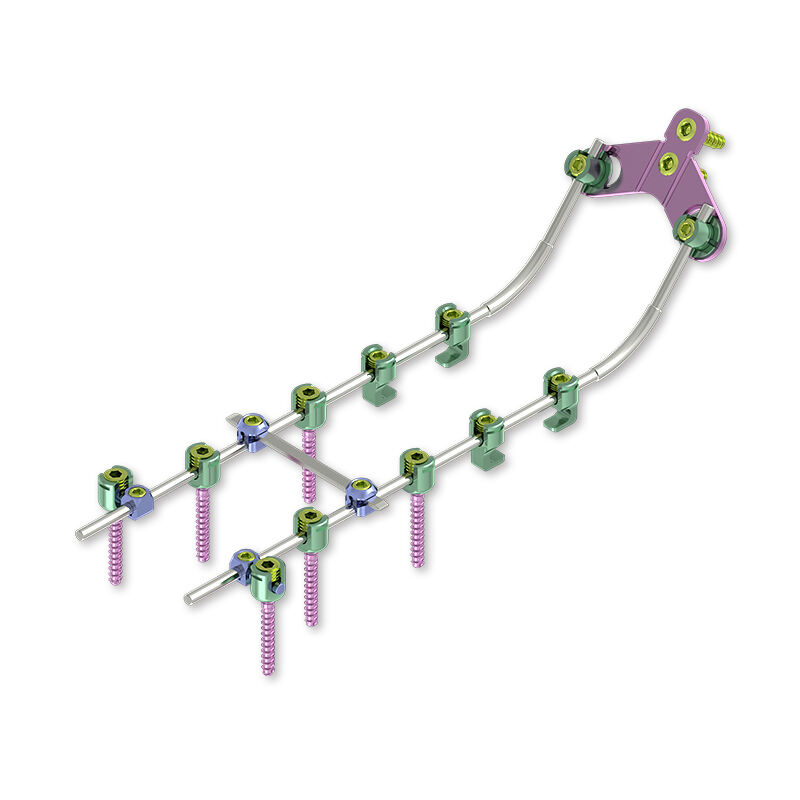
The primary mechanism by which spine screws enhance recovery involves creating optimal biomechanical conditions for bone fusion formation. Rigid fixation eliminates excessive motion at the surgical site, allowing osteoblasts to establish new bone matrix without mechanical disruption. This stable environment promotes faster and more predictable fusion rates compared to less rigid fixation methods or conservative treatment approaches.
Modern implant designs incorporate surface modifications that enhance osseointegration through improved cellular adhesion and proliferation. These bioactive surfaces stimulate bone formation at the implant-tissue interface, creating stronger mechanical bonds that improve long-term stability. The combination of mechanical stability and biological enhancement creates synergistic effects that accelerate overall healing timelines.
Pain Reduction and Functional Improvement
Immediate stabilization provided by properly placed fixation hardware significantly reduces pain levels associated with spinal instability. Patients typically experience rapid improvement in comfort levels following surgery, allowing for earlier mobilization and participation in rehabilitation activities. This accelerated return to function prevents the muscle atrophy and deconditioning commonly associated with prolonged immobilization periods.
The restoration of normal spinal alignment through surgical correction addresses the underlying mechanical causes of pain and dysfunction. Spine screws maintain these corrective positions throughout the healing process, ensuring that therapeutic gains achieved during surgery are preserved long-term. This sustained correction prevents the gradual loss of alignment that can occur with less rigid fixation methods.
Technological Innovations and Material Science
Advanced Alloy Systems
Contemporary spine screws utilize sophisticated titanium alloy compositions that provide optimal mechanical properties while maintaining excellent biocompatibility profiles. These materials resist corrosion in the physiological environment while providing strength characteristics that match or exceed those of human cortical bone. Advanced manufacturing processes ensure consistent material properties and precise dimensional tolerances critical for reliable clinical performance.
Surface treatment technologies have evolved to enhance the biological response to implanted materials. Specialized coatings and surface textures promote cellular attachment and bone ingrowth, creating stronger mechanical bonds between implant and tissue. These innovations have contributed to improved long-term stability and reduced rates of implant-related complications across diverse patient populations.
Design Evolution and Performance Optimization
Continuous refinement of implant geometry has resulted in designs that maximize fixation strength while minimizing tissue trauma during insertion. Advanced thread patterns and core geometries distribute loads more effectively while reducing insertion torque requirements. These improvements enhance surgical efficiency while maintaining or improving clinical outcomes through optimized biomechanical performance.
Finite element analysis and computational modeling have enabled engineers to optimize implant designs for specific clinical applications and patient anatomies. This scientific approach to product development ensures that new innovations provide meaningful clinical benefits while maintaining the safety profiles essential for widespread adoption in surgical practice.
Clinical Outcomes and Evidence-Based Results
Fusion Rate Improvements
Clinical studies consistently demonstrate superior fusion rates when modern fixation systems are utilized compared to historical treatment methods. The rigid stabilization provided by contemporary spine screws creates optimal conditions for bone healing, resulting in fusion rates exceeding ninety percent in appropriate patient populations. These excellent outcomes have established spinal fixation as the gold standard for treating various degenerative and traumatic conditions.
Long-term follow-up studies reveal sustained benefits from surgical intervention, with patients maintaining improved function and pain relief for decades following successful fusion procedures. The durability of modern implant systems ensures that therapeutic benefits persist throughout the patient's lifetime, providing excellent value for healthcare investments and patient quality of life improvements.
Patient Satisfaction and Quality of Life
Patient-reported outcome measures consistently show significant improvements in pain levels, functional capacity, and overall quality of life following successful spinal fusion procedures. The ability to return to normal activities and work responsibilities represents a major benefit for patients who previously faced progressive disability from spinal pathology. These improvements extend beyond physical parameters to include psychological and social benefits associated with restored function.
The predictable nature of modern surgical outcomes allows patients and surgeons to establish realistic expectations for recovery timelines and functional improvements. This transparency in outcome prediction contributes to higher patient satisfaction levels and more informed decision-making processes regarding treatment options and timing.
FAQ
How long does it typically take for spine screws to integrate with bone tissue
The osseointegration process for spine screws typically occurs over a period of three to six months following surgery, though initial stability is achieved immediately upon implantation. During the first few weeks, soft tissue healing predominates while new bone formation begins around the implant surfaces. Complete biological integration may continue for up to twelve months as bone remodeling processes optimize the implant-tissue interface for long-term stability and load transfer.
What factors influence the success rate of spinal fusion procedures with fixation hardware
Several key factors significantly impact fusion success rates including patient age, bone quality, smoking status, nutritional factors, and adherence to postoperative restrictions. Younger patients with healthy bone typically achieve fusion more rapidly and reliably compared to older individuals with osteoporosis or other metabolic bone conditions. Smoking cessation is particularly critical as nicotine significantly impairs bone healing and increases the risk of fusion failure regardless of other favorable factors.
Are there any activity restrictions following spinal fusion surgery with spine screws
Initial activity restrictions focus on protecting the surgical site during early healing phases, typically lasting six to twelve weeks depending on the specific procedure and patient factors. Patients gradually progress from basic activities of daily living to more demanding physical tasks as bone healing progresses and implant integration strengthens. Most individuals can return to full activity levels including recreational sports once solid fusion is confirmed, usually between six months to one year postoperatively.
How do modern spine screws compare to older fixation technologies in terms of patient outcomes
Contemporary spine screws demonstrate superior performance compared to historical fixation methods through improved fusion rates, reduced complication rates, and enhanced patient satisfaction scores. Advanced materials and design features provide better mechanical characteristics while minimizing tissue trauma during implantation. The evolution from stainless steel to titanium alloy systems has eliminated many corrosion-related complications while improved surface treatments enhance biological integration for longer-lasting results.
Table of Contents
- Biomechanical Foundation of Spinal Fixation
- Clinical Applications and Surgical Techniques
- Recovery Enhancement Mechanisms
- Technological Innovations and Material Science
- Clinical Outcomes and Evidence-Based Results
-
FAQ
- How long does it typically take for spine screws to integrate with bone tissue
- What factors influence the success rate of spinal fusion procedures with fixation hardware
- Are there any activity restrictions following spinal fusion surgery with spine screws
- How do modern spine screws compare to older fixation technologies in terms of patient outcomes