
 EN
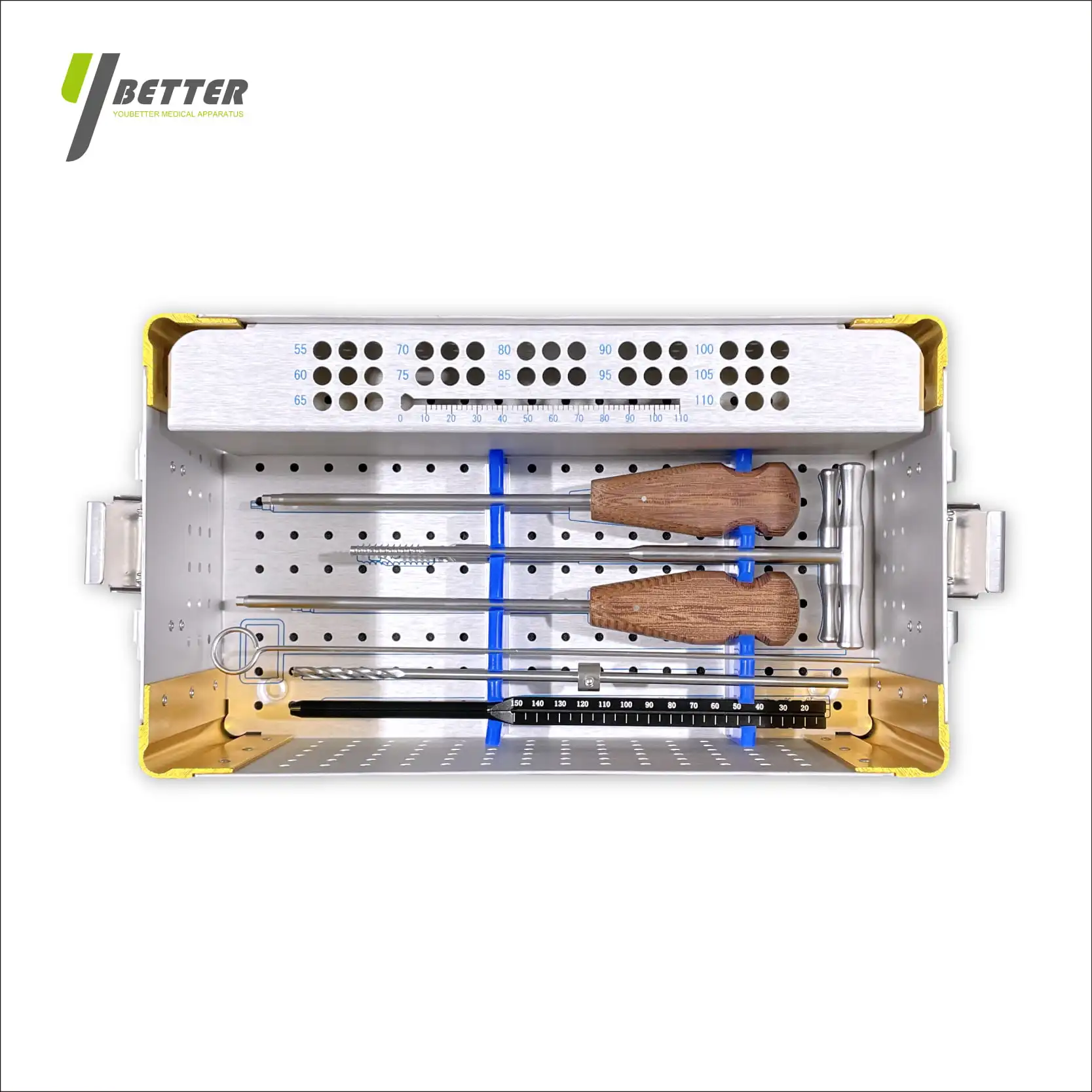
A cannulated screw can support hip fracture treatment by helping a surgeon place fixation accurately while preserving a minimally invasive approach. Its hollow center allows the screw to travel over a guidewire, so the cannulated screw follows a planned trajectory into the bone. Whether that approach is suitable depends on fracture pattern, displacement, bone quality, and patient factors; it is not a universal solution for every hip fracture.
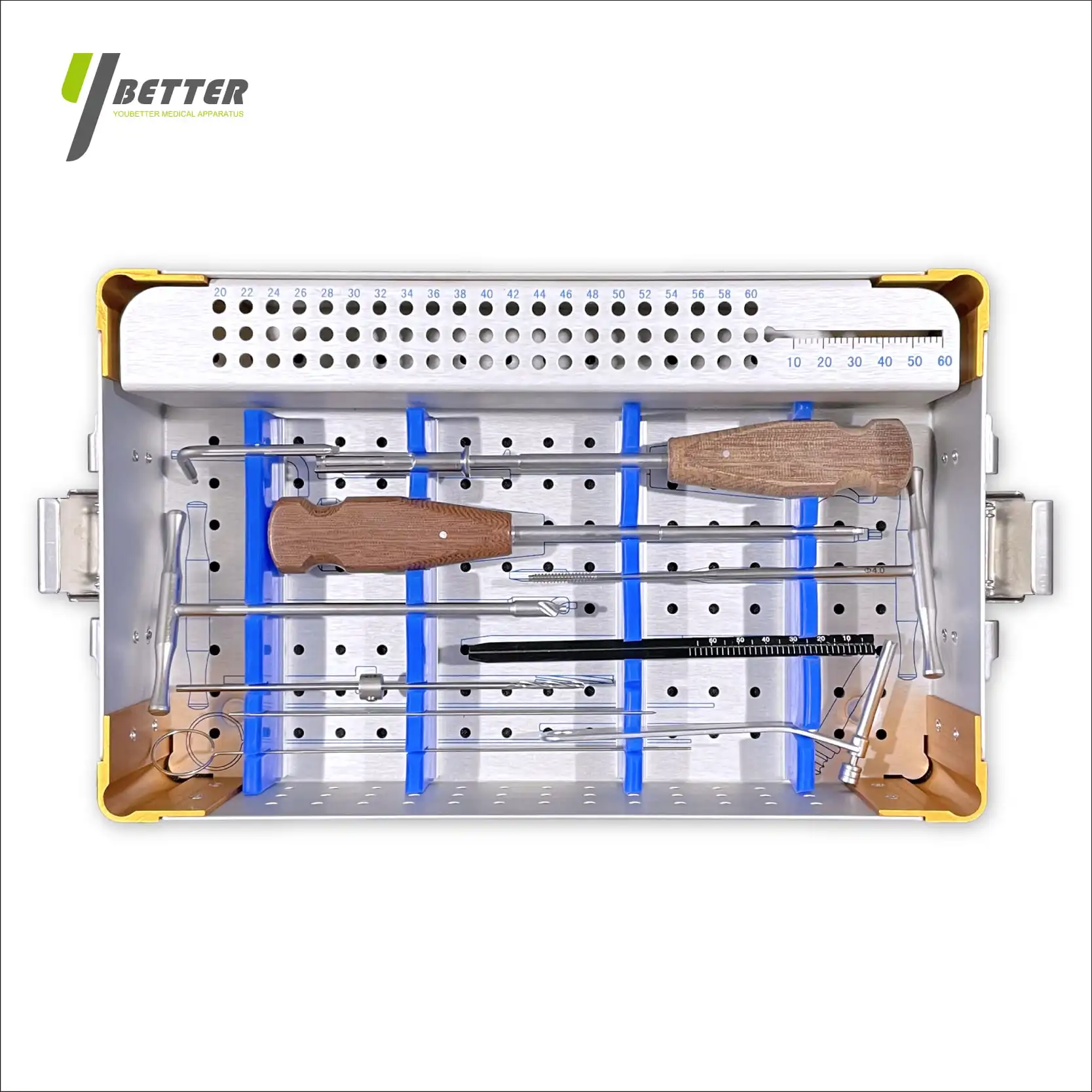
The treatment benefit comes from combining controlled placement with suitable fracture reduction and fixation. A cannulated screw may help hold selected fractures while healing occurs, but the implant alone does not determine the result. The surgeon evaluates alignment, stability, and the patient’s capacity for postoperative care, then chooses a method and screw configuration to match the clinical goal.
How guided placement supports fixation
Guidewire planning and screw trajectory
A cannulated screw has a central channel that accepts a guidewire, creating a reference path from the entry point toward the target bone. After imaging confirms the wire position, the surgeon can advance the cannulated screw along that route. This sequence helps control direction and depth, especially where the operative field is narrow and precise placement matters to the fracture construct.
Planning begins with imaging and assessment of the fracture, not with the implant. The surgeon selects an entry point and trajectory that respect the patient’s anatomy and the intended fixation pattern. A cannulated screw can then be positioned over the wire, while repeated imaging checks whether the path remains appropriate. The guidewire is a placement aid, not a substitute for judgment or verification.
Controlled insertion in a limited approach
Because the cannulated screw is guided over a wire, insertion can be coordinated with a smaller exposure than some open techniques require, when the case permits. A limited approach may reduce disruption to surrounding soft tissue, although incision size and tissue handling depend on the fracture and the chosen operation. The cannulated screw still requires careful preparation, measurement, and confirmation.
Depth matters because the screw must engage bone without being placed too shallowly or advancing beyond the intended endpoint. The surgeon measures the path and chooses a suitable screw length and position. With a cannulated screw, the wire offers a route for delivery, while imaging and tactile feedback help assess progress. Safe insertion depends on the complete technique, not simply on the screw’s hollow design.
How fracture reduction and stability are achieved
Maintaining alignment during fixation
Before fixation, the fracture usually needs reduction so the bone ends or fragments are brought into an acceptable relationship. A cannulated screw is intended to maintain the achieved position; it does not correct every displacement by itself. The surgeon checks alignment and rotation, then places the cannulated screw or screws according to the selected construct and the fracture’s geometry.
In suitable patterns, a cannulated screw may provide compression across the fracture as it is tightened. Compression can help bring fracture surfaces together, but the amount and direction must be controlled. Excessive force or a poorly chosen trajectory can compromise reduction or fixation. For that reason, the cannulated screw is used as part of a deliberate sequence: reduce, verify, guide, insert, and reassess.
Construct stability and healing conditions
The number, size, and orientation of screws influence how a construct resists movement. A cannulated screw must obtain adequate purchase in the relevant bone while avoiding unintended joint penetration. The surgeon considers fracture location, bone stock, and loading forces when planning the configuration. A cannulated screw can contribute to stability, but stability is determined by the complete construct and the quality of reduction.
Healing also depends on biology and postoperative management. Blood supply, bone quality, medical conditions, and adherence to weight-bearing guidance can affect recovery. A cannulated screw does not eliminate those variables or guarantee union. Instead, fixation aims to hold the fracture in a useful position while healing progresses, with clinical review and imaging used to monitor recovery and identify concerns.
How surgeons determine whether the approach fits
Matching the fracture and patient
A cannulated screw may be considered for selected fractures where the surgeon believes screw fixation can achieve the required stability. The decision depends on fracture configuration, displacement, bone quality, age, activity, and overall health. Some fractures may call for a different fixation strategy or replacement procedure. A cannulated screw is therefore one option within individualized treatment planning, rather than a default choice.
The patient’s goals and capacity for rehabilitation are also relevant. A treatment plan must account for mobility needs, other illnesses, support at home, and the risk of complications from surgery or restricted movement. When a cannulated screw is suitable, the team explains expected activity limits and follow-up. When it is not, the surgeon considers alternatives that better address the fracture’s stability and healing demands.
Workflow, follow-up, and practical implications
A coordinated workflow supports accurate use of a cannulated screw. Preoperative imaging informs planning; appropriate instruments support guidewire placement and measurement; and intraoperative imaging confirms reduction and implant position. The surgical team verifies that the cannulated screw is the intended length and follows the planned path. These checks reduce avoidable uncertainty, while clinical expertise remains central at every stage.
After surgery, the care team monitors pain, wound condition, mobility, and radiographic progress. Weight-bearing instructions vary with fracture stability, fixation, and surgeon assessment. If symptoms change or healing appears delayed, further evaluation may be needed. In this broader pathway, a cannulated screw enhances treatment when it fits the anatomy and clinical objective, and when placement and aftercare are managed as one connected process.
FAQ
How does a cannulated screw differ from a standard screw?
A cannulated screw has a hollow center that allows placement over a guidewire. This can help guide the cannulated screw along a planned trajectory. A standard screw does not use that same central wire pathway, though the choice depends on the operation and fixation needs.
Does a cannulated screw work for every hip fracture?
No. A cannulated screw is appropriate only for selected fracture patterns and patients. Displacement, bone quality, anatomy, and stability requirements influence the decision. The treating surgeon determines whether a cannulated screw or another approach better meets the clinical need.
Does a cannulated screw guarantee faster healing?
No fixation device can guarantee a particular healing speed. A cannulated screw aims to support fracture stability, while healing also depends on blood supply, bone health, medical factors, and rehabilitation. Follow-up helps the care team assess progress and adjust guidance when needed.