
 EN
EN
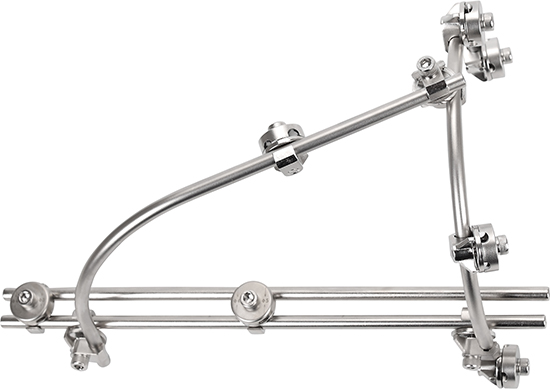
Emergency trauma care demands rapid, reliable solutions that stabilize severe injuries while minimizing complications. The external fixator has become a cornerstone technology in emergency orthopedic departments, enabling surgeons to achieve immediate skeletal stability without the time constraints of traditional internal fixation methods. This innovative approach transforms how trauma teams respond to complex fractures, polytrauma cases, and life-threatening limb injuries.
When seconds matter in the operating room, the external fixator delivers immediate mechanical support for unstable fractures, allowing emergency physicians to focus on life-saving interventions before definitive surgical reconstruction. By reducing operative time and enabling rapid patient stabilization, the external fixator significantly enhances overall emergency care efficiency and patient survival rates.
Why External Fixator Systems Accelerate Emergency Response
Immediate Skeletal Stabilization
The external fixator provides instantaneous fracture alignment without requiring extensive soft tissue manipulation or prolonged surgical exposure. In emergency settings where polytrauma patients face multiple injuries competing for surgical attention, the external fixator establishes stable skeletal frameworks in minutes rather than hours. This rapid stabilization reduces blood loss, prevents fat embolism, and allows trauma teams to address other critical injuries simultaneously.
Emergency surgeons value the external fixator because it eliminates complex anatomical reconstruction during the acute phase. The system holds bone fragments in safe, functional positions while surgeons manage head trauma, thoracic injuries, or abdominal bleeding. Once the patient stabilizes systemically, the external fixator remains in place, protecting the injury site during the critical window when internal fixation might compromise patient safety.
Reduced Operative Time and Resource Demand
External fixator application requires minimal instrumentation compared to internal fixation alternatives, freeing operating room resources for other emergencies. A skilled trauma surgeon can apply an external fixator to a complex femur fracture in under 15 minutes, whereas internal plate fixation might consume 60 to 90 minutes of surgical time. This efficiency advantage directly impacts emergency department throughput, allowing the surgical team to manage multiple simultaneous trauma cases.
The streamlined setup process for external fixator systems means fewer specialized instruments must be sterile and available simultaneously. Emergency departments benefit from this logistical advantage, especially during mass casualty events when multiple trauma patients arrive within hours. The external fixator's straightforward application protocol also reduces technical demands, enabling experienced residents and trauma surgeons to execute the procedure consistently.
Clinical Advantages That Strengthen Emergency Outcomes
Lower Infection Risk in Initial Phases
Emergency trauma patients often present with contaminated or crush injuries where infection risk already elevated. The external fixator addresses this concern by holding fractures in positions that promote natural drainage and tissue healing without creating large surgical wounds. Unlike internal fixation hardware, which sits permanently within tissue planes, the external fixator maintains clearance around the injury zone, reducing bacterial colonization in the critical early days.
Because the external fixator keeps bone ends aligned while allowing soft tissue recovery, swelling typically resolves more predictably than with internal approaches. This predictable soft tissue response means trauma surgeons can plan staged reconstruction with greater confidence, knowing that infection complications won't jeopardize subsequent surgical phases. The external fixator essentially preserves tissue quality while maintaining skeletal stability, a combination that emergency care teams consistently value in complex trauma scenarios.
Adaptability for Evolving Clinical Status
Critically injured patients often develop new complications during their hospital course, requiring surgical adjustments or additional interventions. The external fixator provides unprecedented flexibility because surgeons can modify fixation geometry, add or remove components, or transition to alternative fixation methods without removing and replacing the entire system. This adaptability proves essential when emergency patients require repeated washouts, fasciotomy procedures, or damage control revisions.
Emergency care teams appreciate that the external fixator doesn't commit them irreversibly to a single surgical strategy. If a patient's systemic status improves faster than anticipated, surgeons can convert to internal fixation while the external fixator remains partially in place, supporting ongoing stability. If complications emerge, the external fixator maintains skeletal integrity without blocking access to the surgical field, enabling damage control surgeons to work efficiently.
Practical Implementation in Emergency Trauma Protocols
Integration with Damage Control Orthopedic Strategy
Modern trauma protocols embrace damage control orthopedics, where the external fixator functions as the primary stabilization tool during the acute resuscitation phase. Emergency surgeons apply the external fixator, manage life threats, and allow the patient's physiology to stabilize before considering definitive fixation. This staged approach acknowledges that polytrauma patients cannot tolerate prolonged operations during the acute window, making the external fixator an essential bridge to recovery.
The external fixator's role within damage control orthopedics extends beyond simple fracture management. It prevents secondary fracture complications, reduces systemic inflammatory responses triggered by ongoing skeletal instability, and protects repaired soft tissues from re-injury during emergency interventions. Emergency departments that embrace external fixator-based damage control protocols consistently report improved survival rates and reduced long-term disability among polytrauma survivors.
Training and Standardization Benefits
External fixator application follows standardized protocols that emergency surgeons and trauma residents can master through structured training. Unlike complex internal fixation techniques requiring years of specialized experience, external fixator placement emphasizes consistent biomechanical principles applicable across numerous fracture patterns. This standardization means that multiple surgeons within an emergency department can apply external fixators effectively, improving departmental resilience during high-volume trauma periods.
Trauma centers that standardize external fixator protocols achieve more predictable outcomes because every surgeon follows the same decision trees and application techniques. This consistency reduces complications attributable to surgical variation, improves communication within multidisciplinary trauma teams, and facilitates knowledge transfer during resident training. Emergency departments benefit from this standardization because it ensures that patient care quality remains high regardless of which trauma surgeon assumes operative responsibility.
FAQ
Can an external fixator be used for all fracture types in emergency settings?
The external fixator works exceptionally well for long bone fractures of the femur, tibia, and humerus during emergency trauma response. However, complex intra-articular fractures, pelvis injuries, and certain small bone fractures may require hybrid approaches combining external fixator principles with other techniques. Emergency surgeons select the external fixator based on fracture location, soft tissue damage extent, and systemic patient stability, ensuring the approach matches clinical circumstances.
How long can a patient remain in an external fixator configuration?
Patients can safely remain in an external fixator for weeks to months while soft tissues heal and systemic physiology stabilizes. Many emergency patients transition to internal fixation once their condition permits more complex surgery, typically within one to three weeks of injury. The external fixator excels during this critical window, providing reliable stability while the trauma team manages multiple competing priorities.
Does external fixator application require specialized training beyond standard orthopedic education?
While advanced external fixator techniques require specialized instruction, basic application protocols can be learned by all trauma surgeons and experienced orthopedic residents. Emergency departments should provide structured training programs and maintain clear procedural guidelines so multiple team members can apply external fixators confidently. This distributed competency strengthens emergency response capabilities across the entire trauma team.