
 EN
EN
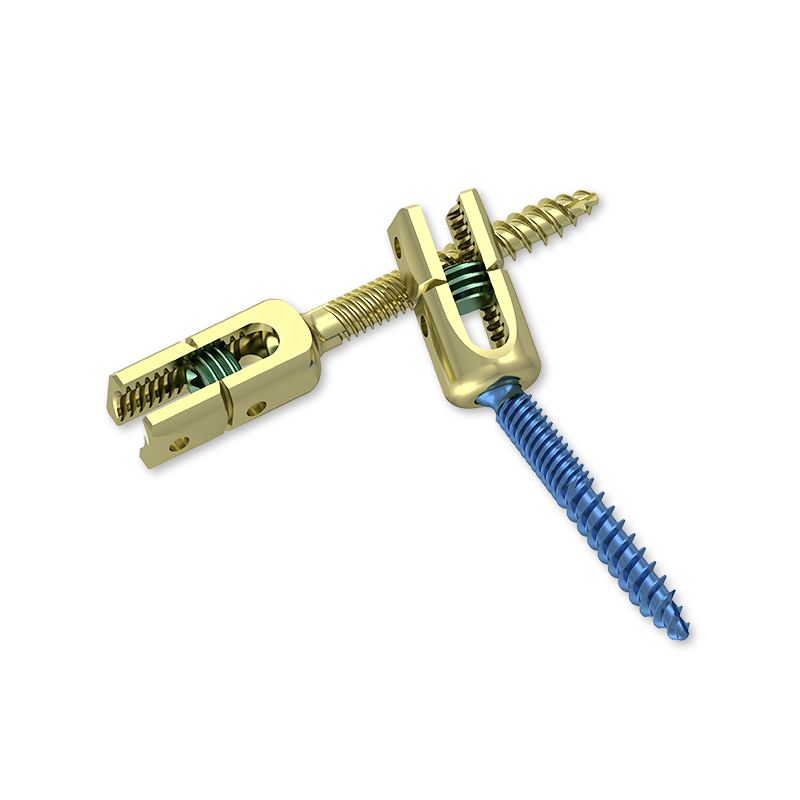
In modern spinal surgery, fixation reliability is not a secondary consideration — it is the foundation upon which patient outcomes are built. The pedicle screw has become the cornerstone of posterior spinal instrumentation, offering surgeons a reliable anchor point for rods, connectors, and correction systems across a wide range of procedures. Yet not all pedicle screws perform equally. The mechanical behavior of a pedicle screw under physiological loads — particularly its resistance to pullout and its ability to maintain stability over time — is directly shaped by specific design choices made at the engineering and manufacturing stage. Understanding these design principles is essential for surgical teams, procurement professionals, and clinical engineers who need to make informed decisions about spinal implant selection.
This article explores the biomechanical and structural factors that determine how a pedicle screw resists extraction forces and maintains long-term positional integrity within vertebral bone. From thread geometry and core diameter to surface treatment and material selection, every engineering variable contributes to clinical performance. By examining these factors in detail, clinicians and purchasing decision-makers can better appreciate why design-driven differences between pedicle screws translate directly into patient safety, surgical efficiency, and construct durability. A well-engineered pedicle screw is not simply a fastener — it is a precision implant whose geometry determines whether a spinal construct remains stable under the demanding mechanical environment of the human spine.
The Biomechanical Basis of Pullout Strength
How Pullout Forces Act on a Pedicle Screw
Pullout strength refers to the maximum axial force required to extract a pedicle screw from its bone purchase. This metric is one of the most clinically relevant mechanical indicators for spinal implants because it reflects how reliably the screw will remain anchored under the repetitive and multidirectional forces generated by patient movement, posture changes, and the forces transmitted through attached rods or connectors. When a pedicle screw loosens or pulls out, the entire spinal construct can fail, potentially leading to loss of correction, implant revision surgery, and serious patient harm.
The primary mechanism of pullout resistance is the mechanical interlock between the screw threads and the trabecular and cortical bone surrounding the implant. As the screw is advanced through the pedicle and into the vertebral body, each thread engages with the bone, creating a series of shear planes along which bone must fracture or deform before axial extraction can occur. The more efficiently the screw geometry distributes load across these shear planes, the higher the pullout strength. This is why thread profile, pitch, depth, and overall engagement length are so critical to pedicle screw performance.
Beyond the immediate post-insertion period, pullout strength can change over time based on how the bone remodels around the implant. Designs that promote osseointegration or minimize stress shielding tend to maintain or even improve their pullout resistance over time, while designs that create excessive micromotion or damage the bone-implant interface may experience progressive loosening. Understanding this temporal dimension of pedicle screw fixation is essential for evaluating implant performance not just at surgery, but across the patient's recovery trajectory.
The Role of Bone Quality in Fixation Outcomes
Bone mineral density is a critical variable that interacts directly with pedicle screw design. In patients with osteoporosis or compromised bone quality, the mechanical resistance offered by trabecular bone is significantly reduced, placing greater demands on the screw's thread geometry to distribute load over a larger bone volume. Standard designs that perform reliably in healthy bone may fail prematurely in osteoporotic bone if they do not compensate through increased thread surface area, larger outer diameter, or specialized thread forms.
This is why advanced pedicle screw designs specifically engineered for compromised bone incorporate features such as wider thread pitch, deeper thread profiles, or dual-lead thread geometries that maximize the volume of bone engaged per unit length of screw. In some cases, fenestrated designs that allow cement augmentation provide a supplementary fixation mechanism in severely osteoporotic patients. Recognizing how pedicle screw design adapts to bone quality variability is critical for surgeons treating elderly populations or patients with metabolic bone disease.
Thread Geometry and Its Impact on Stability
Thread Profile and Pitch as Stability Determinants
The thread profile of a pedicle screw — defined by the shape of the thread cross-section, its angle relative to the screw axis, and the depth of thread penetration into bone — is one of the most impactful design variables affecting both pullout strength and insertion torque. Sharp, deep threads with a buttress profile are particularly effective at resisting axial pullout because they create a mechanically efficient interlock with cancellous bone. The buttress thread form, where one face of the thread is nearly perpendicular to the screw axis, is designed to maximize resistance to forces acting in the pullout direction while minimizing the risk of bone stripping during insertion.
Thread pitch — the axial distance between adjacent thread crests — determines how many threads engage the bone per unit of screw length. A tighter pitch results in more threads engaging the bone over the same screw length, increasing the number of shear planes and typically improving pullout resistance. However, a pitch that is too fine can increase insertion torque to the point where it risks thermal bone necrosis or fracture of the pedicle wall. The optimal pitch for a pedicle screw balances pullout performance with safe and efficient insertion, a balance that differs depending on whether the screw is intended for dense cortical or more porous cancellous bone environments.
Some modern pedicle screw designs employ variable pitch threads — where the pitch tightens progressively along the screw length — to optimize engagement in different bone density zones encountered along the pedicle trajectory. This approach recognizes that the mechanical properties of bone are not uniform across the screw's path and that tailoring the thread geometry to match these variations can improve overall construct stability without increasing the risk of pedicle fracture or cortical blowout.
Core-to-Outer Diameter Ratio and Its Structural Implications
The ratio between the inner core diameter and the outer thread diameter of a pedicle screw has important implications for both mechanical strength and pullout resistance. A larger outer diameter relative to the core diameter means deeper threads, which engage more bone volume per thread and generally increase pullout force. However, a very thin core relative to the outer diameter creates a structurally weaker screw that is more susceptible to fatigue fracture under bending loads.
This trade-off means that pedicle screw designers must optimize the core-to-outer diameter ratio for the specific clinical context. For procedures where high bending loads are anticipated — such as long-segment fusions in deformity correction — screws with a larger core diameter provide greater bending stiffness and fatigue resistance, even if their thread depth and pullout strength are slightly reduced. Conversely, for patients with low bone density where pullout is the primary concern, a design that favors deeper threads and a larger outer diameter may be more appropriate.
Contemporary pedicle screw engineering increasingly addresses this trade-off through material innovation. High-strength titanium alloys allow engineers to use a larger outer diameter with deeper threads while maintaining adequate core strength, effectively improving both pullout resistance and fatigue performance simultaneously. This represents a meaningful advancement over earlier generations of pedicle screw design and underscores how material selection and geometry interact to determine overall implant performance.
Surface Treatments and Osseointegration Strategies
How Surface Finish Affects Bone-Implant Interface Strength
The surface of a pedicle screw interacts directly with bone cells and extracellular matrix from the moment of insertion. A highly polished, smooth surface may reduce friction during insertion, but it also provides fewer sites for osteoblast attachment and bone ingrowth. Textured or roughened surfaces — created through processes such as grit blasting, acid etching, or plasma spraying — increase the effective contact area between the screw surface and bone, promoting a more intimate and mechanically resilient bone-implant interface over time.
This bone ongrowth or ingrowth phenomenon is particularly important for long-term pedicle screw stability. In the acute postoperative period, mechanical interlock through thread geometry provides the primary stability. As the bone heals and remodels, biological fixation through osseointegration progressively supplements and can eventually surpass the contribution of thread geometry alone. A pedicle screw with an optimized surface treatment thus benefits from a dual-mode fixation strategy that delivers both immediate mechanical stability and durable biological anchorage.
Surface coatings represent another avenue for enhancing the bone-implant interface. Hydroxyapatite coatings, for example, present a chemically similar surface to natural bone mineral, creating a favorable environment for bone cell adhesion and new bone formation directly on the screw surface. These coatings can significantly improve the rate and completeness of osseointegration, which in turn reduces the risk of late loosening and the need for revision procedures. The combination of a well-designed thread profile and an osseoconductive surface coating represents a comprehensive approach to maximizing pedicle screw stability.
Titanium Alloy Properties and Their Contribution to Long-Term Performance
Titanium and its alloys — particularly Ti-6Al-4V — are the dominant material choices for modern pedicle screws due to their outstanding combination of mechanical strength, biocompatibility, and corrosion resistance. Titanium's natural oxide layer provides excellent chemical stability within the biological environment, reducing the risk of ion release and associated tissue reactions that can compromise fixation over time. This biocompatibility extends to radiolucency in imaging modalities, allowing surgeons to assess screw positioning and bone healing without the artifact interference associated with steel implants.
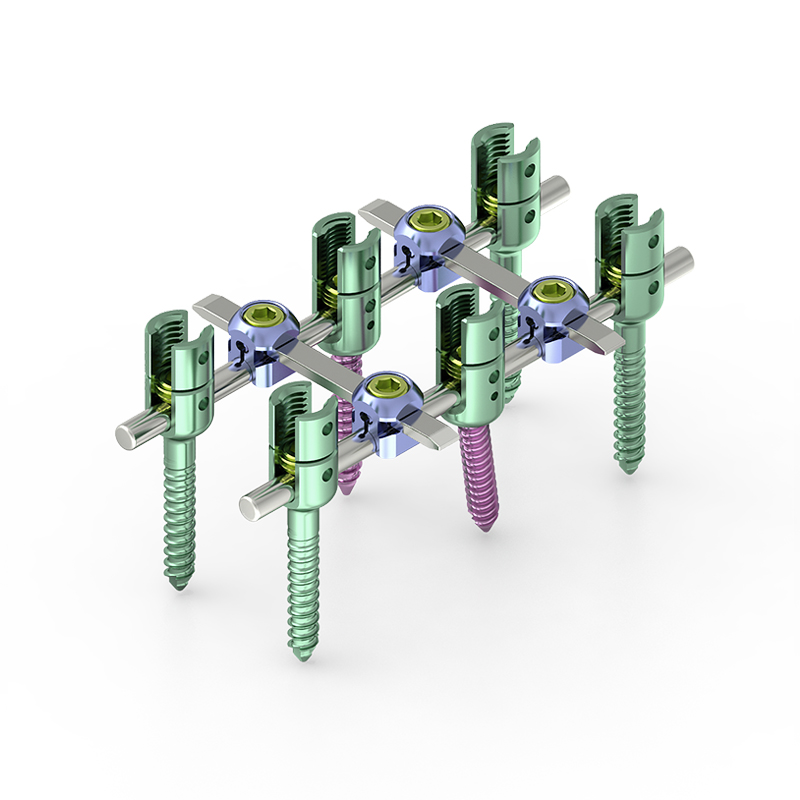
The elastic modulus of titanium alloys — considerably lower than stainless steel — is an often-overlooked design consideration. A pedicle screw with a modulus closer to bone transmits loads more physiologically, reducing stress shielding and the associated risk of periprosthetic bone resorption. When bone surrounding the screw resorbs due to stress shielding, the mechanical interlock progressively weakens, and pullout strength declines over time. By using materials with an appropriately matched stiffness, engineers can help preserve bone density around the screw and maintain fixation integrity throughout the implant's service life.
Reduction Pedicle Screw Design Features for Enhanced Stability
Extended Tulip Height and Its Role in Deformity Correction
Reduction pedicle screws are a specialized category of pedicle screw designed to facilitate rod reduction — the process of capturing a pre-bent rod within the screw head — during scoliosis correction, kyphosis correction, or other spinal deformity procedures. The extended tulip or tower design of these screws provides additional vertical travel that allows the surgeon to gradually approximate the rod into the screw head without requiring excessive force or putting undue stress on the pedicle or the screw-bone interface.
From a stability perspective, the reduction mechanism must not compromise the fundamental fixation properties of the pedicle screw itself. A well-engineered reduction pedicle screw maintains its thread geometry and bone engagement characteristics regardless of the reduction tower height, ensuring that the primary fixation between the screw and the vertebra is not weakened by the additional instrumentation features. The reduction tower is typically removable after the rod has been captured, leaving behind a standard low-profile screw head that integrates seamlessly into the completed construct.
The head design of a reduction pedicle screw also influences how load is transferred between the rod and the screw. Polyaxial head designs allow the screw to accept the rod at various angles, reducing the need for rod bending and making it easier to achieve anatomically appropriate trajectories. This flexibility reduces the mechanical stress at the rod-screw interface and can improve the long-term fatigue performance of the entire construct, contributing to overall construct stability beyond what the screw-bone interface alone provides.
Set Screw Locking Mechanisms and Construct Rigidity
Once the rod has been seated within the pedicle screw head, the set screw locks the rod in place and creates a rigid node in the spinal construct. The design and material of the set screw, as well as the geometry of the locking interface, directly affect how reliably this node maintains its position under cyclic loading. A poorly designed locking mechanism can allow micro-rotation or axial translation of the rod within the screw head, leading to progressive loss of correction and potential construct failure over time.
Advanced set screw designs employ reverse-angled thread profiles or cam-lock mechanisms that generate higher holding forces at lower insertion torques, reducing the risk of cross-threading or incomplete seating. Some designs incorporate a two-piece inner locking mechanism that distributes clamping force over a larger surface area, improving the fatigue resistance of the locking interface. These engineering refinements at the rod-screw junction are as important as the screw-bone interface for ensuring that the pedicle screw maintains its intended position throughout the patient's recovery and beyond.
The overall rigidity of a spinal construct depends on the cumulative performance of every pedicle screw within it — both at the screw-bone interface and at the screw-rod junction. A single failing fixation point can redistribute load to adjacent levels, increasing the risk of adjacent segment disease and accelerating the deterioration of the construct as a whole. This system-level perspective reinforces why design quality in every component of the pedicle screw, from tip to set screw, must be treated as a clinical priority rather than an engineering afterthought.
Clinical and Surgical Considerations for Optimizing Pedicle Screw Performance
Trajectory Planning and Insertion Technique
Even the best-designed pedicle screw can underperform if not inserted along the correct trajectory with appropriate technique. The pedicle is a narrow bony channel, and even small deviations from the ideal insertion angle can result in cortical breach, reduced thread purchase, or proximity to neurovascular structures. Accurate trajectory planning — using preoperative imaging, intraoperative navigation, or robotic guidance — is therefore an essential complement to high-quality pedicle screw design.
Insertion depth is another critical variable. Achieving bicortical purchase — where the screw tip engages the anterior cortex of the vertebral body — has been shown to significantly increase pullout strength compared to unicortical insertion, particularly in patients with reduced bone density. However, bicortical placement requires careful depth measurement and fluoroscopic confirmation to avoid penetrating anterior structures. This clinical judgment is supported by screw designs that incorporate depth markings or tactile feedback systems that help the surgeon gauge insertion progress in real time.
Preoperative Assessment and Implant Sizing
Matching pedicle screw dimensions to patient anatomy is a prerequisite for achieving optimal fixation. Overly large screws risk cortical blowout and pedicle fracture; undersized screws may not engage enough bone volume to achieve adequate pullout resistance. Preoperative CT-based pedicle morphology assessment allows surgeons to select screws with appropriate outer diameter, length, and trajectory for each specific vertebral level and patient, ensuring that the implant's design potential is fully realized within that patient's unique anatomy.
Augmentation strategies — such as local bone graft application around the screw or cement augmentation for severely osteoporotic patients — can further enhance fixation when anatomy or bone quality limits what screw design alone can achieve. These strategies should be considered as part of a comprehensive fixation plan rather than as a correction for suboptimal implant selection. The combination of appropriate implant sizing, correct trajectory, and targeted augmentation provides the most robust platform for durable pedicle screw performance.
FAQ
What is the most important design feature for improving pedicle screw pullout strength?
Thread geometry — specifically the combination of thread profile, pitch, and depth — is generally considered the most influential design variable for pullout strength. Designs with deep, buttress-profile threads and an optimized pitch that maximizes bone engagement without exceeding safe insertion torques consistently demonstrate superior pullout resistance in biomechanical testing. However, pullout strength is ultimately a system property that also depends on bone quality, insertion depth, and trajectory, so no single design feature should be evaluated in isolation.
How does polyaxial head design affect the stability of a pedicle screw construct?
A polyaxial pedicle screw head allows the screw to accept the connecting rod at a range of angles without requiring precise parallelism between the screw axis and the rod. This flexibility reduces the mechanical stress at the rod-screw interface by allowing the rod to seat naturally rather than forcing the screw into an anatomically unfavorable position. When properly locked, a polyaxial head provides construct rigidity equivalent to a monoaxial design while significantly simplifying rod insertion, particularly in multi-level constructs with complex deformities.
Why are reduction pedicle screws used in deformity correction procedures?
Reduction pedicle screws are used in deformity correction because they provide an extended working height that allows the surgeon to capture a pre-positioned rod that may be significantly offset from the screw head due to the spinal curvature being corrected. The reduction mechanism enables gradual, controlled rod approximation that would be impossible with standard low-profile screw heads. Once the rod is fully seated and locked, the reduction tower is removed, leaving a stable, low-profile construct with the same fixation integrity as a standard pedicle screw system.
Can surface coatings on a pedicle screw improve long-term stability?
Yes, surface coatings — particularly hydroxyapatite and other osteoconductive treatments — can meaningfully improve long-term pedicle screw stability by accelerating and enhancing osseointegration at the bone-implant interface. While mechanical thread interlock provides the primary fixation in the early postoperative period, biological fixation through bone ingrowth into a textured or coated surface progressively strengthens the anchorage over weeks and months. In patients with compromised bone quality, this supplementary biological fixation mechanism can be particularly valuable for maintaining pullout resistance as the bone heals and remodels around the implant.
Table of Contents
- The Biomechanical Basis of Pullout Strength
- Thread Geometry and Its Impact on Stability
- Surface Treatments and Osseointegration Strategies
- Reduction Pedicle Screw Design Features for Enhanced Stability
- Clinical and Surgical Considerations for Optimizing Pedicle Screw Performance
-
FAQ
- What is the most important design feature for improving pedicle screw pullout strength?
- How does polyaxial head design affect the stability of a pedicle screw construct?
- Why are reduction pedicle screws used in deformity correction procedures?
- Can surface coatings on a pedicle screw improve long-term stability?