
 EN
EN
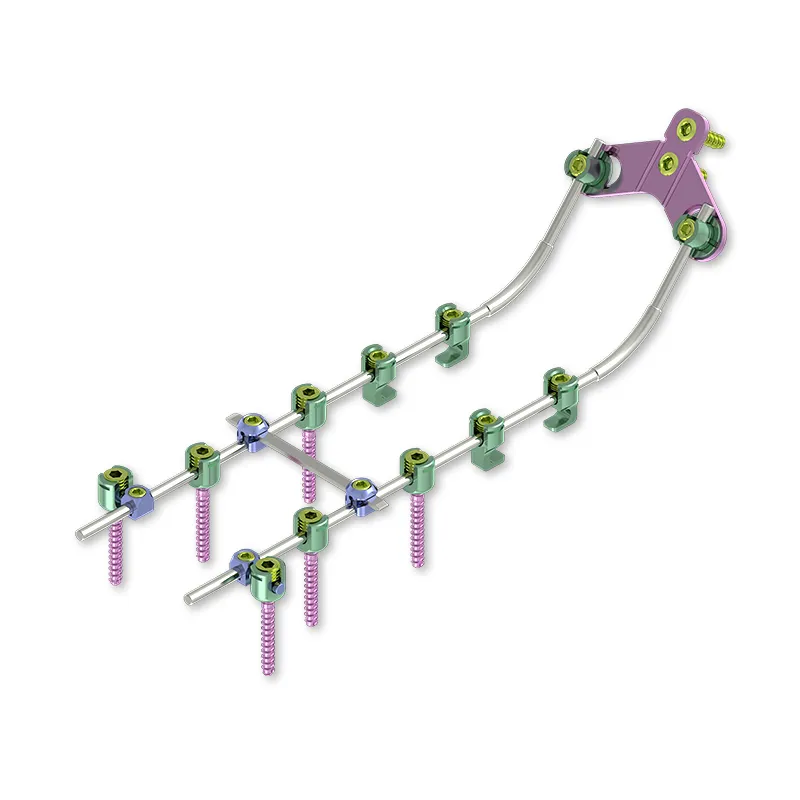
Degenerative spine disease encompasses a broad spectrum of conditions that progressively compromise spinal stability, alignment, and neurological function. As these conditions advance, conservative management often fails to provide adequate relief, and surgical intervention becomes necessary. Among the various implant options available to spine surgeons, the pedicle screw has emerged as one of the most reliable and widely used tools for achieving rigid spinal fixation, deformity correction, and long-term fusion. Understanding precisely when and why to deploy a pedicle screw in the context of degenerative disease is essential knowledge for both clinicians and healthcare procurement professionals.
The decision to incorporate a pedicle screw system into a surgical plan is not arbitrary. It is guided by specific clinical indications rooted in biomechanical necessity, the extent of degenerative change, and the goals of surgical reconstruction. This article examines the principal indications for pedicle screw use across the most common degenerative spine pathologies, explains the underlying reasoning for each indication, and provides practical context for surgeons, hospital purchasing teams, and medical device decision-makers evaluating fixation solutions.
Defining the Role of Pedicle Screw Fixation in Degenerative Spinal Surgery
Biomechanical Foundation of Pedicle Screw Use
A pedicle screw achieves three-column fixation of the spine by passing through the posterior cortex, traversing the pedicle, and anchoring into the vertebral body. This three-point grip creates a substantially more rigid construct than laminar hooks or interspinous wires can offer. In degenerative conditions, where disc height loss, facet joint arthropathy, and segmental instability coexist, this rigidity is often what separates a successful fusion outcome from a failed one.
The biomechanical rationale for using a pedicle screw is particularly strong when the surgeon must neutralize abnormal motion at a compromised segment, correct a deformity, or provide anchorage for interbody cage support. Without pedicle screw fixation, many degenerative constructs lack the stability required to allow bone graft incorporation and durable arthrodesis. This is why the pedicle screw has become the foundational implant in modern posterior spinal instrumentation.
How Degenerative Changes Create Fixation Demands
Degenerative spine disease creates a cascade of structural changes that collectively undermine spinal stability. Intervertebral disc dehydration and height loss cause increased load transfer to the posterior elements, accelerating facet joint wear and eventually producing hypermobility or aberrant motion at affected segments. Over time, osteophyte formation, ligamentum flavum hypertrophy, and facet arthritis can compress neural elements while the segment itself becomes mechanically unreliable.
When surgeons decompress these structures, they often remove stabilizing posterior elements such as the lamina, facet joints, or ligamentum flavum. This decompression, while necessary for neural relief, can further destabilize an already compromised segment. The pedicle screw system then serves as a surrogate stabilizer, recreating structural integrity that has been lost to degeneration or removed during surgery. Recognizing this relationship between degeneration, decompression, and the need for pedicle screw fixation is central to surgical planning.
Primary Indications for Pedicle Screw in Degenerative Lumbar Disease
Degenerative Spondylolisthesis
Degenerative spondylolisthesis is one of the most compelling and well-established indications for pedicle screw fixation. In this condition, disc and facet degeneration allow one vertebra to translate anteriorly relative to the one below, creating segmental instability and commonly producing neurogenic claudication or radiculopathy. The Meyerding classification and degree of slip guide the surgical decision, but once instability is confirmed and decompression is planned, pedicle screw fixation is almost universally indicated.
Studies consistently demonstrate that adding pedicle screw fixation to decompression and fusion for degenerative spondylolisthesis significantly improves fusion rates and clinical outcomes compared to decompression alone or uninstrumented fusion. The pedicle screw prevents further translation, maintains the corrected alignment post-reduction, and creates the mechanical environment needed for graft incorporation. In cases where reduction of the slip is attempted, a reduction pedicle screw with an extended tulip head is specifically chosen to allow controlled vertebral reduction through the screw-rod construct.
Degenerative Disc Disease with Instability
Degenerative disc disease in isolation does not automatically warrant pedicle screw fixation. The indication arises when disc degeneration produces demonstrable segmental instability, defined on dynamic flexion-extension radiographs as abnormal translational or angular motion, or when the degenerated disc level is to be fused as part of a pain-generating motion segment elimination strategy. In these cases, the pedicle screw provides the posterior tension band and axial load-sharing support needed to achieve solid fusion across the degenerated segment.
When combined with interbody devices such as PLIF or TLIF cages, the pedicle screw system creates a 360-degree fusion environment. The interbody cage restores disc height and provides anterior column support, while the posterior pedicle screw construct controls motion and compresses the graft. This combination is particularly important in multi-level degenerative disc disease where isolated interbody support without posterior fixation would be biomechanically insufficient.
Lumbar Spinal Stenosis Requiring Destabilizing Decompression
Central and foraminal lumbar stenosis resulting from degenerative hypertrophy of the facets, ligamentum flavum, and disc bulging frequently requires surgical decompression. When this decompression is limited in scope, the native stability may be preserved and pedicle screw fixation is not mandatory. However, when an adequate decompression necessitates bilateral facetectomy, wide laminectomy, or resection of more than fifty percent of a facet joint, iatrogenic instability is a predictable consequence.
In these scenarios, pedicle screw fixation is indicated to prevent post-laminectomy instability and progressive kyphotic deformity. This is especially true at the lumbosacral junction, where the transition from mobile lumbar segments to the fixed sacrum creates significant stress concentrations. Leaving a destabilized segment unfixed in this region invites early mechanical failure, recurrent pain, and the need for revision surgery. Incorporating a pedicle screw construct at the time of initial decompression avoids these consequences.
Indications in Degenerative Spinal Deformity and Revision Surgery
Adult Degenerative Scoliosis and Sagittal Imbalance
Adult degenerative scoliosis is a complex condition in which asymmetric disc and facet degeneration produces a progressive lateral spinal curvature, often accompanied by sagittal malalignment. These patients suffer from back pain, radiculopathy, neurogenic claudication, and functional disability. When surgical correction is undertaken, the pedicle screw is the implant of choice across the entire construct because it provides the three-dimensional rotational and translational control necessary to correct complex multiplanar deformity.
In adult deformity surgery, pedicle screws anchor the long instrumented constructs that span multiple degenerative levels. Their ability to apply corrective forces through the screw-rod interface makes them indispensable for achieving sagittal balance restoration and coronal curve correction. The pedicle screw density within the construct, whether every level or alternate levels are instrumented, is tailored to the severity of deformity, bone quality, and the number of osteotomies planned. Without adequate pedicle screw fixation points, the corrective forces cannot be safely distributed across the construct.
Revision Surgery After Prior Degenerative Spine Procedures
Revision spine surgery for adjacent segment disease, pseudarthrosis, or implant failure represents another strong indication for pedicle screw use. Adjacent segment disease occurs when segments adjacent to a prior fusion develop accelerated degenerative changes due to altered load distribution. When these levels require extension of the fusion, pedicle screws are placed at the new levels to connect seamlessly with the existing construct.
Pseudarthrosis, or failure of the original fusion to consolidate, also demands revision with pedicle screw augmentation. In these cases, the mechanical environment of the non-union must be corrected by upgrading fixation, adding graft, and sometimes performing osteotomies to improve alignment. The pedicle screw, particularly in augmented or larger diameter designs suited for previously instrumented bone, provides the robust purchase needed to successfully achieve fusion on the second attempt. The reliability and versatility of the pedicle screw make it the go-to implant in these technically demanding revision scenarios.
Special Considerations in Pedicle Screw Selection for Degenerative Disease
Bone Quality and Pedicle Screw Design Choices
Degenerative spine disease frequently occurs in older patients who also have osteoporosis or osteopenia, which reduces bone mineral density and compromises pedicle screw pullout strength. In these patients, screw design choices become critical. Larger diameter screws, longer screws engaging the anterior cortex, expandable designs, or screws used with bone cement augmentation techniques are all strategies employed to improve fixation in poor-quality bone. The indication for a pedicle screw does not change in osteoporotic patients, but the surgical technique and implant selection must be adapted accordingly.
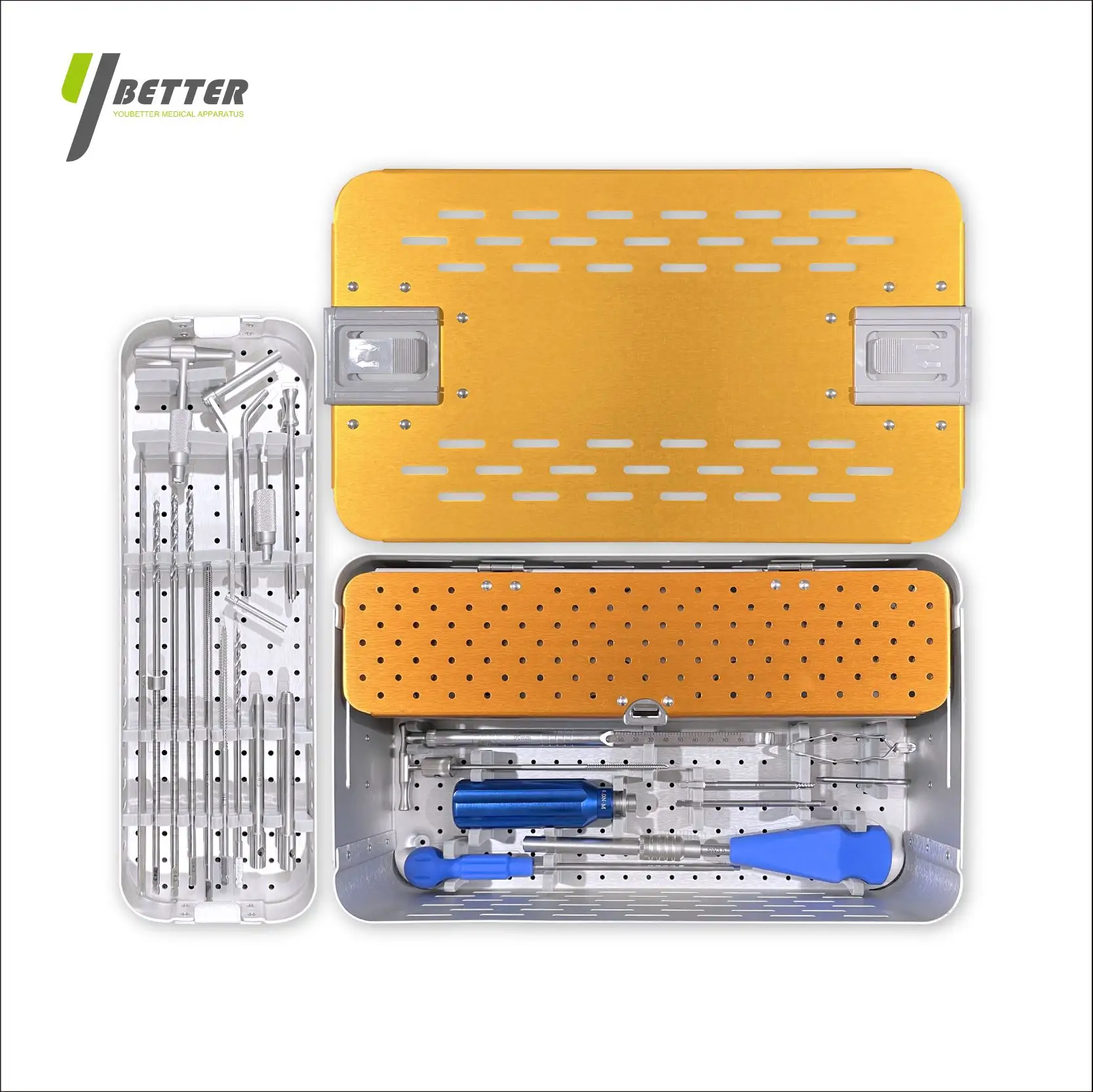
The trajectory of pedicle screw insertion also matters. Straight-ahead techniques may be chosen for familiarity, while cortical bone trajectory techniques, which direct the screw from medial-caudal to lateral-cranial, engage denser cortical bone and improve pullout resistance. Both approaches have their indications depending on anatomy, surgeon preference, and the specific degenerative pathology being addressed. Recognizing that pedicle screw performance in degenerative patients is intimately linked to bone quality and insertion technique ensures that the implant performs as intended.
Reduction Pedicle Screw for Spondylolisthesis Correction
A specialized variant, the pedicle screw with an extended reduction tower or tall tulip head, is specifically indicated in cases where the surgeon plans to reduce a spondylolisthetic slip rather than perform an in-situ fusion. The extended head allows the rod to be captured even when significant vertebral translation is present, and gradual reduction is achieved by compressing the rod into the screw head as the spondylolisthesis is corrected. This design refinement is not necessary for every degenerative case but is an important indication-specific tool in the surgeon's armamentarium.
The choice between standard and reduction pedicle screw designs should be guided by the degree of slip, the patient's neurological status, and whether the surgeon plans active reduction or accepts the deformity in its current position. For high-grade slips or cases where improved alignment is expected to optimize neurological outcomes and long-term mechanics, the reduction pedicle screw is strongly indicated. Understanding this nuance allows surgical teams and procurement officers to ensure the correct implant variant is available for each planned procedure.
FAQ
Is pedicle screw fixation always required when performing a lumbar fusion for degenerative disease?
Not in every case, but in the vast majority of degenerative lumbar fusions, pedicle screw fixation is indicated because it substantially improves fusion rates, maintains alignment, and reduces the risk of graft displacement. Uninstrumented fusions are now rarely performed and are typically reserved for very limited indications with favorable bone quality and minimal instability. Most modern degenerative spine surgery protocols include pedicle screw fixation as the standard of care.
What distinguishes the indication for a reduction pedicle screw versus a standard pedicle screw in degenerative spondylolisthesis?
A standard pedicle screw is appropriate when the surgeon accepts the slip in its current position and fuses in-situ. A reduction pedicle screw is indicated when active correction of the translation is planned, as its extended tulip head accommodates the rod even with significant vertebral offset and allows controlled reduction maneuvers to be performed through the rod-screw interface.
How does patient age and bone density affect the indication for pedicle screw fixation in degenerative spine surgery?
Age and bone density do not change the fundamental indication for pedicle screw fixation, but they significantly affect implant selection and technique. In elderly patients with osteoporosis, surgeons may choose larger, longer, or cement-augmented pedicle screw designs to achieve adequate fixation. The surgical indication remains the same, but the execution must account for compromised bone quality to ensure the construct remains stable through the healing period.
Can pedicle screw fixation be used at the cervicothoracic junction in degenerative disease?
Yes, pedicle screw fixation is applicable at the cervicothoracic junction and throughout the thoracic spine in degenerative conditions, though it is technically more demanding than lumbar placement due to smaller pedicle dimensions and proximity to critical neural and vascular structures. When degenerative pathology at these levels requires fusion, particularly when extending a lumbar construct proximally or managing thoracic degenerative kyphosis, thoracic pedicle screws provide superior fixation compared to hooks or wires and are considered the preferred fixation method by most contemporary spine surgeons.
Table of Contents
- Defining the Role of Pedicle Screw Fixation in Degenerative Spinal Surgery
- Primary Indications for Pedicle Screw in Degenerative Lumbar Disease
- Indications in Degenerative Spinal Deformity and Revision Surgery
- Special Considerations in Pedicle Screw Selection for Degenerative Disease
-
FAQ
- Is pedicle screw fixation always required when performing a lumbar fusion for degenerative disease?
- What distinguishes the indication for a reduction pedicle screw versus a standard pedicle screw in degenerative spondylolisthesis?
- How does patient age and bone density affect the indication for pedicle screw fixation in degenerative spine surgery?
- Can pedicle screw fixation be used at the cervicothoracic junction in degenerative disease?