
 EN
EN
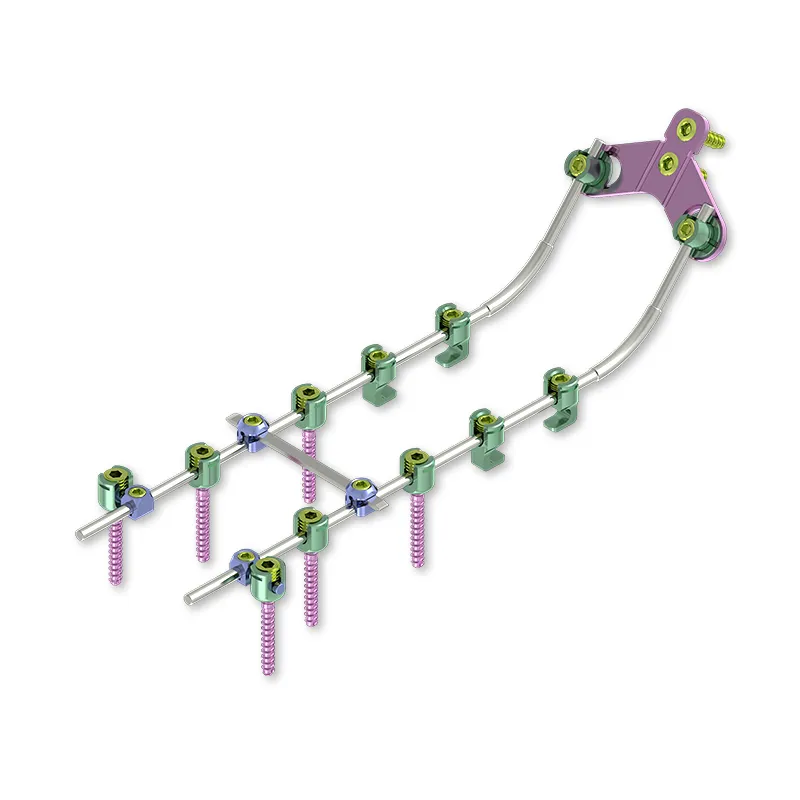
In modern spinal surgery, the pedicle screw is one of the most critical implants used to stabilize the vertebral column. Whether the procedure involves deformity correction, fracture management, or spinal fusion, the pedicle screw serves as the primary anchor connecting the bony structure to the rod-based fixation system. Understanding how its design translates into mechanical strength and reliable fixation is essential for surgeons, medical device engineers, and procurement professionals working in orthopedic and neurosurgical fields.
The design of a pedicle screw is far more than a functional specification on a technical drawing. Every dimension, thread geometry, material grade, and head configuration influences how the pedicle screw performs under cyclic spinal loading. This article examines the core engineering principles that allow the pedicle screw to deliver superior fixation stability, and why these design factors matter so significantly in clinical practice.
Thread Geometry and Its Role in Bone Anchorage
How Thread Design Affects Pullout Resistance
The thread profile of a pedicle screw directly determines how well the implant anchors within cancellous and cortical bone. A pedicle screw with a wider thread pitch and deeper thread depth creates a greater surface area of contact between the implant and bone trabeculae. This expanded contact zone distributes axial loads more evenly, significantly improving the pullout resistance of the pedicle screw under both static and dynamic loading conditions. Engineers designing a pedicle screw must carefully balance pitch, depth, and minor diameter to optimize grip without compromising the structural integrity of the surrounding bone tissue.
Variable-pitch thread designs are increasingly used in modern pedicle screw systems. A pedicle screw with variable pitch features tighter threading near the tip and wider spacing toward the shank, which allows progressive bone compression during insertion. This compressive engagement enhances the initial stability of the pedicle screw, reducing micromotion at the bone-implant interface and supporting more reliable long-term fusion outcomes.
Conical vs. Cylindrical Shaft Configurations
The shaft shape of a pedicle screw also plays a meaningful role in fixation quality. A cylindrical pedicle screw maintains consistent outer diameter along its length, making it predictable during insertion and useful in standard anatomical corridors. A conical pedicle screw, by contrast, tapers from a larger proximal diameter to a smaller distal tip, allowing it to engage bone progressively as it advances. This tapering action generates radial compression against the pedicle walls, which increases the pedicle screw holding strength particularly in softer osteoporotic bone. Surgeons selecting a pedicle screw for elderly patients or those with reduced bone density often prefer conical shaft designs for this reason.
Material Selection and Structural Durability
Titanium Alloys in Pedicle Screw Manufacturing
Material choice is a fundamental determinant of pedicle screw performance. Titanium alloys, particularly Ti-6Al-4V, are the dominant material for pedicle screw fabrication due to their excellent combination of high tensile strength, low modulus of elasticity relative to stainless steel, and superior biocompatibility. A titanium pedicle screw produces minimal stress shielding and supports osseointegration around the implant surface. The modulus of elasticity of titanium is closer to that of cortical bone than stainless steel, which reduces the mechanical mismatch at the bone-implant interface and lowers the risk of stress-related bone resorption around the pedicle screw over time.
Surface treatments further enhance the clinical performance of a pedicle screw. Anodized or roughened titanium surfaces on a pedicle screw promote biological fixation by encouraging bone cell adhesion and ingrowth. When osseointegration occurs around a pedicle screw, the biological bonding supplements the mechanical grip of the threads, creating a dual fixation mechanism that substantially improves long-term stability. This combination of mechanical and biological fixation is one reason why the titanium pedicle screw remains the preferred choice in modern spinal reconstruction.
Fatigue Resistance Under Cyclic Loading
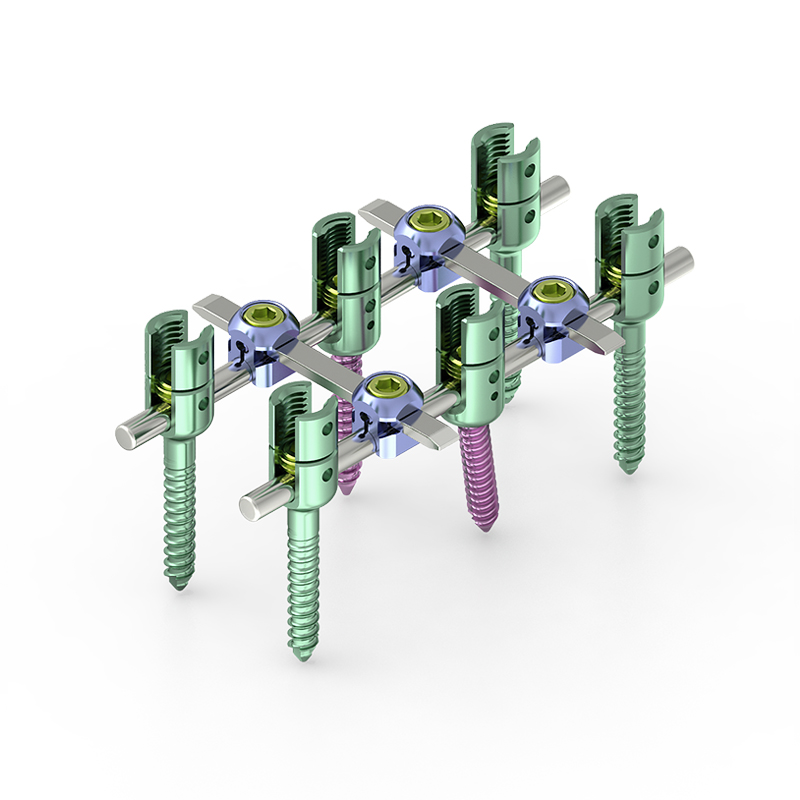
Spinal implants endure millions of loading cycles throughout a patient's active life. A pedicle screw must therefore demonstrate exceptional fatigue resistance in addition to static pullout strength. The manufacturing quality of the pedicle screw, including controlled grain structure, absence of surface defects, and precise threading tolerances, directly impacts fatigue life. A well-manufactured pedicle screw can sustain the repetitive bending and torsional forces generated during normal movement without crack initiation at the screw-rod junction or the shank. Fatigue testing standards for the pedicle screw are defined by protocols such as ASTM F1717, which evaluates implant assemblies under physiologically relevant load conditions.
Head Design and Reduction Capability in Fixation Systems
Polyaxial Heads and Multi-Directional Alignment
The head design of a pedicle screw governs how the implant interfaces with the connecting rod and the overall spinal fixation construct. Polyaxial pedicle screw designs allow the screw head to pivot in multiple directions before final locking, giving surgeons flexibility in rod placement without requiring precise trajectory matching between adjacent pedicle screw anchors. This adaptability reduces operative time and minimizes the need for rod bending, which can introduce stress concentrations. A polyaxial pedicle screw is particularly valuable in cases involving multilevel instrumentation or significant vertebral rotation.
The Reduction Pedicle Screw and Deformity Correction
A specialized variant known as the pedicle screw with an extended reduction tower is engineered specifically for deformity correction procedures such as scoliosis or spondylolisthesis repair. The extended head of a reduction pedicle screw allows the surgeon to capture and reduce a displaced or angulated vertebral segment by drawing the rod down into the screw head using controlled incremental force. This mechanism allows significant vertebral reduction without excessive soft tissue disruption. The structural design of the reduction pedicle screw must accommodate the elevated bending moments generated during the reduction maneuver, which requires reinforced head geometry and robust locking mechanisms to prevent screw head fracture or rod escape during correction.
The locking interface of a pedicle screw, whether it uses a set screw, compression cap, or tulip-locking mechanism, must generate consistent and measurable locking torque. Insufficient locking force on a pedicle screw allows rod micromotion, which can lead to nonunion at the fusion site and long-term construct failure. Precision-machined locking components in a pedicle screw system ensure that the rod is secured at the correct compression force, maintaining construct rigidity throughout the healing period.
FAQ
What makes a reduction pedicle screw different from a standard pedicle screw?
A reduction pedicle screw features an extended tulip head that allows surgeons to apply downward reduction force to bring a misaligned vertebra into correct position. A standard pedicle screw has a lower profile head designed for rod capture after alignment is already achieved. The reduction pedicle screw is specifically used in deformity and listhesis correction cases.
How does bone density affect pedicle screw fixation performance?
Lower bone density reduces the pullout resistance of a pedicle screw because there is less trabecular bone to engage with the thread profile. In osteoporotic patients, a conical pedicle screw, longer screw length, or cement augmentation techniques are often used to improve the fixation strength of the pedicle screw in compromised bone.
Can a pedicle screw loosen over time after spinal fusion surgery?
A pedicle screw can loosen if fusion fails to occur, if the locking mechanism is not adequately torqued, or if biological integration around the pedicle screw is insufficient. Proper surgical technique, correct pedicle screw sizing, and adequate bone preparation are the primary factors that determine long-term implant stability after spinal surgery.