
 EN
EN
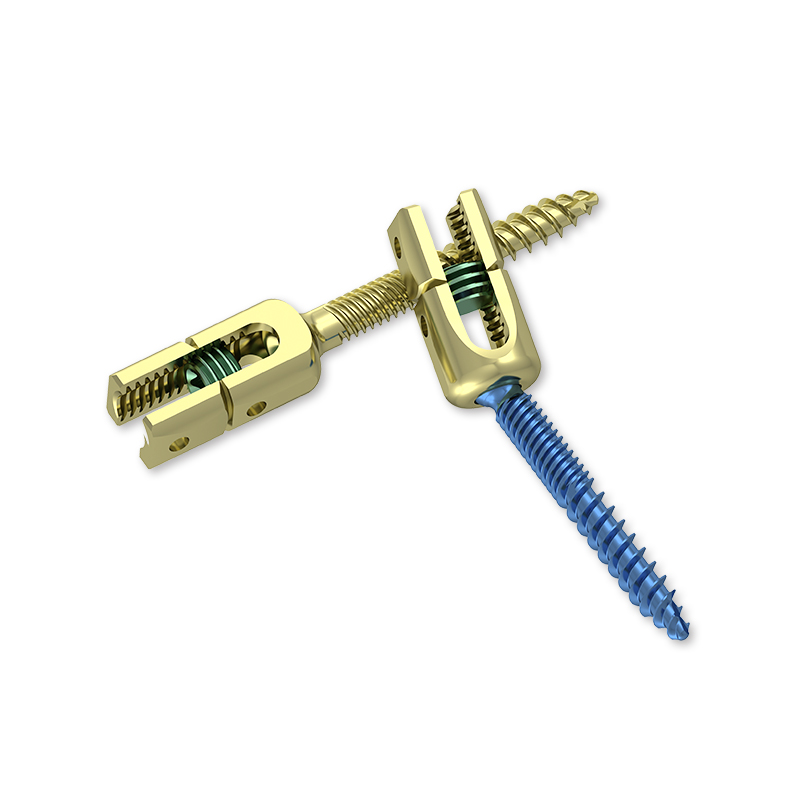
Scoliosis correction surgery is one of the most technically demanding procedures in spinal care, requiring precise instrumentation to restore alignment and maintain long-term stability. At the center of modern surgical technique, the spinal screw has become the defining tool that surgeons rely on to achieve measurable, reproducible deformity correction. Without a well-engineered spinal screw, the forces needed to realign a curved spine cannot be safely transmitted through the vertebral column. Understanding how each spinal screw contributes to surgical success helps clinicians, procurement teams, and facility planners make informed decisions about the implants they select.
The evolution of the spinal screw from simple bone fastener to a precision reduction instrument reflects decades of biomechanical research and clinical refinement. A modern spinal screw is engineered to anchor deeply into the pedicle, distribute corrective loads evenly, and provide a reliable interface for rod connection. Each spinal screw must perform consistently under the cyclic stresses of daily movement while the fusion mass matures. This article explains exactly how the spinal screw improves outcomes at every stage of scoliosis correction surgery.
The Biomechanical Role of Spinal Screw in Deformity Correction
How Spinal Screw Anchors Corrective Force
The primary mechanical function of a spinal screw in scoliosis surgery is to serve as a fixed anchor point through which corrective forces are applied to each vertebra. Because the pedicle is the strongest part of a vertebra, placing a spinal screw through this corridor allows surgeons to engage all three spinal columns simultaneously. When a contoured rod is seated into the head of each spinal screw, rotation and translation maneuvers can be executed with high precision. The rigidity of the spinal screw-pedicle interface determines how much of the applied corrective force is actually transferred to the bone rather than lost through micromotion.
A reduction-type spinal screw adds another dimension by incorporating an extended tab or reduction tower that guides the rod down into the screw head without requiring excessive force near the bone-implant interface. This design protects the pedicle wall from stress fracture during reduction maneuvers. The result is that each spinal screw can maintain its corrective position throughout the remainder of the procedure and into the postoperative period. Surgeons who use a well-designed reduction spinal screw consistently report cleaner rod seating and fewer intraoperative complications related to screw pullout.
Load Distribution Across the Spinal Screw Construct
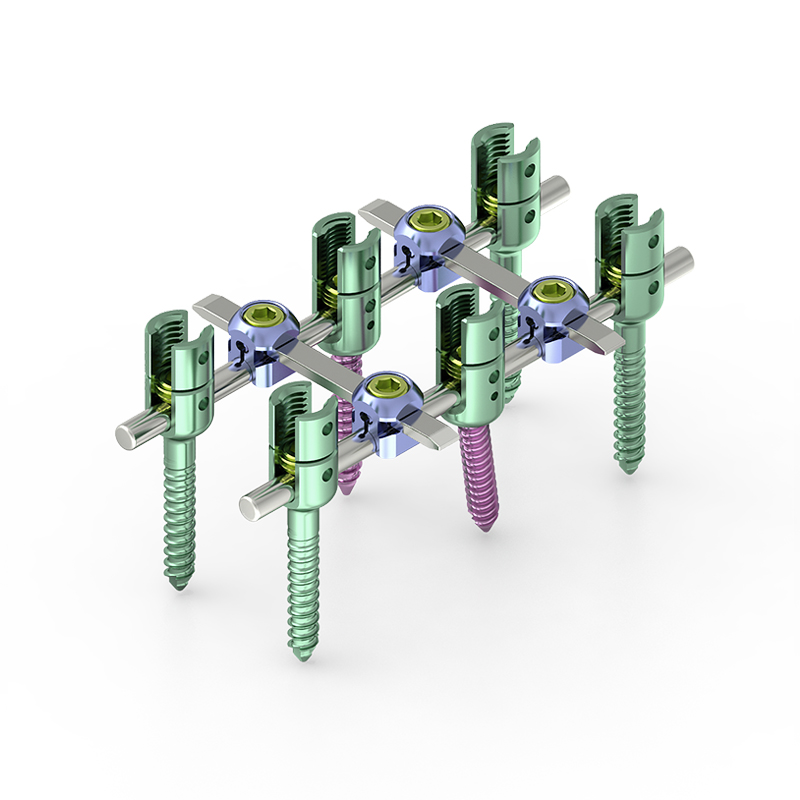
In scoliosis correction, no single spinal screw bears the entire corrective load. Instead, the construct distributes forces across every spinal screw in the instrumented segment, creating a mechanically balanced system. This load sharing is critical because it prevents any individual spinal screw from experiencing stress concentrations that could lead to loosening or hardware failure. The spacing, angulation, and trajectory of each spinal screw are planned preoperatively to optimize this distribution. When each spinal screw is placed accurately within its pedicle, the collective construct achieves a stiffness that supports early mobilization and reduces the risk of correction loss over time.
Spinal Screw Design Features That Enhance Surgical Outcomes
Thread Geometry and Pullout Resistance of Spinal Screw
The holding strength of a spinal screw is determined largely by its thread geometry, outer diameter, and the quality of bone it engages. A spinal screw with a dual-lead or variable-pitch thread profile maximizes the bone-implant contact area within the pedicle, increasing resistance to axial pullout forces. In patients with osteopenic or adolescent bone, selecting the appropriate spinal screw diameter and thread design is essential to achieving stable fixation. Surgeons must also consider the insertion torque of each spinal screw, since under-torqued screws lack initial stability while over-torqued screws can fracture the pedicle wall. Proper trajectory planning combined with a well-matched spinal screw profile ensures that fixation is adequate from the moment of implantation.
Polyaxial Head Mechanism of Spinal Screw
One of the most clinically valuable features of a modern spinal screw is the polyaxial head, which allows the screw body to pivot within the screw head during rod insertion. This freedom of angulation means that even when adjacent spinal screws are placed at slightly different trajectories, the rod can still be seated without creating unwanted stress on the instrumented vertebrae. The polyaxial spinal screw head accommodates anatomical variability across different vertebral levels and patient populations. Once the set screw is tightened, the spinal screw head locks rigidly, converting the construct from a flexible insertion tool into a rigid corrective framework. This two-phase behavior — flexible during rod seating, rigid after locking — is a key reason why the polyaxial spinal screw has become the standard of care in scoliosis instrumentation.
Spinal Screw Placement Strategy in Scoliosis Constructs
Pedicle Mapping and Spinal Screw Trajectory Planning
Accurate placement of each spinal screw begins before the patient enters the operating room. Surgeons use preoperative CT imaging and 3D reconstructions to map the pedicle dimensions at every level included in the fusion. This planning determines the optimal diameter, length, and entry point for each spinal screw. In the thoracic spine, where pedicles are narrower and more angulated, precise spinal screw placement is especially critical to avoid neurovascular injury. Intraoperative navigation and fluoroscopic confirmation help surgeons verify that each spinal screw is correctly positioned before rod insertion begins. A well-placed spinal screw reduces the need for revision, shortens operative time, and contributes directly to better radiographic correction.
Segmental Density and Spinal Screw Coverage
The concept of spinal screw density refers to the proportion of available pedicle sites that are instrumented within the fusion segment. Higher spinal screw density generally produces greater three-dimensional correction of the scoliotic curve because more vertebrae are directly controlled by the rod-screw construct. However, surgeons must balance spinal screw density against operative time, blood loss, and patient-specific anatomy. In highly rigid curves, a denser spinal screw pattern allows more aggressive correction forces to be applied safely. In flexible adolescent curves, strategic placement of each spinal screw at key vertebrae may achieve comparable results with fewer implants. The decision about spinal screw density is therefore individualized based on curve characteristics, patient age, and bone quality.
FAQ
What makes a reduction spinal screw different from a standard spinal screw?
A reduction spinal screw features an extended tab or built-in reduction mechanism that guides the rod down into the screw head without placing excessive force on the surrounding bone. A standard spinal screw requires the surgeon to manually manipulate the rod into position, which can be more challenging in severely deformed spines. The reduction spinal screw simplifies rod seating, reduces operative time, and lowers the risk of pedicle wall fracture during correction maneuvers.
How does spinal screw selection affect long-term fusion outcomes?
The spinal screw chosen for a scoliosis construct affects fusion outcomes through its pullout resistance, load distribution behavior, and long-term fatigue performance. A spinal screw that maintains stable fixation allows bone graft to consolidate predictably around the instrumented segment. If a spinal screw loosens early, micromotion at the bone-implant interface can delay fusion and lead to progressive correction loss. Selecting a spinal screw with appropriate thread geometry, diameter, and material properties for the patient's bone density is therefore a critical determinant of long-term surgical success.
Can spinal screw placement be guided by navigation technology?
Yes, intraoperative navigation systems can guide the placement of each spinal screw with high precision, particularly in complex scoliosis cases where the anatomy is significantly distorted. Navigation uses real-time CT or fluoroscopic data to display the planned spinal screw trajectory on a monitor, allowing the surgeon to adjust the insertion angle before committing to the final path. Studies have shown that navigated spinal screw placement reduces pedicle breach rates compared to freehand techniques. For challenging thoracic levels or revision cases, navigation-assisted spinal screw insertion is considered an important tool for improving safety and accuracy.