
 EN
EN
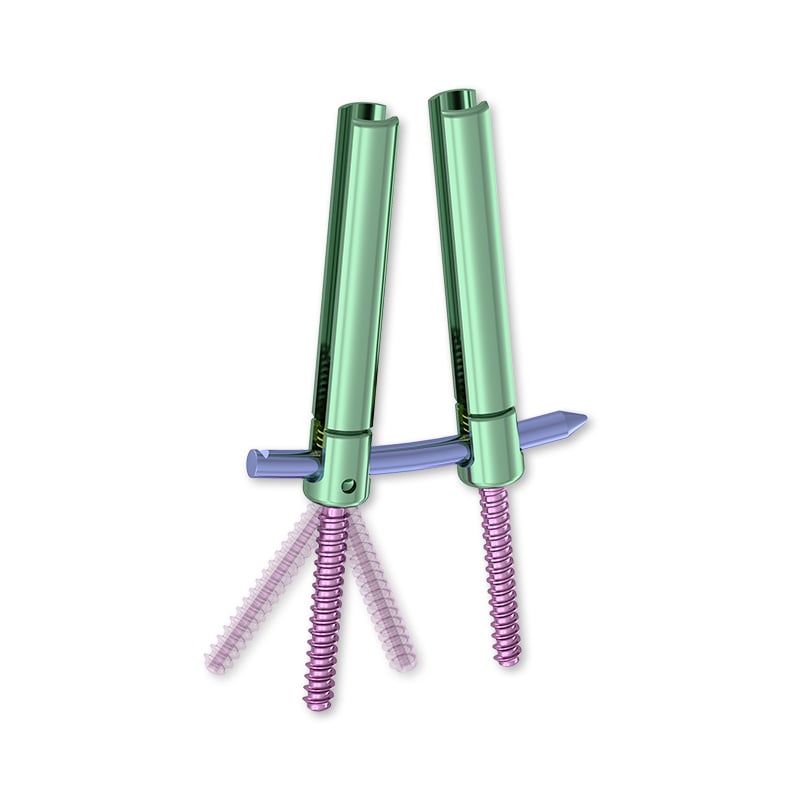
In complex spinal reconstruction procedures, every implant must perform with precision and reliability. The spinal screw is one of the most critical components in these surgeries, serving as the primary anchor that holds rods, connectors, and bone segments in their corrected positions. Without a properly placed spinal screw, the entire construct risks mechanical failure, misalignment, or non-union — outcomes that can be devastating for patients requiring multi-level reconstruction.
Understanding how a spinal screw functions within complex reconstruction helps surgeons, procurement specialists, and medical device professionals make better decisions. This article examines the specific roles a spinal screw plays — from initial fixation to deformity correction — and why its design characteristics matter so much in demanding surgical environments where multiple spinal levels, severe deformity, or revision surgery are involved.
Biomechanical Foundation of the Spinal Screw
How a Spinal Screw Anchors the Construct
The fundamental job of any spinal screw is to create a rigid anchor point within the vertebral body or pedicle. In complex reconstruction, this anchor must withstand significant biomechanical forces — including axial load, flexion, extension, and rotational stress. A spinal screw inserted through the pedicle, known as a pedicle screw, engages both the cortical and cancellous bone of the vertebra, distributing these forces across a larger internal surface area. This design dramatically reduces the risk of screw pullout, which remains one of the most common failure modes in spinal fixation systems.
The thread geometry of a spinal screw directly influences how well it integrates with bone. Coarser, wider threads provide greater pullout resistance in osteoporotic or low-density bone, while fine-thread designs can offer greater precision in healthy cortical bone. Surgeons performing multi-level fusions or corrective procedures rely on this mechanical integrity to maintain correction throughout the healing period. If a spinal screw loosens prematurely, the construct loses rigidity, and the reconstruction may fail before fusion is achieved.
Load Sharing Between the Spinal Screw and Rod System
A spinal screw does not work in isolation. It functions as part of a rod-and-screw construct, where the spinal screw transfers force into the connecting rod and distributes mechanical stress across multiple vertebral segments. In complex reconstructions involving long-segment fusion or severe scoliosis correction, this load-sharing behavior is critical. The spinal screw must maintain stable connection with the rod while allowing the surgeon to fine-tune alignment before final locking. The head design of the spinal screw — whether fixed, monoaxial, or polyaxial — plays a significant role in how easily the rod can be seated and tensioned during the procedure.
The Spinal Screw in Deformity Correction
Reduction Capability and Its Surgical Value
One of the most demanding roles a spinal screw can play is in vertebral reduction — the process of repositioning a displaced or malpositioned vertebra back into anatomical alignment. A reduction spinal screw features an extended, threaded tulip head that allows the surgeon to gradually draw a displaced vertebra toward the connecting rod using a reduction instrument. This is especially valuable in cases involving spondylolisthesis, trauma-related displacement, or complex deformity where vertebral segments have shifted significantly out of position. The reduction spinal screw enables controlled correction without requiring excessive manual force on fragile bone structures.
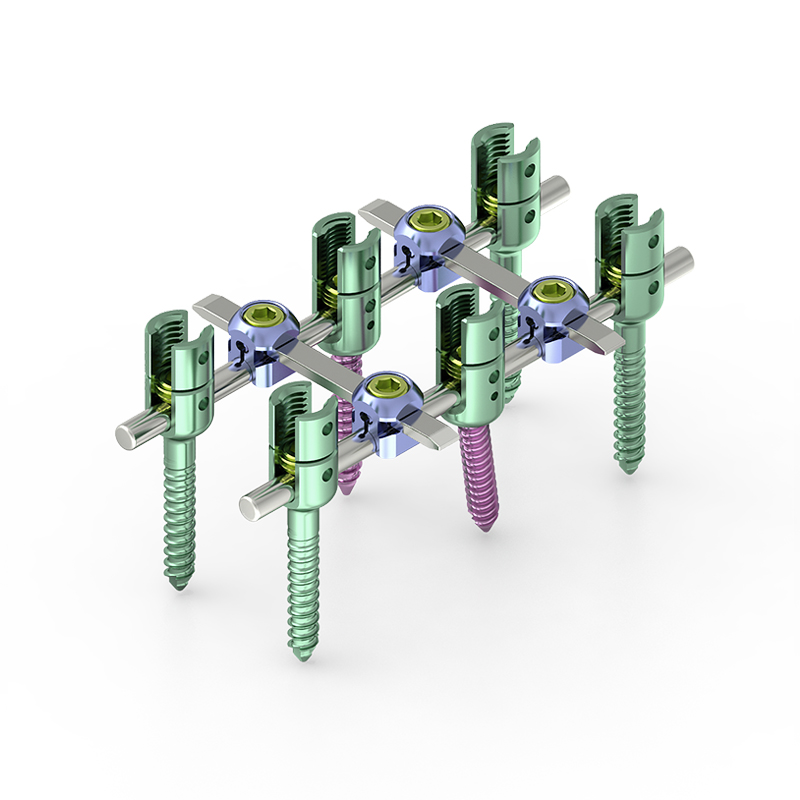
The design of a reduction spinal screw must balance two competing demands: providing enough height for the reduction maneuver while maintaining a low enough profile once reduction is complete to avoid soft tissue irritation. Surgeons depend on the spinal screw to hold the corrected position firmly during and after the reduction step, ensuring that subsequent rod placement locks the vertebra in its intended location. Any instability in the spinal screw at this stage can compromise the final correction angle and affect the patient's long-term outcome.
Multi-Level Alignment and Sagittal Balance
Restoring sagittal balance is one of the primary goals in complex spinal reconstruction. The spinal screw contributes to this goal by serving as the fixed point around which alignment corrections are made. When surgeons apply compression or distraction forces through a rod-screw construct, each spinal screw must resist displacement while transmitting those corrective forces accurately. In multi-level cases, the cumulative effect of many individual spinal screw placements determines whether the final construct achieves the intended lordosis or kyphosis correction. Accurate screw trajectory, appropriate screw diameter, and correct torque application are all essential to achieving and maintaining proper sagittal alignment.
Surgical and Clinical Considerations for Spinal Screw Selection
Matching the Spinal Screw to Patient Anatomy
No two spinal reconstruction cases are identical, and the selection of the correct spinal screw size and design must reflect the patient's specific anatomy. Pedicle dimensions vary significantly across the thoracic and lumbar spine, and the spinal screw diameter must closely match the pedicle width to maximize cortical engagement without causing fracture. Screw length must reach deep enough into the vertebral body to achieve adequate purchase, particularly in patients with reduced bone density. Preoperative imaging, including CT-based pedicle measurement, is standard practice to guide spinal screw selection and placement strategy in complex cases.
Material selection also matters. Most modern spinal screw implants are manufactured from titanium alloy, which offers a strong strength-to-weight ratio, excellent biocompatibility, and MRI compatibility — all important factors in post-surgical monitoring. Surgeons and procurement teams should verify that the spinal screw system they select meets relevant regulatory standards and is validated for use in the specific surgical application being planned.
Revision Surgery and the Role of the Spinal Screw
Revision spinal surgery presents unique challenges, and the spinal screw must perform reliably even in compromised bone environments. When a previous construct has failed, the bone at prior screw sites may be weakened or sclerotic. Surgeons may opt for larger-diameter spinal screw implants, use bone cement augmentation, or redirect screw trajectories to find virgin bone. The adaptability of the spinal screw system — including availability of various lengths, diameters, and head configurations — directly affects a surgeon's ability to achieve secure fixation in these difficult revision scenarios.
FAQ
What makes a reduction spinal screw different from a standard pedicle screw?
A reduction spinal screw has a taller, threaded head that allows surgeons to gradually pull a displaced vertebra into alignment with the connecting rod. A standard pedicle spinal screw has a lower profile head designed for straightforward rod capture. The reduction type is specifically used when vertebral displacement must be corrected during the procedure.
How does spinal screw placement affect fusion outcomes?
Accurate spinal screw placement ensures rigid fixation, which is essential for bone fusion. When the spinal screw achieves strong purchase in the pedicle and vertebral body, it minimizes micromotion at the fusion site, allowing bone graft or biologics to consolidate properly. Poor placement or loose spinal screw fixation increases the risk of pseudarthrosis and construct failure.
Can a spinal screw be used at every level of the spine?
A spinal screw can be placed throughout the thoracic and lumbar spine using pedicle-based technique. In the cervical spine, lateral mass screws or specific cervical pedicle screw designs are used instead of standard lumbar spinal screw types. The size, diameter, and insertion angle of the spinal screw must be adapted to the anatomy of each specific spinal region.