
 EN
EN
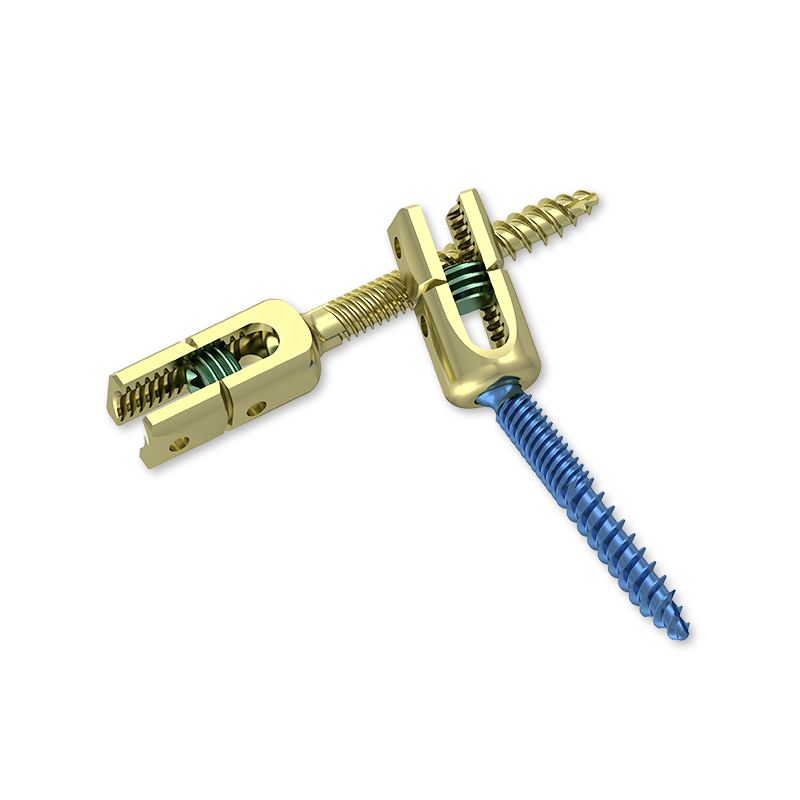
When surgeons evaluate a patient with spine trauma, one of the most critical decisions they face is whether to use a spinal screw for stabilization. A spinal screw serves as the mechanical foundation of posterior fixation systems, anchoring rods or plates to the vertebral column and restoring structural integrity. Understanding the clinical indications for a spinal screw is essential for any orthopedic or neurosurgical team managing traumatic spinal injuries, because choosing the right implant at the right time directly affects patient outcomes, recovery speed, and long-term spinal function.
The decision to implant a spinal screw is never made arbitrarily. Clinical indications arise from a combination of imaging findings, neurological assessment, biomechanical analysis of the injury pattern, and the patient's overall health status. This article outlines the primary clinical scenarios in which a spinal screw is indicated in spine trauma, helping clinicians and medical procurement teams understand when this implant is both necessary and appropriate.
Fracture Patterns That Indicate Spinal Screw Use
Burst Fractures and Vertebral Body Comminution
A burst fracture is one of the most common indications for spinal screw fixation. In this injury type, the vertebral body shatters under axial load, with fragments potentially displacing into the spinal canal. A spinal screw placed through the pedicle allows surgeons to apply distraction forces, indirectly reducing retropulsed fragments and restoring canal diameter. When neurological compromise is present alongside a burst fracture, the need for a spinal screw construct becomes even more urgent. The spinal screw provides the rigid anchor point required to maintain decompression and prevent secondary displacement.
Flexion-Distraction and Chance-Type Injuries
Flexion-distraction injuries, including classic Chance fractures, involve disruption of both the anterior and posterior columns of the spine. These injuries are inherently unstable, and a spinal screw is typically indicated to restore three-column integrity. Surgeons use a spinal screw on both sides of the fracture level to compress the disrupted posterior elements and prevent progressive kyphosis. Without a spinal screw-based fixation system, Chance-type injuries carry a high risk of delayed instability, neurological deterioration, and chronic deformity. The spinal screw construct effectively neutralizes the tensile forces that would otherwise propagate the injury.
Neurological Status and Instability Criteria
Incomplete Neurological Deficit With Canal Compromise
When a patient presents with an incomplete spinal cord injury or radiculopathy associated with structural instability, a spinal screw is strongly indicated. The goal is to decompress neural elements while simultaneously stabilizing the segment with a spinal screw construct. An unstable spine without spinal screw fixation poses a continuous risk of further neural injury during mobilization or rehabilitation. By securing the injured level with a spinal screw, surgeons protect the spinal cord and nerve roots from additional mechanical insult. The spinal screw also enables earlier patient mobilization, which is critical for reducing complications such as pressure injuries and deep vein thrombosis.
Three-Column Instability and High-Energy Trauma
High-energy trauma, such as motor vehicle accidents or falls from significant height, frequently causes three-column spinal instability. In these scenarios, a spinal screw is the standard of care. Surgeons assess instability through validated scoring systems, and when a score indicates surgical intervention, a spinal screw construct is almost always part of the solution. The spinal screw must engage solid pedicle bone to achieve the pull-out resistance necessary to withstand the forces acting on a traumatized spine. A well-placed spinal screw distributes load across multiple vertebral levels, preventing failure at the fracture site and supporting the natural healing process.
Surgical Scenarios Requiring Reduction Capability
Fracture-Dislocation With Translational Deformity
Fracture-dislocation injuries involve both osseous disruption and significant translational or rotational deformity of one vertebral segment relative to another. A standard spinal screw alone may not be sufficient in these cases. This is where a spinal screw with reduction capability becomes a critical tool. A reduction-style spinal screw allows the surgeon to gradually bring a displaced vertebra back into alignment by manipulating the screw head relative to the rod. This eliminates the need for excessive manual force on fragile neural structures. The reduction spinal screw is particularly valuable when open reduction would otherwise require significant soft tissue disruption or extended surgical exposure.
Post-Traumatic Kyphosis and Delayed Instability
Not all spine trauma cases present acutely. Some patients develop progressive post-traumatic kyphosis weeks or months after the initial injury, especially when early conservative management fails. In delayed instability, a spinal screw is indicated to halt deformity progression and restore sagittal alignment. A reduction-capable spinal screw offers additional benefit in these cases by allowing controlled correction of the kyphotic angle intraoperatively. Surgeons use the spinal screw to apply corrective forces while securing the construct to healthy adjacent vertebrae. The result is a stable, well-aligned construct that prevents further collapse and supports bone fusion across the affected levels.
FAQ
What types of spine fractures most commonly require a spinal screw?
Burst fractures, Chance fractures, fracture-dislocations, and injuries involving three-column instability are the most frequent indications for a spinal screw. Any fracture pattern that compromises spinal stability or threatens neurological function warrants serious consideration of spinal screw fixation as part of the surgical treatment plan.
How does a reduction spinal screw differ from a standard spinal screw?
A reduction spinal screw features an extended tab or tulip head that allows the surgeon to reduce a displaced vertebra onto the rod without applying direct manual force to the spine. A standard spinal screw provides fixation but lacks this built-in reduction mechanism. The reduction spinal screw is preferred when significant translational deformity or fracture-dislocation is present.
Can a spinal screw be used in osteoporotic bone after trauma?
Yes, a spinal screw can be used in osteoporotic bone, though the surgical approach requires modification. Techniques such as cement augmentation, longer spinal screw length, and the use of expandable or fenestrated spinal screw designs help achieve adequate pull-out strength in low-density bone. Proper preoperative planning ensures the spinal screw construct remains stable throughout the healing period even in compromised bone quality.