
 EN
EN
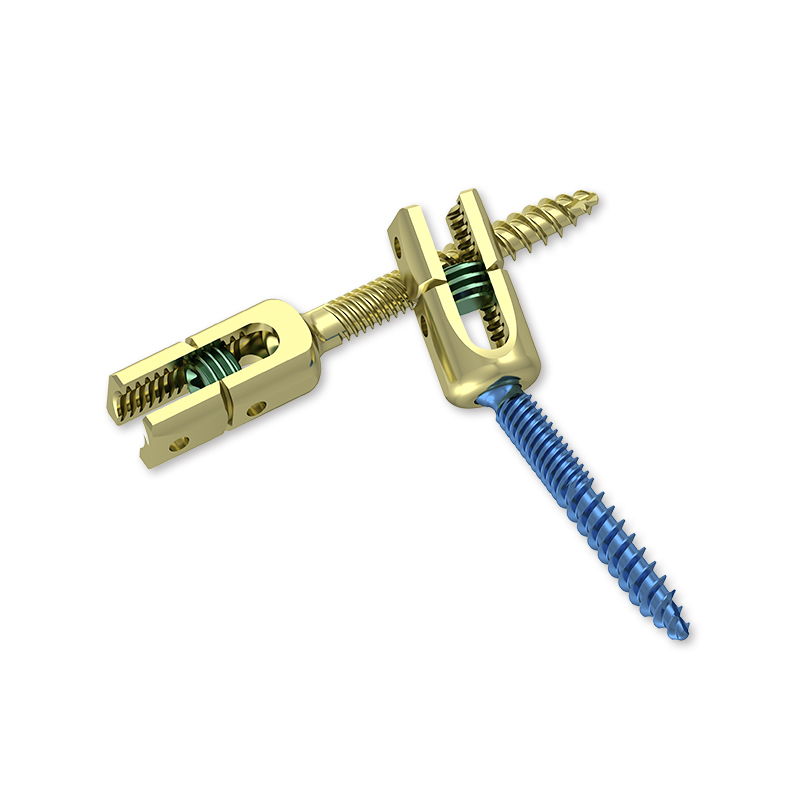
In spinal surgery, choosing the right implant can directly influence surgical outcomes, patient recovery, and long-term construct stability. Among the most critical decisions a spine surgeon faces is selecting the appropriate type of pedicle screw for a given procedure. The two dominant designs — monoaxial and polyaxial — serve fundamentally different mechanical and clinical purposes, and understanding those differences is essential for anyone involved in spinal implant procurement, surgical planning, or orthopedic device evaluation.
The pedicle screw is a foundational component in posterior spinal fixation systems, used to anchor rods, connectors, and other hardware to the bony architecture of the spine. While both monoaxial and polyaxial variants achieve this goal, the mechanics behind how each type functions — and under what conditions each excels — are distinct enough to warrant a thorough, side-by-side examination. This article provides a detailed, clinically grounded explanation of each design type, their differences, and their respective application contexts.
Understanding the Basic Anatomy of a Pedicle Screw
Core Components Shared by Both Designs
Every pedicle screw, regardless of design type, consists of a threaded shank that is driven into the pedicle of a vertebra, and a head or tulip that accepts a connecting rod. The threaded shank engages the cancellous and cortical bone of the pedicle, creating a firm anchor point. The design and quality of the thread pattern, pitch, and outer diameter all contribute to pullout strength and overall fixation integrity.
The head of the pedicle screw is where the two design philosophies diverge most significantly. In both monoaxial and polyaxial designs, a locking cap or set screw is used to secure the rod within the tulip head. However, the relationship between the screw shank and the tulip head is fundamentally different in each design, and this single distinction drives nearly all the clinical and biomechanical differences between the two.
Material selection is also a shared consideration. Most modern pedicle screw systems are manufactured from titanium alloy or cobalt-chromium alloy, each offering different stiffness and imaging compatibility profiles. The material does not define whether a screw is monoaxial or polyaxial, but it does contribute to the overall performance of either design in clinical use.
How the Head-Shank Relationship Defines the Design
In a monoaxial pedicle screw, the head and shank are fixed in a rigid, non-adjustable relationship. The axis of the screw shank and the axis of the head are aligned and cannot be altered after implantation. Once the screw is placed, the rod must conform precisely to the trajectory defined by the screw head orientation.
In a polyaxial pedicle screw, the head is designed to rotate freely around the shank in multiple planes before being locked. This means a surgeon can insert the screw along the optimal bone trajectory and then pivot the head to accept a rod running in a different direction. The head articulates in a ball-and-socket or similar mechanism relative to the screw shank, providing angular freedom before final locking.
This structural distinction is not merely a design curiosity — it has direct implications for surgical technique, rod contouring requirements, case complexity tolerance, and the biomechanical environment the construct creates across the spinal segment being treated.
Monoaxial Pedicle Screw: Design Logic and Clinical Strengths
Biomechanical Rigidity and Construct Stiffness
The defining advantage of a monoaxial pedicle screw is its rigidity. Because the head and shank move as a single unit, there is no internal articulation that could introduce micro-motion at the bone-implant interface. This translates to a stiffer, more mechanically robust construct — a critical feature in cases where maximum stability and minimal movement are surgical priorities.
In high-demand biomechanical scenarios such as multilevel fusion for degenerative scoliosis, trauma reconstruction, or correction of severe deformity, the stiffness of a monoaxial pedicle screw system can contribute to more predictable load distribution across the rod-screw-bone interface. Surgeons who prioritize construct stiffness often prefer monoaxial designs for their ability to resist toggling and fatigue over time.
Additionally, because there is no articulating head mechanism, the monoaxial pedicle screw tends to have a lower profile head design in some systems, which can reduce soft tissue irritation in select anatomical locations such as the upper thoracic region where space is limited.
Technique Demands and Rod Contouring Requirements
The rigidity of a monoaxial pedicle screw comes with a tradeoff: the surgeon must contour the connecting rod precisely to match the fixed trajectory of each screw head. If screws are placed at slightly varying angles due to patient anatomy, the rod must be bent to accommodate each head position exactly. This demands greater intraoperative precision and more extensive rod contouring skills.
For experienced deformity surgeons, this is often a manageable challenge. In fact, many deformity specialists prefer monoaxial designs precisely because the rigid construct allows them to use the rod as a deformity correction instrument, translating and rotating vertebrae through controlled rod manipulation. The fixed-head design amplifies the corrective forces applied through the rod.
However, for surgeons working in high-volume trauma or routine degenerative cases, the additional time and skill required for precise rod contouring with a monoaxial pedicle screw may make polyaxial alternatives more practical. The clinical setting and surgical team experience are therefore important contextual factors in this decision.
Polyaxial Pedicle Screw: Design Logic and Clinical Advantages
Angular Freedom and Surgical Versatility
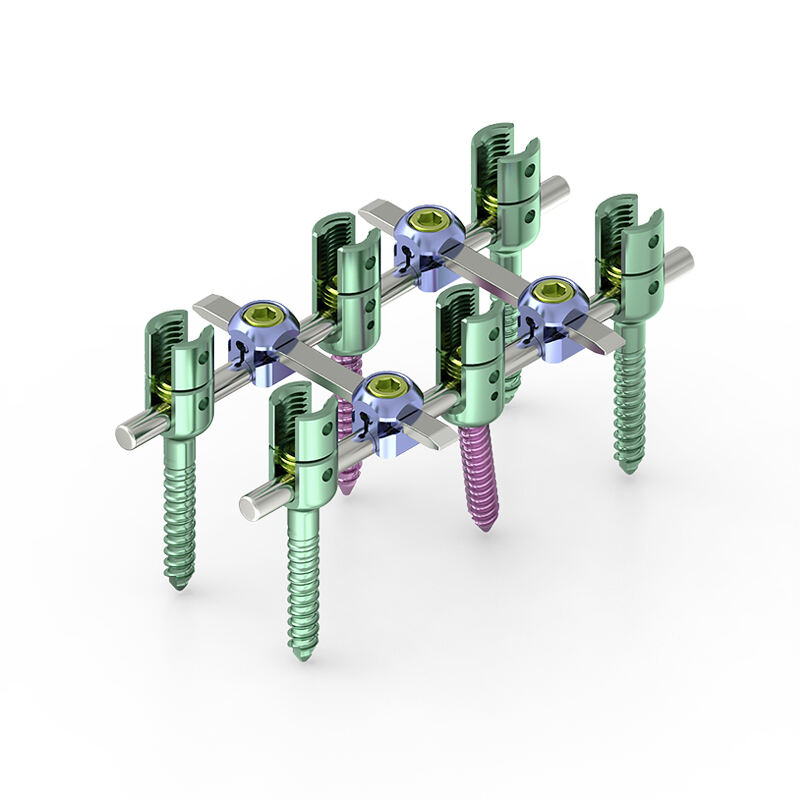
The polyaxial pedicle screw is engineered to address one of the most common intraoperative challenges in spinal surgery: the inability to perfectly align rod and screw trajectories across multiple vertebral levels. By allowing the screw head to pivot in multiple directions before locking, the polyaxial design dramatically reduces the precision required for rod seating.
This angular freedom — typically ranging from 20 to 40 degrees depending on the system — means that once the screws are placed according to optimal bone entry points and trajectories, the rod can be laid across the heads without requiring complex bending to match each fixed angle. This simplifies rod placement, reduces operative time, and lowers the cognitive and technical burden on the surgical team during rod insertion steps.
In minimally invasive spinal surgery, where percutaneous screw placement is performed through limited tissue corridors with restricted visualization, the polyaxial pedicle screw is practically indispensable. The ability to fine-tune head orientation after placement allows the surgeon to connect a pre-contoured or straight rod across percutaneous screws that may not be perfectly co-planar.
Applications in Degenerative and Minimally Invasive Cases
Polyaxial pedicle screw systems are among the most widely used implants in routine lumbar fusion procedures for degenerative disc disease, spondylolisthesis, and spinal stenosis. The combination of reasonable biomechanical performance and improved surgical ergonomics makes them the default choice for many spine surgeons in these common clinical scenarios.
In minimally invasive transforaminal lumbar interbody fusion or posterior lumbar interbody fusion, the polyaxial pedicle screw allows efficient construct assembly through small incisions. The head angulation compensates for the limited approach angles inherent in these techniques, enabling secure rod-to-screw connection without requiring extended tissue dissection to accommodate rod placement.
It is worth noting, however, that the articulating head mechanism of a polyaxial pedicle screw introduces a small degree of inherent micro-motion at the head-shank interface before locking. In most clinical scenarios this is inconsequential after final tightening, but it is a consideration in high-load, high-motion segment constructs where long-term fatigue behavior is evaluated.
Key Clinical and Biomechanical Differences Compared
Load Transfer and Construct Mechanics
The monoaxial pedicle screw delivers a more direct and rigid load path between rod and bone. Because there is no articulating interface, forces are transmitted through a unified structure. This can be advantageous in posterior-only constructs for trauma or tumor cases where the anterior column cannot provide load sharing, and maximum posterior construct rigidity is required to prevent failure.
The polyaxial pedicle screw, once locked, creates a construct that is functionally rigid under most clinical loading conditions. Studies have shown that well-locked polyaxial constructs approach the stiffness of monoaxial constructs in the primary planes of spinal loading. However, the pre-lock articulation means that construct assembly errors, incomplete locking, or head-shank wear over time can theoretically introduce more variability in long-term performance.
In revision surgery contexts, where bone quality may be compromised and construct demands are elevated, the choice between a monoaxial and polyaxial pedicle screw requires careful consideration of both biomechanical needs and the anatomical constraints that will influence screw placement accuracy.
Reduction Capabilities and Specialized Variants
Beyond the standard monoaxial and polyaxial designs, specialized pedicle screw variants have been developed to address specific surgical challenges. One of the most clinically significant is the reduction pedicle screw, designed with an extended tulip or tower mechanism that allows surgeons to reduce displaced vertebrae — such as in spondylolisthesis — by applying corrective forces through the screw head without requiring direct manual manipulation of the vertebra.
Reduction pedicle screws are available in both monoaxial and polyaxial configurations, and the choice of base design still applies to reduction variants. A reduction pedicle screw with a polyaxial base offers the additional benefit of head angulation freedom during the reduction process, which can be valuable when vertebral displacement creates an angular mismatch between adjacent screw heads.
Understanding the full spectrum of pedicle screw design options — from standard monoaxial and polyaxial to specialized reduction and cannulated variants — allows procurement specialists and surgical teams to build implant inventories that meet a broad range of procedural demands without over-relying on any single design type.
Selecting the Right Design for the Right Procedure
Clinical Scenario Mapping
Selecting between a monoaxial and polyaxial pedicle screw should be driven by a clear understanding of the surgical goal, the patient's anatomy, the approach technique, and the biomechanical demands of the construct. Neither design is universally superior — each is optimized for a different set of conditions.
For complex adult deformity surgery requiring powerful corrective maneuvers, monoaxial pedicle screw systems remain the preferred choice among many deformity surgeons due to their rigidity and force transmission efficiency. For routine lumbar degenerative cases, minimally invasive procedures, and cases involving anatomically challenging pedicle trajectories, polyaxial designs offer meaningful practical advantages that translate into shorter operative times and lower technical risk.
In cases involving significant vertebral translation — such as high-grade spondylolisthesis — a specialized reduction pedicle screw may be the most appropriate choice regardless of the monoaxial or polyaxial base design selected, as the reduction mechanism itself is the primary functional differentiator in those scenarios.
Procurement and Inventory Strategy for Surgical Teams
For hospitals, surgical centers, and implant procurement managers, maintaining an inventory that includes both monoaxial and polyaxial pedicle screw options is generally advisable. The clinical variety of spinal cases encountered in most high-volume spine programs will include scenarios where each design type is the preferred option.
Standardizing entirely on one design type to simplify procurement can result in suboptimal implant selection for specific case types. A more strategic approach is to define a primary system for the most common case types while maintaining availability of specialized variants — including reduction pedicle screw options — for cases with specific mechanical demands.
Procurement teams should evaluate pedicle screw systems not only on price and availability but on instrumentation compatibility, locking mechanism reliability, implant material quality, and the breadth of available sizes and configurations. These factors collectively determine whether a system can meet the full range of clinical needs encountered in a busy spine surgery program.
FAQ
What is the main functional difference between a monoaxial and polyaxial pedicle screw?
The main difference lies in the relationship between the screw head and shank. In a monoaxial pedicle screw, the head is fixed and cannot pivot, creating a rigid construct that requires precise rod contouring. In a polyaxial pedicle screw, the head can rotate in multiple planes before locking, allowing the rod to be placed across screws with varying insertion angles without extensive bending.
Which type of pedicle screw is better for minimally invasive spinal surgery?
The polyaxial pedicle screw is generally preferred for minimally invasive spinal surgery. The angular freedom of the head allows surgeons to connect rods across percutaneously placed screws that may not be perfectly co-planar, compensating for the limited visualization and approach angles inherent in minimally invasive techniques. This makes construct assembly safer and more efficient in those surgical contexts.
Is a reduction pedicle screw a separate category from monoaxial and polyaxial?
A reduction pedicle screw is a specialized functional variant that can be built on either a monoaxial or polyaxial base design. Its defining feature is an extended head mechanism that allows controlled vertebral reduction — commonly used in spondylolisthesis correction. The choice between a monoaxial or polyaxial base still applies when selecting a reduction pedicle screw, depending on the broader construct requirements of the case.
Does a polyaxial pedicle screw compromise construct stability compared to a monoaxial design?
Once properly locked, a polyaxial pedicle screw construct performs comparably to a monoaxial construct in most standard clinical loading scenarios. The primary concern is ensuring complete and reliable locking of the head-shank articulation at final tightening. In extremely high-demand biomechanical cases, some surgeons still prefer monoaxial designs for their inherently rigid load path, but for the majority of spinal fusion procedures, a well-locked polyaxial pedicle screw provides adequate construct stability.
Table of Contents
- Understanding the Basic Anatomy of a Pedicle Screw
- Monoaxial Pedicle Screw: Design Logic and Clinical Strengths
- Polyaxial Pedicle Screw: Design Logic and Clinical Advantages
- Key Clinical and Biomechanical Differences Compared
- Selecting the Right Design for the Right Procedure
-
FAQ
- What is the main functional difference between a monoaxial and polyaxial pedicle screw?
- Which type of pedicle screw is better for minimally invasive spinal surgery?
- Is a reduction pedicle screw a separate category from monoaxial and polyaxial?
- Does a polyaxial pedicle screw compromise construct stability compared to a monoaxial design?