
 EN
EN
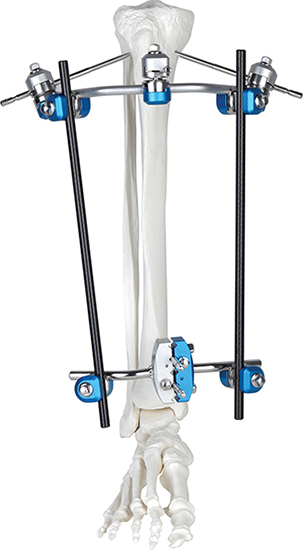
Orthopedic surgeons and trauma specialists increasingly recognize that the external fixator represents a transformative approach to managing complex fractures, bone infections, and limb alignment challenges. Unlike traditional rigid fixation methods, a modular external fixator system provides surgeons with unprecedented flexibility during surgery and throughout the patient's healing journey. This adaptability translates directly into better clinical outcomes, reduced complications, and improved patient satisfaction across diverse trauma scenarios.
The advantages of choosing a modular external fixator system extend far beyond simple convenience. Trauma departments, orthopedic centers, and surgical hospitals benefit from the system's capability to adapt in real time to evolving patient conditions. When initial assessment proves incomplete or complications arise during healing, surgeons using an external fixator can make immediate adjustments without scheduling additional procedures. This responsiveness reduces overall treatment duration, hospital stays, and costs while minimizing patient anxiety and disability time.
Superior Surgical Flexibility and Intraoperative Control
Real-Time Adjustment and Precision Alignment
One of the primary reasons trauma surgeons prefer a modular external fixator lies in its ability to achieve precise, verifiable alignment during surgery. Unlike plate fixation or intramedullary nailing, an external fixator allows surgeons to visualize the fracture reduction continuously, adjust parameters under direct observation, and confirm anatomical alignment with imaging before finalizing the construct. This visibility dramatically reduces the need for intraoperative repositioning and revision, saving operative time and reducing radiation exposure for both patient and surgical team.
The modular design of each external fixator system means surgeons can select pin diameter, clamp type, and frame geometry to match the specific fracture pattern and bone quality. For patients with comminuted fractures or poor bone stock, an external fixator offers the mechanical advantage and adjustability that rigid plates cannot replicate. The ability to fine-tune compression forces, distraction vectors, and rotational control makes an external fixator the gold standard for complex pilon fractures, proximal humerus injuries, and metaphyseal damage where precision is non-negotiable.
Minimally Invasive Access and Soft-Tissue Preservation
An external fixator system requires only small percutaneous incisions for pin placement rather than the large surgical exposures demanded by plate fixation. This minimally invasive approach preserves the soft-tissue envelope, maintains blood supply integrity, and reduces surgical trauma. For patients with severe soft-tissue injury, burns, or compartment syndrome, the gentle access profile of an external fixator becomes lifesaving. Surgeons can stabilize fractures without worsening the already compromised soft-tissue bed, allowing time for wound healing and infection management before any definitive reconstruction.
Extended Treatment Capability and Patient Healing Optimization
Progressive Healing and Limb Lengthening Applications
Beyond acute fracture fixation, an external fixator enables therapeutic applications impossible with rigid internal fixation. Progressive limb lengthening, bone transport for segmental defects, and gradual deformity correction all depend on the adjustability inherent in a modular external fixator design. Surgeons apply controlled distraction forces over weeks or months, stimulating bone regeneration and bridging gaps that would otherwise require complex reconstructive procedures. Patients with traumatic bone loss, nonunions, or limb-length discrepancies benefit profoundly from an external fixator's capacity to guide healing incrementally and reversibly.
The ability to modify an external fixator construct during the healing phase is equally important. If early callus formation suggests accelerated healing, surgeons can modify loading parameters or reduce fixation stiffness to promote secondary bone remodeling. Conversely, if healing lags, the external fixator can be reinforced or reconfigured without reoperation. This dynamic management philosophy, enabled by the modular nature of external fixator systems, optimizes biological healing and reduces the incidence of nonunion and malunion complications.
Infection Management and Bone Transport
An external fixator system is essential for managing infected nonunions and osteomyelitis where internal implants must be avoided. The external fixator maintains skeletal stability while bone is debrided, antibiotics are administered, and necrotic tissue is removed. Once infection is cleared, the same external fixator can be reconfigured for bone transport, filling segmental defects with living bone regenerated from adjacent healthy segments. This biological reconstruction, powered by the versatility of an external fixator, avoids artificial grafts and implants while restoring functional bone stock.
Cost Efficiency and Clinical Workflow Advantages
Reduced Hospital Burden and Operational Efficiency
Healthcare systems investing in modular external fixator technology experience significant operational and financial returns. A single external fixator system components can be reconfigured for dozens of different fracture patterns, eliminating the need to maintain large inventories of specialized plates, nails, and implants. Training trauma surgeons on comprehensive external fixator techniques reduces case-specific learning curves and allows rapid scale-up of trauma capability across surgical teams. Hospital administrators appreciate the reduced implant costs and streamlined inventory management that a modular external fixator system provides.
The external fixator's compatibility with early mobilization reduces complications like deep vein thrombosis, pneumonia, and pressure ulcers that arise from prolonged immobilization. Patients managed with an external fixator can begin weight-bearing and joint motion protocols sooner, accelerating rehabilitation and reducing length of stay. Lower complication rates and faster functional recovery translate into better outcomes, reduced readmission, and improved patient satisfaction scores that drive hospital reputation and referral volumes.
Scalability for Resource-Limited Settings
In regions where implant costs constrain surgical capacity, an external fixator system offers exceptional value. The reusable modular components of an external fixator are sterilizable, durable, and resistant to obsolescence. A single set of external fixator equipment can serve hundreds of patients over many years, making it ideal for training institutions, government hospitals, and international surgical missions. This affordability and durability make an external fixator the preferred fixation method in low-income and middle-income countries, where trauma burden is highest but resources are most constrained.
FAQ
What types of fractures benefit most from an external fixator?
An external fixator is ideal for complex fractures including comminuted pilon fractures, proximal humerus injuries, open fractures with soft-tissue compromise, metaphyseal damage, and fractures associated with severe edema or vascular injury. Trauma surgeons also use an external fixator for nonunions, infected bones, limb lengthening, and deformity correction. The external fixator's adjustability makes it suitable whenever precise control, staged treatment, or biological preservation of soft tissue is prioritized over rigid immobility.
How long does an external fixator typically remain in place?
The duration an external fixator is needed depends on fracture complexity, healing rate, and treatment goals. Most acute fractures require an external fixator for 6 to 12 weeks until callus maturation and bone healing permit transition to lighter bracing or removal. Limb-lengthening procedures using an external fixator may take 3 to 6 months or longer. Surgeons monitor callus progression with serial radiographs and adjust or remove the external fixator once healing milestones are achieved. The modular design allows staged reduction of external fixator stiffness as bone strengthens, gradually loading the healing fracture and promoting remodeling.
Can an external fixator be used for complex deformity correction?
Yes, an external fixator is the gold standard for progressive deformity correction through controlled distraction osteogenesis. Surgeons use specialized external fixator frames like ring fixators to apply precise forces in multiple planes simultaneously. The external fixator gradually redirects bone segments toward anatomical alignment over weeks, allowing soft tissues, nerves, and blood vessels to adapt safely. This biological approach, enabled by the external fixator's adjustability, corrects severe angular deformities, length discrepancies, and rotational malalignment that rigid internal fixation cannot address without major surgical exposure and tissue trauma.