Types of External Fixators in Orthopedics Guide

All Categories

Get a Free Quote

Our representative will contact you soon.
Email
Name
Company Name
Message
0/1000

types of external fixators in orthopedics

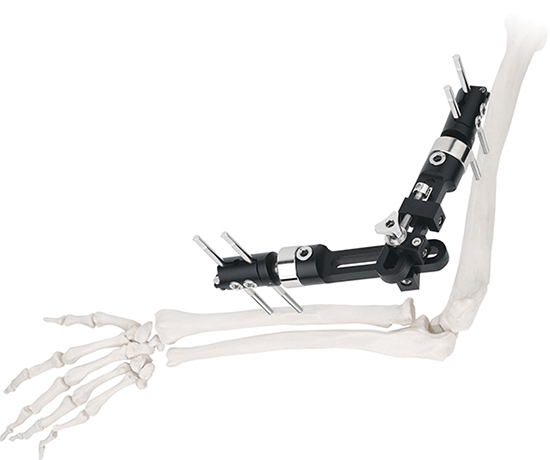
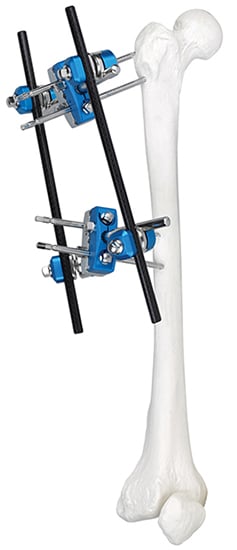
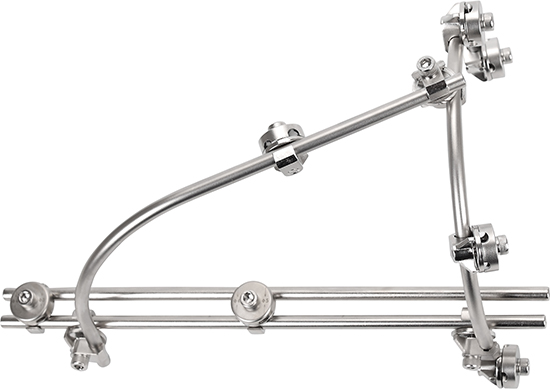
In modern orthopedic surgery, the types of external fixators in orthopedics play a crucial role in stabilizing bone fractures and correcting skeletal deformities. These medical devices consist of pins or wires that penetrate the skin to anchor into bone, connected to an external frame that provides structural support. The main functions include fracture stabilization, limb lengthening, deformity correction, and joint fusion. External fixators maintain bone alignment while allowing access to soft tissues for wound care and monitoring. The technological features of these systems incorporate modular components, adjustable connections, and radiolucent materials that facilitate imaging during treatment. Types of external fixators in orthopedics are categorized into several distinct configurations: unilateral fixators feature pins on one side connected to a single bar, circular fixators utilize rings connected by threaded rods for circumferential stability, hybrid fixators combine both circular and linear elements, and multiplanar fixators offer three-dimensional correction capabilities. Applications span trauma management for open fractures and complex injuries, pediatric orthopedics for growth-related conditions, reconstructive surgery addressing bone loss or infection, and specialized procedures like Ilizarov technique for limb lengthening. The versatility of types of external fixators in orthopedics makes them indispensable tools across emergency departments, surgical theaters, and rehabilitation settings, providing solutions when internal fixation proves unsuitable or impossible.

New Product Recommendations

Understanding the practical benefits of types of external fixators in orthopedics helps medical professionals and patients make informed treatment decisions. These devices offer immediate fracture stabilization without requiring extensive surgical exposure, reducing operative time and minimizing tissue trauma. Patients benefit from preserved blood supply to healing bone since the fixator works externally rather than disrupting internal vascularity. The adjustable nature allows surgeons to modify alignment post-operatively without additional invasive procedures, enabling gradual correction and fine-tuning throughout recovery. For facilities managing trauma cases, types of external fixators in orthopedics provide rapid deployment in emergency situations where patients cannot tolerate lengthy anesthesia or have compromised soft tissues. Operational benefits include the ability to perform staged reconstruction, where initial stabilization occurs immediately and definitive treatment follows once conditions improve. Healthcare teams appreciate unrestricted wound access for dressing changes, infection monitoring, and soft tissue management without removing hardware. Application suitability extends to complex scenarios including severe open fractures with contamination, infected nonunions requiring bone transport, pediatric cases needing growth preservation, and polytrauma patients requiring damage control orthopedics. Decision-useful context reveals that types of external fixators in orthopedics accommodate both temporary and definitive treatment strategies, offering flexibility based on patient progress and clinical requirements. The reversibility factor means removal requires no additional surgery compared to internal plates and screws. Cost considerations favor external fixation in resource-limited settings, while versatility across multiple fracture patterns reduces inventory complexity for surgical departments managing diverse orthopedic emergencies and reconstructive challenges.

Latest News

What Are the Main Types of Orthopedic Implants Used in Trauma Surgery?

02

Jun

What Are the Main Types of Orthopedic Implants Used in Trauma Surgery?

When a patient sustains a serious bone fracture or joint injury, the goal of trauma surgery is to restore stability, alignment, and function as efficiently and safely as possible. Central to achieving that goal are orthopedic implants — precisi...
View More
How Do Orthopedic Implants Enhance Fracture Healing and Recovery?

02

Jun

How Do Orthopedic Implants Enhance Fracture Healing and Recovery?

When a bone fractures, the body initiates a complex biological cascade aimed at restoring structural integrity and function. However, in many cases, this natural process requires mechanical support to succeed. This is precisely where orthopedic impla...
View More
What Are the Differences Between Spinal Screw and Pedicle Screw Systems?

06

Jul

What Are the Differences Between Spinal Screw and Pedicle Screw Systems?

When evaluating spinal implant instrumentation, one of the most common points of confusion is the distinction between a general spinal screw and a pedicle screw system. Both are used in spinal surgery, but they differ significantly in anatomy, biomec...
View More
How to Optimize Pedicle Screw Placement for Better Surgical Outcomes?

06

Jul

How to Optimize Pedicle Screw Placement for Better Surgical Outcomes?

Achieving precise pedicle screw placement is one of the most critical skills in modern spinal surgery. When pedicle screw placement is performed accurately, it creates a stable fixation point that supports spinal fusion, corrects deformity, and reduc...
View More

Get a Free Quote

Our representative will contact you soon.
Email
Name
Company Name
Message
0/1000

types of external fixators in orthopedics

Modular Design Flexibility

Modular Design Flexibility

The modular construction of types of external fixators in orthopedics represents a significant advantage for surgical teams handling diverse clinical presentations. Components interconnect through standardized connections, allowing surgeons to build custom configurations matching specific anatomical requirements and fracture patterns. This adaptability means a single system inventory can address injuries ranging from simple diaphyseal fractures to complex periarticular or deformity cases. Surgeons can add or remove components during treatment as clinical needs evolve, transforming a simple unilateral frame into a more complex construct without complete system replacement. The modular approach reduces surgical planning uncertainty since adjustments occur intraoperatively based on actual bone quality and alignment needs rather than preoperative estimates. For healthcare facilities, this translates to reduced equipment costs through versatile components serving multiple purposes rather than maintaining separate specialized systems. Training benefits emerge as surgical teams master core assembly principles applicable across various configurations rather than learning entirely different systems for each clinical scenario. Patient outcomes improve through customized mechanical environments optimized for their specific healing requirements and anatomical variations.
Minimally Invasive Application

Minimally Invasive Application

Types of external fixators in orthopedics excel through minimally invasive placement techniques that preserve soft tissue integrity and vascular supply critical for bone healing. Unlike internal fixation requiring extensive surgical dissection to expose fracture sites and apply plates, external fixators anchor through small percutaneous incisions for pin insertion. This approach dramatically reduces surgical trauma, operative blood loss, and anesthesia duration, making treatment accessible for medically compromised patients unable to tolerate extensive procedures. The preservation of soft tissue envelope and periosteal blood supply accelerates healing by maintaining the biological environment necessary for bone regeneration. Surgeons can address severe open fractures immediately without closing contaminated wounds over internal hardware, preventing infection risks while achieving skeletal stability. The external positioning eliminates foreign material within potential infection zones, allowing aggressive wound management and debridement without hardware removal concerns. Recovery timelines shorten as patients experience less postoperative pain from surgical exposure and can begin rehabilitation earlier with stable fracture fixation. For polytrauma victims requiring multiple procedures, the rapid application of types of external fixators in orthopedics enables damage control strategies that stabilize critical injuries quickly, deferring definitive treatment until physiological stability returns.
Dynamic Adjustment Capabilities

Dynamic Adjustment Capabilities

The ability to adjust alignment dynamically represents one of the most valuable features distinguishing types of external fixators in orthopedics from internal fixation methods. Post-application modifications occur through simple external adjustments without additional surgery or anesthesia, allowing gradual correction of deformities or fracture alignment as healing progresses. This capability proves essential for limb lengthening procedures where daily micro-adjustments stimulate new bone formation through distraction osteogenesis, achieving length gains impossible through single-stage surgical intervention. Surgeons can correct angular deformities progressively, allowing soft tissues to adapt gradually and reducing neurovascular complications associated with acute correction. The real-time adjustment feature enables response to healing progression, compensating for bone resorption, settling, or unexpected alignment changes during recovery. Patients benefit from non-invasive fine-tuning that optimizes final outcomes without operating room returns and additional healthcare costs. Clinical teams monitor healing through regular radiographs and adjust compression or distraction at the fracture site to optimize mechanical environment for bone formation. This dynamic control transforms types of external fixators in orthopedics from passive stabilization devices into active treatment tools that surgeons manipulate throughout recovery to achieve optimal skeletal restoration and functional outcomes.

Get a Free Quote

Our representative will contact you soon.
Email
Name
Company Name
Message
0/1000
Newsletter
Please Leave A Message With Us