Bone Fracture External Fixator Solutions

All Categories

Get a Free Quote

Our representative will contact you soon.
Email
Name
Company Name
Message
0/1000

bone fracture external fixator

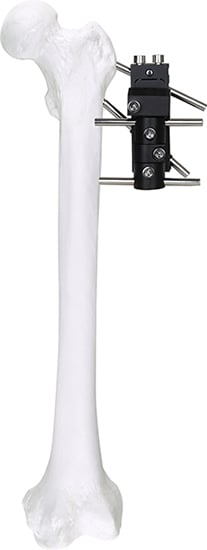
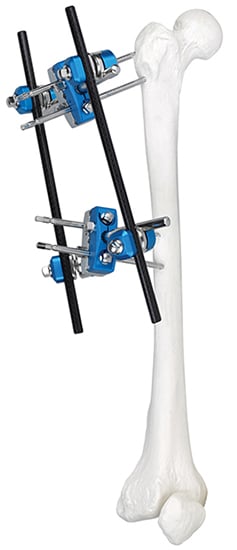
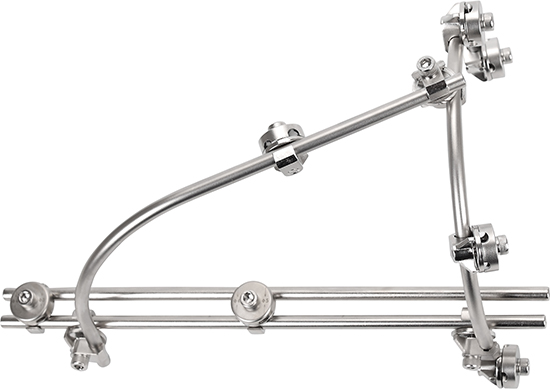
A bone fracture external fixator is a sophisticated orthopedic device designed to stabilize and align broken bones from outside the body during the healing process. This medical apparatus consists of stainless steel or titanium pins that are inserted through the skin directly into the bone on either side of the fracture site, connected to an external frame using adjustable bars and clamps. The bone fracture external fixator serves as a temporary skeletal support system that maintains proper bone alignment while allowing healthcare professionals to monitor and adjust the treatment as needed. The primary functions include immobilizing fractured bones, correcting limb length discrepancies, treating complex fractures with soft tissue damage, and managing open fractures where internal fixation methods may pose infection risks. Technologically, modern bone fracture external fixator systems feature modular designs with radiolucent components that facilitate clear X-ray imaging, precise microadjustment capabilities for gradual correction, and lightweight materials that enhance patient comfort. These devices find extensive applications in trauma surgery, orthopedic reconstruction, limb lengthening procedures, and pediatric fracture management. The bone fracture external fixator proves particularly valuable in treating comminuted fractures, pelvic injuries, and cases requiring damage control orthopedics where immediate definitive internal fixation is not advisable due to patient instability or severe soft tissue compromise.

Popular Products

The bone fracture external fixator delivers significant practical benefits that directly address patient recovery needs and clinical treatment challenges. Patients experience faster initial treatment since the device can be applied quickly in emergency situations without requiring extensive surgical exposure of the fracture site. This minimally invasive approach reduces tissue trauma and preserves blood supply to the injured area, promoting better healing outcomes. Healthcare providers appreciate the adjustment flexibility that allows them to modify bone alignment throughout the treatment period without additional surgeries, enabling fine-tuning based on healing progress and X-ray findings. The open-access design of the bone fracture external fixator permits thorough wound care and soft tissue management, which proves essential when treating open fractures or burns accompanying the bone injury. Patients maintain better mobility compared to traditional casting methods, as the device stabilizes only the injured segment while leaving adjacent joints free for movement and physical therapy. This operational benefit prevents joint stiffness and muscle atrophy that commonly occur with prolonged immobilization. The bone fracture external fixator suits diverse applications including complex multi-fragment fractures, infected nonunions, and bone transport procedures for gap defects. Decision-makers value the cost-effectiveness of this treatment option, as it reduces hospitalization time and allows outpatient management in many cases. The device serves patients across all age groups, from pediatric fractures requiring growth-friendly fixation to elderly patients with compromised bone quality. Removal requires only a simple outpatient procedure, eliminating the need for implant retrieval surgery that internal fixation devices demand, thereby reducing overall treatment costs and patient burden.

Tips And Tricks

Why Is Innovation Important for Competitive Orthopedic Implants Suppliers?

02

Jun

Why Is Innovation Important for Competitive Orthopedic Implants Suppliers?

The medical device industry is undergoing rapid transformation, and nowhere is this change more consequential than in the field of orthopedic surgery. For orthopedic implants suppliers, staying competitive is no longer simply a matter of offering rel...
View More
How Do Orthopedic Implants Enhance Fracture Healing and Recovery?

02

Jun

How Do Orthopedic Implants Enhance Fracture Healing and Recovery?

When a bone fractures, the body initiates a complex biological cascade aimed at restoring structural integrity and function. However, in many cases, this natural process requires mechanical support to succeed. This is precisely where orthopedic impla...
View More
How Does Spinal Screw Improve Outcomes in Scoliosis Correction Surgery?

06

Jul

How Does Spinal Screw Improve Outcomes in Scoliosis Correction Surgery?

Scoliosis correction surgery is one of the most technically demanding procedures in spinal care, requiring precise instrumentation to restore alignment and maintain long-term stability. At the center of modern surgical technique, the spinal screw has...
View More
How Can Distributors Assess Pedicle Screw Supplier Reliability?

06

Jul

How Can Distributors Assess Pedicle Screw Supplier Reliability?

Choosing the right pedicle screw supplier is one of the most consequential decisions a medical device distributor can make. A pedicle screw supplier directly affects patient safety, regulatory standing, and the commercial reputation of every distribu...
View More

Get a Free Quote

Our representative will contact you soon.
Email
Name
Company Name
Message
0/1000

bone fracture external fixator

Versatile Fracture Management Capability

Versatile Fracture Management Capability

The bone fracture external fixator stands out for its exceptional versatility in managing a wide spectrum of orthopedic conditions that would be challenging or impossible to treat with conventional methods. This adaptability makes it an invaluable tool for trauma surgeons facing complex clinical scenarios. The device excels in treating severely comminuted fractures where bone fragments are too small or numerous for internal plate fixation, providing stable support while maintaining fragment blood supply. In cases of significant soft tissue injury, burns, or vascular compromise accompanying fractures, the bone fracture external fixator allows complete access to wounds for debridement, dressing changes, and reconstructive procedures without disturbing bone stability. The system proves particularly beneficial for damage control orthopedics in polytrauma patients, where rapid skeletal stabilization is necessary but the patient's critical condition precludes lengthy definitive surgery. Surgeons can apply the device quickly to stabilize life-threatening pelvic fractures or long bone injuries, then convert to internal fixation once the patient stabilizes. Additionally, the bone fracture external fixator facilitates complex reconstructive procedures including limb lengthening through distraction osteogenesis and bone transport for segmental defects, applications that require gradual, controlled bone movement over extended periods.
Reduced Infection Risk and Superior Wound Access

Reduced Infection Risk and Superior Wound Access

One of the most compelling advantages of the bone fracture external fixator is its significantly lower infection risk profile compared to internal fixation devices, particularly critical in contaminated or open fracture scenarios. When bone breaks through the skin, bacterial contamination is inevitable, and placing metal implants deep within tissues creates an ideal environment for biofilm formation and chronic infection. The bone fracture external fixator circumvents this risk by keeping the primary stabilizing framework outside the body, with only smooth pins penetrating the skin through small incisions in healthy tissue away from the injury zone. This configuration allows the compromised fracture site to heal without foreign material within the zone of injury. Healthcare teams can perform aggressive wound irrigation, debridement of devitalized tissue, and apply negative pressure wound therapy without removing or working around bulky internal hardware. Pin sites remain visible and accessible for daily cleaning and monitoring, enabling early detection of any signs of pin tract infection before they progress to deeper structures. For patients with high infection susceptibility, including diabetics, immunocompromised individuals, or those with vascular insufficiency, the bone fracture external fixator offers a safer stabilization option that doesn't compromise already vulnerable soft tissues with extensive surgical dissection required for plate and screw insertion.
Dynamic Adjustment and Bone Healing Optimization

Dynamic Adjustment and Bone Healing Optimization

The bone fracture external fixator provides unmatched capacity for dynamic adjustment throughout the healing process, a feature that transforms fracture management from a static intervention into an actively guided treatment journey. Unlike internal implants that remain fixed once surgically placed, requiring additional operations for any modification, this external system allows surgeons to make precise adjustments during regular clinic visits based on radiographic healing assessment. Clinicians can compress fracture fragments together to enhance bone contact and stimulate consolidation, or gradually distract bone segments to correct shortening or achieve lengthening in reconstruction cases. The bone fracture external fixator enables controlled angular and rotational corrections to optimize alignment as healing progresses, accommodating the natural settling and remodeling that occurs in fracture repair. This adjustability proves particularly valuable in pediatric applications where growth considerations require periodic modifications, and in complex deformity corrections where gradual multi-plane adjustments achieve results impossible with single-stage surgery. The mechanical environment at the fracture site can be modulated by changing frame stiffness, allowing initial rigid fixation for stability followed by controlled dynamization that applies beneficial mechanical stimulation to promote bone formation. This intelligent load-sharing progression optimizes the biological healing response while preventing stress-shielding that can delay union with overly rigid fixation systems.

Get a Free Quote

Our representative will contact you soon.
Email
Name
Company Name
Message
0/1000
Newsletter
Please Leave A Message With Us