External Fixator Solutions for Orthopedic Care

All Categories

Get a Free Quote

Our representative will contact you soon.
Email
Name
Company Name
Message
0/1000

external fixator

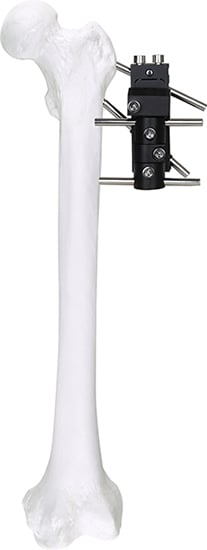
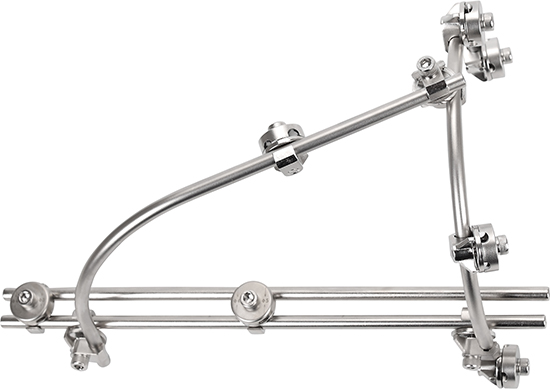
An external fixator is a sophisticated orthopedic device designed to stabilize and support fractured or damaged bones from outside the body. This medical apparatus consists of metal pins or wires that penetrate the skin and bone, connected to an external framework of bars and clamps that hold everything securely in place. The external fixator serves as a temporary or sometimes permanent solution for complex fractures, bone deformities, and limb lengthening procedures. Unlike internal fixation methods that require surgical implants inside the body, this device operates entirely from the exterior, making adjustments and modifications significantly more accessible throughout the healing process. The primary functions include maintaining proper bone alignment, providing stable support during the healing phase, and allowing controlled movement when necessary for optimal recovery. Technological features of the external fixator encompass adjustable components that enable precise positioning, modular designs that accommodate various bone sizes and fracture types, and materials engineered for biocompatibility and durability. Applications span across trauma surgery for severe open fractures, reconstructive procedures for bone defects, correction of skeletal deformities, treatment of non-union fractures that refuse to heal naturally, and gradual limb lengthening in both pediatric and adult patients. The external fixator proves particularly valuable in emergency situations where immediate stabilization is critical, contaminated wounds require ongoing access for treatment, or when patient health conditions make extensive internal surgery too risky to perform safely.

New Product Recommendations

The external fixator delivers remarkable benefits that directly address the challenges faced by patients and healthcare providers in orthopedic treatment. First, this device allows doctors to make precise adjustments after initial placement without requiring additional surgeries, saving patients from repeated anesthesia exposure and reducing overall treatment costs significantly. You gain immediate access to the fracture site for wound care, infection management, and tissue monitoring, which proves essential when dealing with open fractures or contaminated injuries that demand frequent cleaning and assessment. The external fixator provides exceptional stability while simultaneously permitting early joint movement in adjacent areas, helping you maintain muscle strength and prevent joint stiffness that often complicates recovery. Patients benefit from shorter initial surgery times compared to internal fixation procedures, as the external fixator can be applied quickly in emergency situations without extensive soft tissue dissection. This speed becomes crucial when treating polytrauma patients who cannot tolerate lengthy operations. The device works effectively across diverse scenarios, from temporary stabilization during patient transfer to definitive treatment for complex fractures that other methods cannot adequately address. You experience enhanced bone healing through controlled micro-motion that stimulates natural bone formation, a principle supported by extensive clinical research. The external fixator accommodates patients with compromised immune systems, poor bone quality, or severe soft tissue damage where internal hardware would face high infection risks or fixation failure. Healthcare facilities appreciate the versatility of these systems, as one set of components can treat multiple fracture patterns and anatomical locations, making inventory management more efficient and cost-effective for your institution while ensuring appropriate treatment options remain readily available for every patient scenario.

Tips And Tricks

Why Is Pedicle Screw Accuracy Critical in Minimally Invasive Spine Surgery?

02

Jun

Why Is Pedicle Screw Accuracy Critical in Minimally Invasive Spine Surgery?

In the evolving landscape of spinal surgery, precision is not merely a technical preference — it is a clinical imperative. The pedicle screw has become the cornerstone of modern spinal fixation systems, offering surgeons a reliable anchor point...
View More
How Do Spinal Screw Systems Perform in Osteoporotic Patients?

06

Jul

How Do Spinal Screw Systems Perform in Osteoporotic Patients?

When a surgeon places a spinal screw into osteoporotic bone, the mechanical environment is fundamentally different from that of healthy vertebral bone. Osteoporosis reduces bone mineral density and disrupts trabecular architecture, leaving the cancel...
View More
How Does Spinal Screw Design Enhance Mechanical Strength and Fixation?

06

Jul

How Does Spinal Screw Design Enhance Mechanical Strength and Fixation?

In modern spinal surgery, the pedicle screw is one of the most critical implants used to stabilize the vertebral column. Whether the procedure involves deformity correction, fracture management, or spinal fusion, the pedicle screw serves as the prima...
View More
How to Optimize Pedicle Screw Placement for Better Surgical Outcomes?

06

Jul

How to Optimize Pedicle Screw Placement for Better Surgical Outcomes?

Achieving precise pedicle screw placement is one of the most critical skills in modern spinal surgery. When pedicle screw placement is performed accurately, it creates a stable fixation point that supports spinal fusion, corrects deformity, and reduc...
View More

Get a Free Quote

Our representative will contact you soon.
Email
Name
Company Name
Message
0/1000

external fixator

Adjustable Precision for Optimal Healing Outcomes

Adjustable Precision for Optimal Healing Outcomes

The external fixator stands out through its unparalleled adjustability that transforms post-operative care and healing optimization. Unlike fixed internal implants that lock bone position permanently at surgery, this system empowers surgeons to make incremental corrections throughout the recovery period based on healing progress and radiographic findings. You can fine-tune alignment, adjust compression or distraction forces, and modify angular positioning without returning to the operating room, giving treatment plans flexibility that adapts to each patient's unique healing response. This adjustability proves especially valuable in limb lengthening procedures where gradual bone distraction occurs over weeks or months, requiring frequent small adjustments to maintain proper pace and direction. The ability to modify the construct also benefits fracture treatment when initial positioning requires refinement as swelling resolves and soft tissues stabilize. Medical professionals can respond immediately to complications like early malunion or loss of reduction by adjusting the external fixator configuration, preventing problems that would otherwise necessitate revision surgery. Patients appreciate fewer hospital visits and reduced medical expenses since adjustments happen in clinic settings rather than surgical suites, while maintaining treatment effectiveness that matches or exceeds traditional methods for appropriate indications.
Infection Control Through External Access

Infection Control Through External Access

The external fixator provides a critical advantage in infection prevention and management that distinguishes it from internal fixation alternatives. When treating open fractures, contaminated wounds, or injuries with significant soft tissue damage, maintaining access to the affected area becomes paramount for successful outcomes. This device stabilizes bones while keeping the wound completely accessible for regular inspection, cleaning, debridement, and dressing changes that internal hardware would obstruct. You benefit from direct visualization of healing tissues, early detection of infection signs, and immediate intervention capability that can prevent minor concerns from escalating into serious complications. The external fixator avoids placing foreign material directly in contaminated or compromised tissue zones where internal implants would create persistent infection risks that antibiotics struggle to resolve. Clinical evidence demonstrates lower deep infection rates in appropriate cases compared to immediate internal fixation of severely contaminated fractures. Healthcare teams can perform staged treatment protocols, using the external fixator for initial stabilization while addressing soft tissue problems, then converting to internal fixation only after confirming wound health and infection resolution. This staged approach improves safety and reduces the catastrophic complications associated with infected internal hardware that often requires implant removal and prolonged antibiotic therapy, protecting your long-term bone health and functional recovery.
Rapid Application for Emergency Trauma Care

Rapid Application for Emergency Trauma Care

The external fixator excels in emergency trauma situations where speed, simplicity, and effectiveness converge to save limbs and lives. When patients arrive with multiple injuries, unstable vital signs, or severe fractures requiring immediate stabilization, this device can be applied rapidly with minimal surgical exposure and shorter anesthesia times compared to comprehensive internal fixation procedures. You gain critical bone stability that prevents further soft tissue damage, controls bleeding, reduces pain, and facilitates patient transport or transfer to specialized facilities when local resources prove insufficient for definitive care. The rapid application capability becomes especially important in mass casualty events, remote locations, or resource-limited settings where complex surgical infrastructure may be unavailable. Emergency physicians and orthopedic surgeons appreciate the external fixator's forgiving learning curve and standardized application techniques that maintain effectiveness even under suboptimal conditions. The device serves excellently as temporary stabilization that buys time for patient optimization, allowing medical teams to address life-threatening injuries first before returning to perform definitive fracture treatment when the patient can safely tolerate longer procedures. This damage control orthopedics approach, enabled by the external fixator, has revolutionized polytrauma care and improved survival rates while preserving limb function that aggressive early surgery might compromise through excessive physiologic stress on critically injured patients.

Get a Free Quote

Our representative will contact you soon.
Email
Name
Company Name
Message
0/1000
Newsletter
Please Leave A Message With Us