Stainless Steel Cannulated Screw Solutions

All Categories

Get a Free Quote

Our representative will contact you soon.
Email
Name
Company Name
Message
0/1000

stainless steel cannulated screw

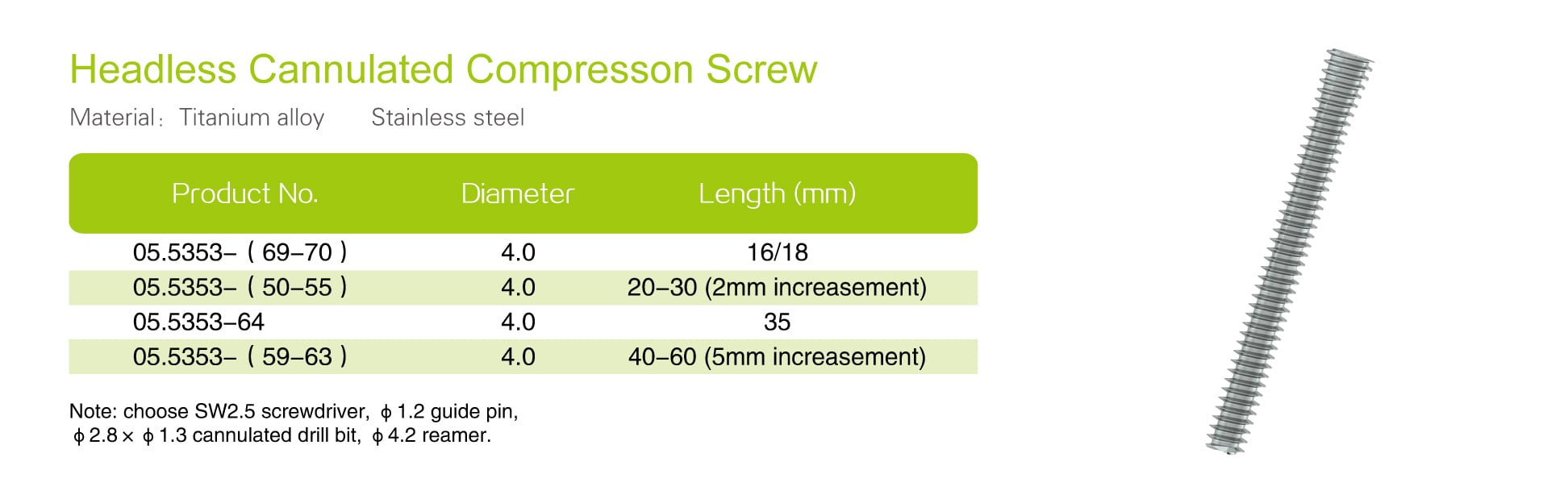
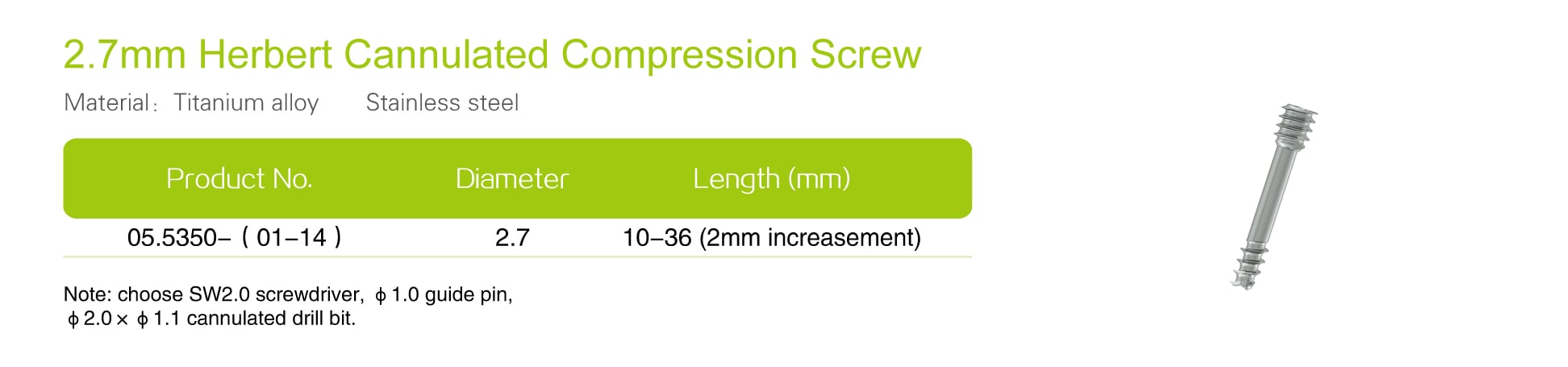
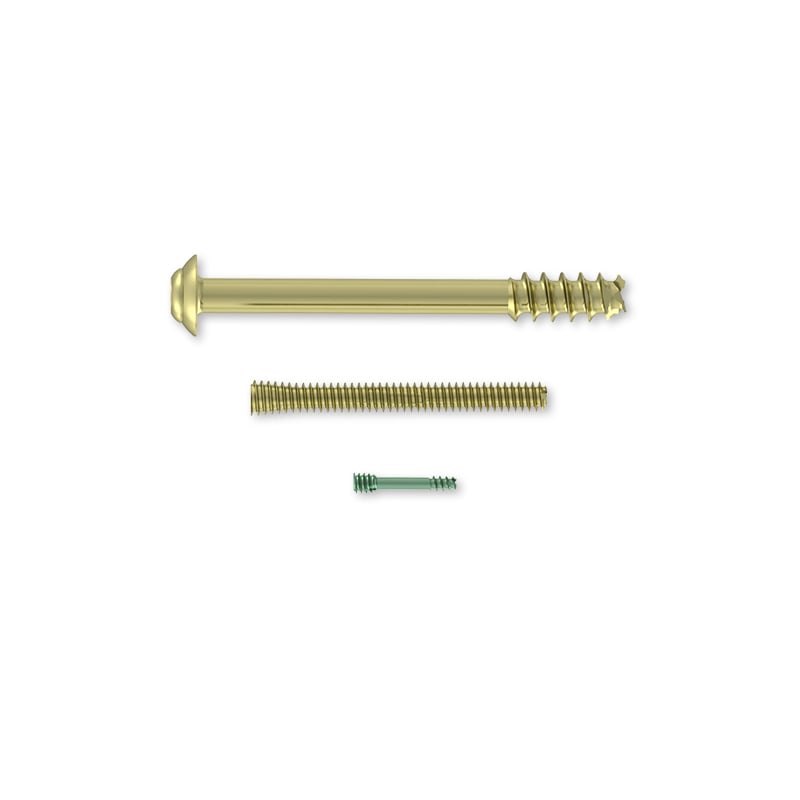
The stainless steel cannulated screw represents a critical advancement in orthopedic and trauma surgery, designed to provide robust internal fixation for bone fractures and reconstructive procedures. This specialized medical device features a hollow core running through its entire length, allowing surgeons to insert it over a guide wire for precise placement during surgical interventions. Manufactured from high-grade medical stainless steel, typically 316L surgical steel, the stainless steel cannulated screw offers exceptional biocompatibility and corrosion resistance within the human body. The main function of this implant is to stabilize bone fragments, promote proper healing alignment, and provide compression at fracture sites. Its technological features include a cannulated design that facilitates minimally invasive surgical techniques, self-tapping threads that reduce insertion torque, and various head configurations such as countersunk or button heads to accommodate different anatomical requirements. The stainless steel cannulated screw finds extensive applications across multiple medical specialties, including treatment of hip fractures, scaphoid fractures, ankle fractures, foot and hand surgery, and arthrodesis procedures. Surgeons favor these implants for their versatility in treating both simple and complex fracture patterns. The hollow core design allows real-time visualization through fluoroscopy, ensuring accurate positioning before final fixation. Available in various diameters ranging from 3.0mm to 7.3mm and lengths from 10mm to 100mm, the stainless steel cannulated screw can be customized to match specific patient anatomical needs and surgical requirements, making it an indispensable tool in contemporary orthopedic practice.

Popular Products

When choosing surgical implants for bone fixation, the stainless steel cannulated screw delivers multiple practical benefits that directly impact surgical outcomes and patient recovery. The primary advantage lies in its guided insertion capability, which significantly reduces surgical time and improves placement accuracy. By using a guide wire, surgeons can establish the optimal trajectory before implant insertion, minimizing tissue trauma and reducing the risk of misplacement. This precision translates to fewer complications and faster patient recovery times. The material composition provides excellent strength-to-weight ratio, ensuring the implant can withstand physiological loads during the healing process without causing stress shielding or implant failure. For medical facilities and purchasing decision-makers, the stainless steel cannulated screw offers cost-effectiveness compared to titanium alternatives while maintaining reliable performance for most orthopedic applications. The broad compatibility with standard surgical instruments reduces the need for specialized equipment investments. From an operational perspective, these screws support minimally invasive surgical approaches, resulting in smaller incisions, reduced blood loss, and shorter hospital stays for patients. This operational efficiency benefits both healthcare providers through improved patient throughput and patients through quicker return to normal activities. The versatility of the stainless steel cannulated screw makes it suitable for multiple anatomical locations and fracture types, allowing hospitals to maintain a streamlined inventory rather than stocking numerous specialized implants. The proven track record spanning decades provides confidence in long-term clinical outcomes, with extensive research supporting its safety and efficacy. For trauma cases requiring immediate fixation, the stainless steel cannulated screw can be quickly deployed, and its radiopaque properties enable clear postoperative imaging assessment to verify proper healing progression.

Tips And Tricks

How Do Orthopedic Implants Contribute to Minimally Invasive Surgery?

02

Jun

How Do Orthopedic Implants Contribute to Minimally Invasive Surgery?

The evolution of surgical medicine has brought forward one of the most significant shifts in patient care: the widespread adoption of minimally invasive surgery. At the heart of this transformation lies the role of orthopedic implants, which have bee...
View More
How Do Orthopedic Implants Enhance Fracture Healing and Recovery?

02

Jun

How Do Orthopedic Implants Enhance Fracture Healing and Recovery?

When a bone fractures, the body initiates a complex biological cascade aimed at restoring structural integrity and function. However, in many cases, this natural process requires mechanical support to succeed. This is precisely where orthopedic impla...
View More
How Does Pedicle Screw Design Enhance Pullout Strength and Stability?

02

Jun

How Does Pedicle Screw Design Enhance Pullout Strength and Stability?

In modern spinal surgery, fixation reliability is not a secondary consideration — it is the foundation upon which patient outcomes are built. The pedicle screw has become the cornerstone of posterior spinal instrumentation, offering surgeons a ...
View More
What Are the Differences Between Spinal Screw and Pedicle Screw Systems?

06

Jul

What Are the Differences Between Spinal Screw and Pedicle Screw Systems?

When evaluating spinal implant instrumentation, one of the most common points of confusion is the distinction between a general spinal screw and a pedicle screw system. Both are used in spinal surgery, but they differ significantly in anatomy, biomec...
View More

Get a Free Quote

Our representative will contact you soon.
Email
Name
Company Name
Message
0/1000

stainless steel cannulated screw

Precision-Guided Insertion Technology

Precision-Guided Insertion Technology

The defining characteristic of the stainless steel cannulated screw is its hollow core architecture, which revolutionizes surgical precision and safety. This central channel, typically ranging from 1.0mm to 2.5mm in diameter depending on screw size, accommodates a guide wire that acts as a navigation system for accurate implant placement. Surgeons first insert a thin guide wire through the fractured bone segments under fluoroscopic guidance, confirming the ideal trajectory before committing to screw insertion. This preliminary step virtually eliminates the risk of improper positioning that could compromise fixation stability or damage surrounding neurovascular structures. The stainless steel cannulated screw then advances over this wire, following the predetermined path with exceptional accuracy. This technique is particularly valuable in complex anatomical regions where traditional solid screws would pose higher risks. The guided approach reduces surgical time by up to 30 percent compared to freehand techniques, decreasing anesthesia exposure and overall procedural costs. Additionally, the cannulated design enables minimally invasive percutaneous insertion techniques, requiring only small skin incisions and reducing soft tissue disruption. Patients benefit from less postoperative pain, minimal scarring, and accelerated rehabilitation timelines, making the stainless steel cannulated screw the preferred choice for modern fracture management protocols.
Superior Material Strength and Biocompatibility

Superior Material Strength and Biocompatibility

Constructed from premium-grade 316L medical stainless steel, this implant meets stringent international standards including ISO 5832-1 and ASTM F138 specifications for surgical implants. The material selection provides exceptional mechanical properties essential for bone fixation applications. The stainless steel cannulated screw exhibits tensile strength exceeding 860 MPa and yield strength above 690 MPa, ensuring it can withstand the cyclic loading forces experienced during weight-bearing activities without bending or breaking. The corrosion-resistant chromium-nickel composition prevents degradation in the physiological environment, maintaining structural integrity throughout the healing period and beyond. Unlike some biomaterials that may provoke immune responses, medical-grade stainless steel demonstrates excellent biocompatibility with minimal risk of adverse tissue reactions or implant rejection. The non-magnetic properties of 316L stainless steel make these screws compatible with MRI scanning protocols, allowing postoperative diagnostic imaging without artifact interference or patient safety concerns. The polished surface finish reduces friction during insertion and minimizes bacterial adhesion, contributing to lower infection rates. For healthcare providers managing diverse patient populations, the stainless steel cannulated screw offers reliable performance across various bone densities and patient age groups, from young trauma patients to elderly individuals with osteoporotic bone, making it a versatile solution for comprehensive orthopedic care.
Comprehensive Design Versatility for Multiple Applications

Comprehensive Design Versatility for Multiple Applications

The stainless steel cannulated screw family encompasses an extensive range of specifications engineered to address virtually every orthopedic fixation requirement. Thread design variations include fully threaded configurations for maximum purchase across fracture lines and partially threaded options that provide interfragmentary compression by engaging only the far cortex. Head styles such as countersunk designs sit flush with bone surfaces to prevent soft tissue irritation, while button heads distribute load over larger surface areas for cancellous bone applications. The self-tapping feature integrated into most designs eliminates the need for pre-tapping in many cases, simplifying the surgical procedure and reducing operative time. Diameter options ranging from small 3.0mm screws for delicate hand and foot procedures to robust 7.3mm screws for large joint stabilization ensure appropriate sizing for each anatomical site. Length increments typically available in 5mm steps allow precise matching to bone thickness and fracture configuration. This comprehensive selection enables surgeons to customize fixation strategies based on specific patient anatomy, fracture complexity, and biomechanical requirements. The stainless steel cannulated screw proves equally effective in acute trauma management, elective reconstructive surgery, arthrodesis procedures requiring joint fusion, and osteotomy fixation, demonstrating remarkable adaptability across orthopedic subspecialties and making it an essential component of any surgical implant inventory.

Get a Free Quote

Our representative will contact you soon.
Email
Name
Company Name
Message
0/1000
Newsletter
Please Leave A Message With Us