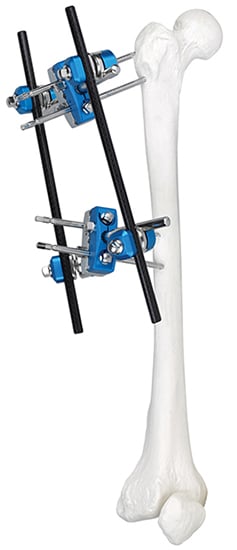
Surgical External Fixator - Advanced Stabilization

All Categories

Get a Free Quote

Our representative will contact you soon.
Email
Name
Company Name
Message
0/1000

surgical external fixator

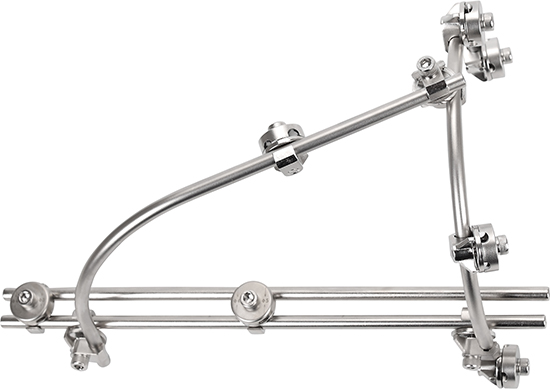
A surgical external fixator is a specialized orthopedic device designed to stabilize and support fractured or damaged bones from outside the body. This advanced medical apparatus consists of pins or wires that penetrate the skin and bone, connected to an external frame made of carbon fiber or stainless steel bars. The surgical external fixator provides rigid stabilization while allowing healthcare professionals to adjust alignment and compression without additional invasive procedures. This innovative system serves multiple critical functions in trauma care and orthopedic surgery, including fracture stabilization, limb lengthening, bone deformity correction, and soft tissue management. The technology features modular components that enable customization based on patient anatomy and specific clinical requirements. Modern surgical external fixator designs incorporate radiolucent materials that facilitate clear radiographic imaging during treatment monitoring. The device proves particularly valuable in complex cases involving open fractures, severe bone loss, infected nonunions, and polytrauma patients requiring damage control orthopedics. Clinical applications extend across emergency trauma management, reconstructive surgery, pediatric orthopedics, and limb salvage procedures. The surgical external fixator allows for early patient mobilization while maintaining fracture stability, significantly improving recovery outcomes. Healthcare facilities worldwide rely on this essential tool to manage challenging skeletal injuries that cannot be adequately treated through internal fixation methods alone. The versatility and adjustability of the surgical external fixator make it indispensable in contemporary orthopedic practice, offering solutions for both temporary stabilization and definitive fracture management across diverse patient populations and injury patterns.

New Product Recommendations

The surgical external fixator delivers exceptional value through its non-invasive approach to fracture stabilization, eliminating the need to introduce large metal implants inside the body. Patients benefit from reduced surgical trauma since the procedure requires only small skin incisions for pin placement rather than extensive soft tissue dissection. This minimally invasive technique translates to shorter operating times, decreased blood loss, and lower infection risks compared to traditional internal fixation methods. The adjustability feature provides surgeons with unparalleled control throughout the healing process, enabling fine-tuning of bone alignment, compression, and distraction without returning to the operating room. This dynamic capability proves especially valuable when treating pediatric patients whose growing bones require periodic adjustments. Medical facilities appreciate the cost-effectiveness of the surgical external fixator system, as the reusable frame components reduce per-case expenses while maintaining exceptional clinical outcomes. The device facilitates wound access and soft tissue management, allowing nurses to dress open wounds and monitor healing without removing stabilization hardware. Patients experience faster rehabilitation since the surgical external fixator permits early weight-bearing and joint mobilization, preventing muscle atrophy and joint stiffness. The system accommodates complex three-dimensional deformity corrections through gradual adjustment protocols, achieving results impossible with static fixation methods. Emergency departments value the rapid application capability during damage control scenarios when patients cannot tolerate lengthy surgical procedures. The surgical external fixator serves dual purposes as both temporary stabilization before definitive surgery and permanent treatment for specific conditions, offering flexibility in treatment planning. Healthcare providers find the learning curve manageable with proper training, and the transparent frame design allows continuous visual monitoring of the surgical site throughout recovery.

Practical Tips

How Do Pedicle Screw Systems Support Scoliosis Correction Surgery?

02

Jun

How Do Pedicle Screw Systems Support Scoliosis Correction Surgery?

Scoliosis correction surgery is one of the most technically demanding procedures in modern spinal orthopedics. The ability to realign a severely curved spine, restore sagittal balance, and maintain long-term structural integrity depends heavily on th...
View More
What Are the Indications for Using Pedicle Screw in Degenerative Spine Disease?

02

Jun

What Are the Indications for Using Pedicle Screw in Degenerative Spine Disease?

Degenerative spine disease encompasses a broad spectrum of conditions that progressively compromise spinal stability, alignment, and neurological function. As these conditions advance, conservative management often fails to provide adequate relief, a...
View More
How to Choose the Right Pedicle Screw Size for Lumbar Fusion Procedures?

02

Jun

How to Choose the Right Pedicle Screw Size for Lumbar Fusion Procedures?

Selecting the correct pedicle screw size for lumbar fusion procedures is one of the most consequential decisions a spine surgeon makes during operative planning. The diameter, length, and thread design of each pedicle screw directly influence fixatio...
View More
How Does Spinal Screw Design Enhance Mechanical Strength and Fixation?

06

Jul

How Does Spinal Screw Design Enhance Mechanical Strength and Fixation?

In modern spinal surgery, the pedicle screw is one of the most critical implants used to stabilize the vertebral column. Whether the procedure involves deformity correction, fracture management, or spinal fusion, the pedicle screw serves as the prima...
View More

Get a Free Quote

Our representative will contact you soon.
Email
Name
Company Name
Message
0/1000

surgical external fixator

Versatile Fracture Stabilization Technology

Versatile Fracture Stabilization Technology

The surgical external fixator represents cutting-edge technology in fracture management, offering unmatched versatility across numerous clinical scenarios. This sophisticated system excels in managing open fractures where internal hardware placement risks infection, providing stable fixation while preserving access to wounds for irrigation and debridement. The modular design accommodates virtually any bone configuration, from simple diaphyseal fractures to complex periarticular injuries involving joints. Surgeons can configure the surgical external fixator in multiple frame geometries including unilateral, bilateral, circular, and hybrid constructs, tailoring the mechanical environment to specific fracture patterns and patient needs. The device maintains fracture reduction through rigid stabilization while simultaneously allowing controlled micromotion that promotes callus formation and bone healing. This biomechanical advantage accelerates union rates compared to excessively rigid fixation that may inhibit natural healing processes. The surgical external fixator proves indispensable in polytrauma situations where rapid stabilization prevents further soft tissue injury and enables patient transport. Its capacity to bridge bone defects and maintain length during staged reconstruction makes it essential for limb salvage procedures, preventing amputation in severe injuries that would otherwise result in limb loss.
Adjustable Correction Capabilities

Adjustable Correction Capabilities

One of the most compelling features distinguishing the surgical external fixator from alternative treatment options is its dynamic adjustability throughout the entire treatment period. Unlike internal plates and screws that remain static after surgical placement, the surgical external fixator allows precise three-dimensional corrections through external adjustments accessible to trained medical staff. This capability enables gradual correction of angular deformities, rotational malalignment, and limb length discrepancies through controlled distraction osteogenesis protocols. Patients undergoing limb lengthening procedures benefit enormously from this technology, achieving several centimeters of bone growth through programmed daily adjustments performed at home. The surgical external fixator eliminates the need for revision surgeries to correct alignment issues that become apparent during healing, as real-time radiographic assessment guides incremental adjustments. Pediatric orthopedic surgeons particularly value this adaptability when treating growth-related deformities that require ongoing modification as children develop. The device permits compression at fracture sites to stimulate healing or distraction to correct shortening, with mechanical adjustments made through simple strut exchanges or threaded rod turns. This flexibility reduces anesthesia exposure, minimizes surgical risks, and decreases overall healthcare costs while optimizing clinical outcomes through personalized treatment modifications.
Enhanced Patient Mobility and Recovery

Enhanced Patient Mobility and Recovery

The surgical external fixator fundamentally transforms the patient recovery experience by enabling early mobilization and functional activity during the healing phase. Unlike traction or rigid casts that confine patients to bed rest, this system provides sufficient stability for protected weight-bearing shortly after application, preventing complications associated with prolonged immobilization. Patients maintain independence in daily activities including personal care, ambulation with assistive devices, and participation in physical therapy programs that preserve muscle strength and joint range of motion. The open frame design of the surgical external fixator allows unrestricted access for wound care, reducing infection rates through regular cleansing and monitoring of pin sites and soft tissue injuries. Physical therapists can implement aggressive rehabilitation protocols while fractures remain protected, accelerating return to work and recreational activities. The psychological benefits prove equally significant, as patients avoid the social isolation and depression often accompanying extended hospitalization or immobility. The surgical external fixator accommodates showering with appropriate waterproof coverings, maintaining hygiene standards that boost patient satisfaction and compliance. Family caregivers receive straightforward training for pin site care and device monitoring, facilitating earlier hospital discharge and home-based recovery that reduces healthcare system burden while improving patient comfort in familiar surroundings.

Get a Free Quote

Our representative will contact you soon.
Email
Name
Company Name
Message
0/1000
Newsletter
Please Leave A Message With Us