Medical External Fixator Solutions

All Categories

Get a Free Quote

Our representative will contact you soon.
Email
Name
Company Name
Message
0/1000

medical external fixator

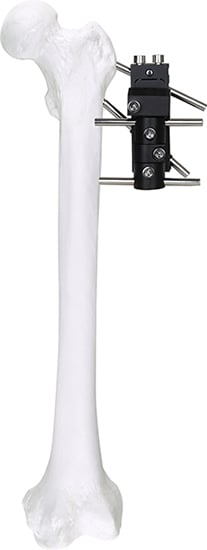
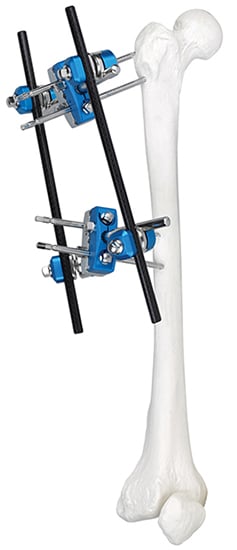
A medical external fixator is an advanced orthopedic device designed to stabilize and align fractured or damaged bones from outside the body. This sophisticated system consists of metal pins or wires that penetrate the skin and bone, connected to an external frame made of stainless steel or carbon fiber rods. The medical external fixator serves as a temporary or definitive treatment solution for complex fractures, bone deformities, and limb lengthening procedures. Its primary functions include maintaining proper bone alignment during the healing process, providing rigid stabilization while allowing controlled movement, and enabling healthcare professionals to make precise adjustments without additional surgical interventions. The technological features of this device incorporate modular components that can be customized to fit various anatomical locations and injury patterns. Modern medical external fixator systems utilize biomechanically optimized designs that distribute forces evenly across the bone structure, minimizing stress concentration points. The device's versatility makes it invaluable in trauma surgery, reconstructive procedures, and pediatric orthopedics. Applications extend to treating open fractures where internal fixation is contraindicated due to infection risk, managing severe soft tissue damage, correcting skeletal deformities through gradual distraction osteogenesis, and stabilizing pelvic ring injuries. The medical external fixator represents a critical tool in orthopedic surgery, offering surgeons flexibility in managing challenging cases while promoting optimal bone healing and functional recovery for patients across diverse clinical scenarios.

New Product Recommendations

The medical external fixator delivers exceptional value through its minimally invasive approach that reduces surgical trauma and infection risks compared to traditional internal fixation methods. Patients benefit from shorter initial surgical times because the device can be applied quickly in emergency situations without extensive soft tissue dissection. This rapid application capability proves especially valuable in polytrauma cases where multiple injuries require immediate attention. The device allows wounds to remain accessible for monitoring and treatment, enabling healthcare teams to address soft tissue complications without removing the stabilization system. Operational benefits include the ability to make post-operative adjustments to bone alignment without returning to the operating room, saving time and reducing patient exposure to anesthesia risks. Surgeons can modify compression, distraction, and angular correction dynamically throughout the healing process, optimizing outcomes based on radiographic findings and clinical progress. The medical external fixator suits applications ranging from acute trauma management to planned reconstructive procedures, demonstrating remarkable versatility across patient populations. For elderly patients with compromised bone quality, the device distributes forces across larger bone segments, reducing the risk of fixation failure. In pediatric cases, the system accommodates growth and allows for gradual correction of congenital deformities without permanently implanting hardware. Decision-makers appreciate the cost-effectiveness of the medical external fixator in developing healthcare settings where resources are limited, as the reusable components reduce per-case expenses. The device's transparent design facilitates patient education, helping individuals understand their treatment and participate actively in rehabilitation. Insurance providers recognize the medical external fixator as an established standard of care, ensuring reimbursement coverage and financial viability for healthcare facilities investing in this essential orthopedic technology.

Latest News

Why Is Innovation Important for Competitive Orthopedic Implants Suppliers?

02

Jun

Why Is Innovation Important for Competitive Orthopedic Implants Suppliers?

The medical device industry is undergoing rapid transformation, and nowhere is this change more consequential than in the field of orthopedic surgery. For orthopedic implants suppliers, staying competitive is no longer simply a matter of offering rel...
View More
How Do Pedicle Screw Systems Support Scoliosis Correction Surgery?

02

Jun

How Do Pedicle Screw Systems Support Scoliosis Correction Surgery?

Scoliosis correction surgery is one of the most technically demanding procedures in modern spinal orthopedics. The ability to realign a severely curved spine, restore sagittal balance, and maintain long-term structural integrity depends heavily on th...
View More
What Are the Indications for Using Pedicle Screw in Degenerative Spine Disease?

02

Jun

What Are the Indications for Using Pedicle Screw in Degenerative Spine Disease?

Degenerative spine disease encompasses a broad spectrum of conditions that progressively compromise spinal stability, alignment, and neurological function. As these conditions advance, conservative management often fails to provide adequate relief, a...
View More
How Does Spinal Screw Improve Outcomes in Scoliosis Correction Surgery?

06

Jul

How Does Spinal Screw Improve Outcomes in Scoliosis Correction Surgery?

Scoliosis correction surgery is one of the most technically demanding procedures in spinal care, requiring precise instrumentation to restore alignment and maintain long-term stability. At the center of modern surgical technique, the spinal screw has...
View More

Get a Free Quote

Our representative will contact you soon.
Email
Name
Company Name
Message
0/1000

medical external fixator

Adjustable Precision Engineering for Optimal Bone Healing

Adjustable Precision Engineering for Optimal Bone Healing

The medical external fixator incorporates sophisticated adjustable mechanisms that empower surgeons to achieve precise bone alignment throughout the entire healing timeline. Unlike static fixation methods, this dynamic system features calibrated adjustment nuts and sliding mechanisms that allow millimeter-level modifications in six degrees of freedom. Healthcare professionals can fine-tune compression to promote bone consolidation, apply controlled distraction for limb lengthening procedures, or correct angular deformities gradually without subjecting patients to repeat surgical interventions. This adjustability proves particularly valuable when initial alignment requires refinement based on follow-up imaging studies or when planned distraction osteogenesis protocols demand incremental daily adjustments. The engineering excellence behind the medical external fixator ensures smooth, predictable movements that translate surgeon inputs into accurate bone position changes. Patients experience improved outcomes because their treatment can be optimized continuously rather than remaining fixed at the initial surgical setting. The system's mechanical advantage reduces the physical effort required for adjustments, making the process comfortable for patients who may perform prescribed home adjustments under medical guidance. This feature distinguishes the medical external fixator as a truly adaptive treatment platform that responds to the unique healing characteristics of each individual patient.
Infection Prevention Through External Stabilization Design

Infection Prevention Through External Stabilization Design

The medical external fixator significantly reduces infection risks by maintaining bone stability without placing foreign materials deep within traumatized tissues. Traditional internal fixation requires extensive surgical exposure and implant placement within the fracture zone, creating potential pathways for bacterial colonization in compromised tissue environments. By contrast, the medical external fixator achieves robust stabilization through strategically placed transcutaneous pins that minimize the volume of implanted material while maximizing biomechanical effectiveness. The external frame remains completely outside the body, eliminating concerns about deep implant-related infections that can prove devastating and difficult to eradicate. This design philosophy proves especially critical when treating open fractures contaminated with environmental bacteria, crush injuries with questionable tissue viability, or patients with systemic conditions that impair wound healing. The medical external fixator permits thorough wound inspection, debridement, and dressing changes without compromising skeletal stability. Healthcare teams can monitor pin sites daily for early signs of superficial infection and intervene promptly with local care measures before problems escalate. The device's infection prevention advantages translate directly into reduced hospitalization duration, fewer revision surgeries, lower antibiotic consumption, and improved functional outcomes. For healthcare facilities tracking quality metrics and patient safety indicators, the medical external fixator represents a proactive strategy for minimizing one of orthopedic surgery's most serious complications.
Versatile Modular System for Diverse Clinical Applications

Versatile Modular System for Diverse Clinical Applications

The medical external fixator features a comprehensive modular design that adapts seamlessly to virtually any anatomical location and fracture pattern encountered in clinical practice. The system comprises interchangeable components including various rod lengths, clamp configurations, pin sizes, and specialized connectors that combine to create custom frame geometries matched precisely to patient anatomy and injury characteristics. Surgeons can configure the medical external fixator for simple uniplanar stabilization of long bone fractures or construct complex multiplanar frames for challenging periarticular injuries and pelvic ring disruptions. This modularity extends the device's utility across medical specialties, supporting trauma surgeons managing acute injuries, reconstructive specialists correcting post-traumatic deformities, and pediatric orthopedists treating congenital skeletal abnormalities. The same instrument set serves diverse patient populations from young children to elderly adults, maximizing equipment utilization and return on investment for healthcare institutions. Sterile components can be assembled rapidly in emergency departments, operating rooms, or field hospitals, providing reliable skeletal stabilization regardless of setting constraints. The medical external fixator's modular architecture also facilitates hybrid constructs that combine external and limited internal fixation elements, offering creative solutions for complex cases that defy standard treatment algorithms. This versatility ensures that orthopedic teams can address the full spectrum of bone injuries and deformities with confidence using a single, thoroughly understood fixation platform.

Get a Free Quote

Our representative will contact you soon.
Email
Name
Company Name
Message
0/1000
Newsletter
Please Leave A Message With Us