Trauma External Fixator Solutions & Benefits

All Categories

Get a Free Quote

Our representative will contact you soon.
Email
Name
Company Name
Message
0/1000

trauma external fixator

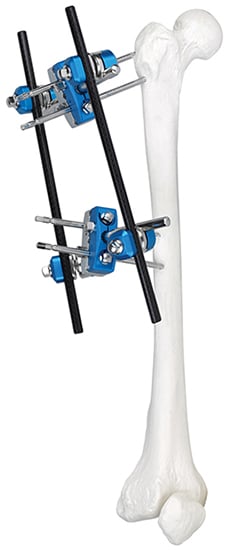
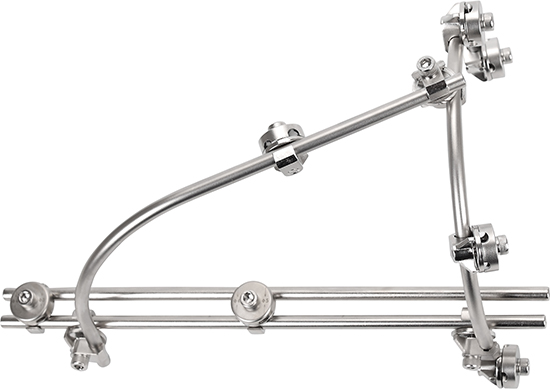
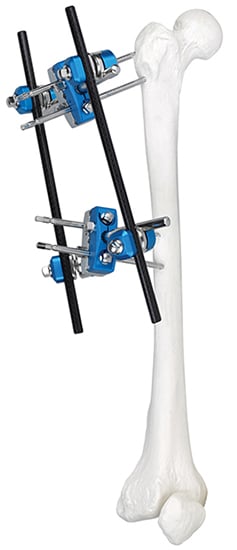
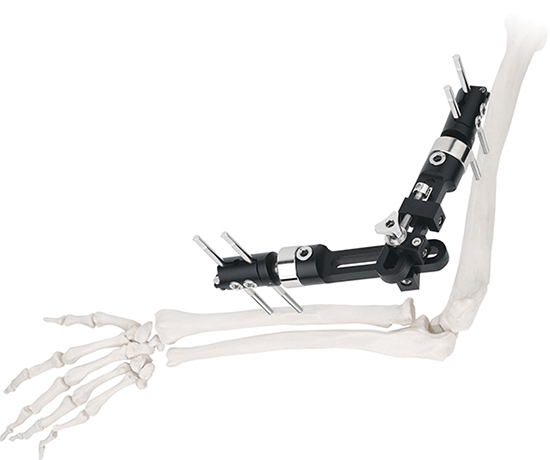
A trauma external fixator is a sophisticated orthopedic device designed to stabilize and align fractured bones from outside the body during the healing process. This critical medical equipment consists of metal bars, pins, and clamps that work together to hold bone fragments in their proper position without requiring immediate internal surgery. The trauma external fixator serves as a temporary or definitive treatment solution for complex fractures, providing rigid stabilization while allowing healthcare professionals to monitor and adjust the bone alignment throughout recovery. The device features a modular construction that enables surgeons to customize the configuration based on specific injury patterns and anatomical requirements. Modern trauma external fixator systems incorporate advanced materials such as carbon fiber and titanium alloys, ensuring optimal strength while minimizing weight and patient discomfort. The technology behind these devices has evolved significantly, now offering multi-planar adjustability and precise control over fracture reduction. Clinical applications span emergency trauma situations, open fractures with soft tissue damage, pelvic injuries, limb lengthening procedures, and cases where internal fixation poses excessive surgical risks. The trauma external fixator proves particularly valuable in managing polytrauma patients, infected fractures, and situations requiring damage control orthopedics. Healthcare facilities worldwide rely on this versatile tool to address challenging musculoskeletal injuries while preserving blood supply to healing tissues and facilitating wound care access.

New Products

The trauma external fixator delivers substantial practical benefits that directly impact patient outcomes and clinical efficiency. This system allows immediate fracture stabilization without extensive surgical intervention, reducing operative time and minimizing tissue trauma during critical initial treatment phases. Patients experience faster access to definitive care since the trauma external fixator can be applied quickly in emergency settings, enabling early mobilization and preventing complications associated with prolonged immobilization. The device provides exceptional versatility across multiple injury types and anatomical locations, making it a cost-effective investment for medical facilities treating diverse trauma cases. Healthcare providers appreciate the adjustability features that permit post-application modifications without additional surgery, allowing fine-tuning of bone alignment as swelling subsides and healing progresses. The open frame design of the trauma external fixator facilitates wound inspection, dressing changes, and soft tissue management without compromising fracture stability. This accessibility proves invaluable when treating open fractures or managing infection risks. Facilities benefit from shorter hospital stays as patients can often be discharged earlier with external fixation compared to traditional casting methods. The system supports weight-bearing rehabilitation protocols sooner, accelerating functional recovery and reducing overall treatment costs. For decision-makers evaluating orthopedic equipment, the trauma external fixator represents a reliable solution that enhances surgical capabilities while offering flexibility in treatment planning. The device reduces the need for immediate definitive surgery in unstable patients, serving as an effective bridge treatment until optimal surgical conditions exist. Medical teams gain confidence managing complex cases knowing they have adjustable stabilization options that accommodate evolving clinical situations throughout the healing journey.

Tips And Tricks

How Do Orthopedic Implants Contribute to Minimally Invasive Surgery?

02

Jun

How Do Orthopedic Implants Contribute to Minimally Invasive Surgery?

The evolution of surgical medicine has brought forward one of the most significant shifts in patient care: the widespread adoption of minimally invasive surgery. At the heart of this transformation lies the role of orthopedic implants, which have bee...
View More
What Role Does Spinal Screw Play in Complex Spinal Reconstruction?

06

Jul

What Role Does Spinal Screw Play in Complex Spinal Reconstruction?

In complex spinal reconstruction procedures, every implant must perform with precision and reliability. The spinal screw is one of the most critical components in these surgeries, serving as the primary anchor that holds rods, connectors, and bone se...
View More
How Does Spinal Screw Design Enhance Mechanical Strength and Fixation?

06

Jul

How Does Spinal Screw Design Enhance Mechanical Strength and Fixation?

In modern spinal surgery, the pedicle screw is one of the most critical implants used to stabilize the vertebral column. Whether the procedure involves deformity correction, fracture management, or spinal fusion, the pedicle screw serves as the prima...
View More
Why Is Accurate Spinal Screw Placement Crucial for Patient Safety?

06

Jul

Why Is Accurate Spinal Screw Placement Crucial for Patient Safety?

Pedicle screw placement is one of the most technically demanding steps in spinal surgery. When a surgeon positions each screw with precision, the entire construct gains stability, and the patient's recovery is protected from preventable complications...
View More

Get a Free Quote

Our representative will contact you soon.
Email
Name
Company Name
Message
0/1000

trauma external fixator

Rapid Deployment and Emergency Stabilization

Rapid Deployment and Emergency Stabilization

The trauma external fixator excels in emergency trauma scenarios where immediate bone stabilization is critical for patient survival and limb preservation. This capability proves essential in damage control orthopedics, where life-threatening injuries require swift intervention before comprehensive surgical reconstruction can occur. The device can be applied rapidly in the emergency department or operating room, providing secure fracture fixation within minutes rather than hours required for complex internal procedures. This speed advantage reduces anesthesia exposure time for critically injured patients and allows trauma teams to address multiple injuries systematically. The trauma external fixator maintains fracture alignment while medical teams stabilize vital functions, manage hemorrhage, and treat associated injuries. Emergency physicians and orthopedic surgeons value this temporal flexibility, as it transforms chaotic trauma situations into manageable treatment sequences. The system accommodates various fracture patterns without requiring extensive preoperative planning, making it ideal for unpredictable emergency conditions. Healthcare institutions equipped with trauma external fixator systems demonstrate improved trauma response capabilities and better patient triage outcomes, directly impacting survival rates in polytrauma populations.
Adjustable Precision for Optimal Healing

Adjustable Precision for Optimal Healing

The trauma external fixator incorporates sophisticated adjustment mechanisms that enable precise three-dimensional control over fracture fragment positioning throughout the healing process. This dynamic capability distinguishes external fixation from static treatment methods, allowing surgeons to correct alignment issues that become apparent as post-injury swelling resolves and bone healing progresses. Medical professionals can perform gradual corrections without subjecting patients to repeat surgical procedures, reducing complications and healthcare costs. The adjustment features support complex reconstruction techniques including bone transport for segmental defects, gradual angular correction for malunions, and limb lengthening procedures requiring incremental distraction. Patients benefit from this precision as optimal bone alignment directly correlates with functional outcomes, joint mechanics, and long-term quality of life. The trauma external fixator system provides measurement scales and calibrated adjustments that ensure reproducible corrections based on radiographic assessments. This level of control proves particularly valuable in pediatric applications where growth considerations demand careful monitoring and adjustment. Clinical teams appreciate the ability to fine-tune fixation without removing the entire construct, maintaining treatment continuity while optimizing results. The adjustable nature of the trauma external fixator transforms orthopedic treatment from a one-time intervention into a guided healing process.
Enhanced Soft Tissue Management and Access

Enhanced Soft Tissue Management and Access

The trauma external fixator design prioritizes soft tissue preservation and accessibility, addressing a critical challenge in managing severe musculoskeletal injuries where bone and soft tissue damage coexist. The open frame configuration keeps hardware external to the injury zone, avoiding additional surgical dissection through compromised tissues and preserving tenuous blood supply essential for healing. This approach significantly reduces infection risks compared to internal fixation in contaminated or open fractures. Healthcare providers gain unrestricted access to wounds for inspection, debridement, dressing changes, and reconstructive procedures without disturbing fracture stability. The trauma external fixator enables coordinated care between orthopedic surgeons and plastic surgeons managing complex injuries requiring flap coverage or skin grafting. Patients experience better outcomes as soft tissue health directly influences bone healing potential and functional recovery. The system accommodates vacuum-assisted closure devices and other advanced wound care modalities while maintaining rigid skeletal stabilization. This compatibility makes the trauma external fixator indispensable in treating high-energy injuries, crush injuries, and blast trauma where soft tissue management determines ultimate success. Medical facilities utilizing external fixation protocols report lower infection rates and reduced need for amputation in severe lower extremity trauma cases.

Get a Free Quote

Our representative will contact you soon.
Email
Name
Company Name
Message
0/1000
Newsletter
Please Leave A Message With Us