Titanium Cannulated Screw - Precision Fixation

All Categories

Get a Free Quote

Our representative will contact you soon.
Email
Name
Company Name
Message
0/1000

titanium cannulated screw

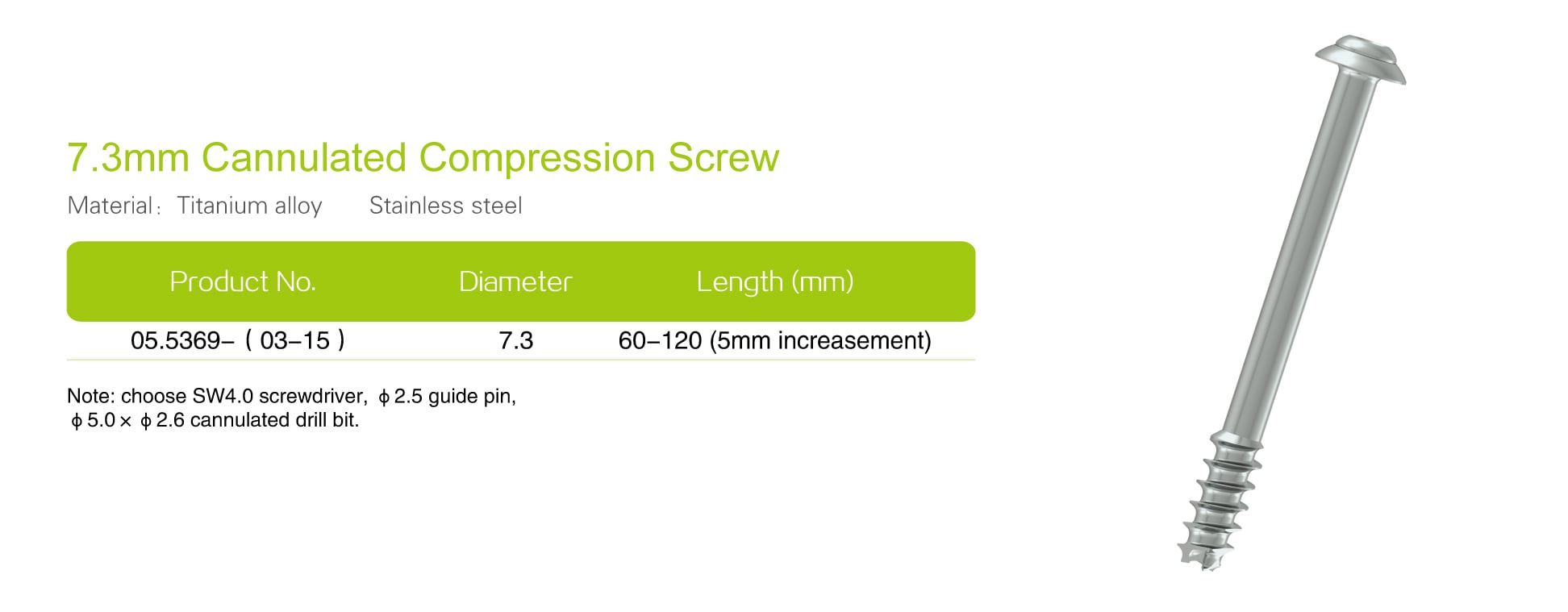
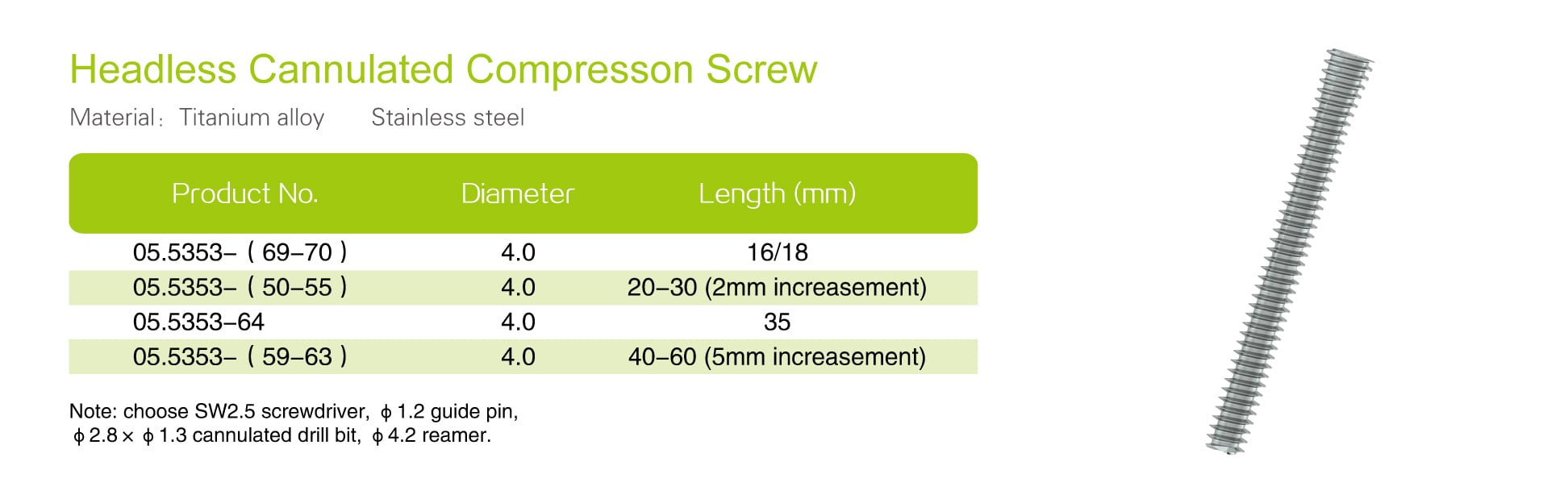
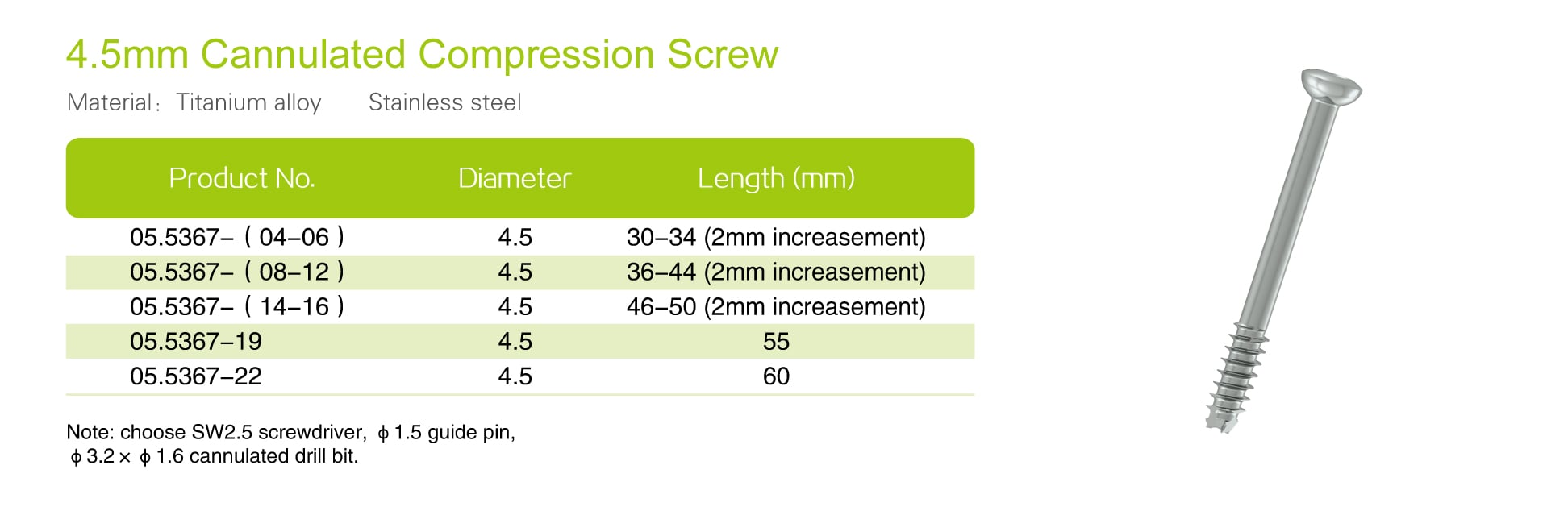
The titanium cannulated screw is an advanced orthopedic fixation device designed for precise bone fragment stabilization and fracture repair across various skeletal locations. Manufactured from medical-grade titanium alloy, this specialized screw features a hollow central channel running through its entire length, enabling surgeons to insert it over a guidewire for enhanced surgical accuracy and positioning control. The titanium cannulated screw serves critical functions in trauma surgery, reconstructive procedures, and sports medicine applications where reliable bone fixation is essential. Its hollow core design allows for minimally invasive surgical techniques, reducing tissue trauma while maintaining exceptional structural integrity. The screw's threading pattern ensures optimal purchase in both cortical and cancellous bone, while the titanium material provides superior biocompatibility and corrosion resistance. Medical professionals utilize the titanium cannulated screw for treating fractures in the hip, ankle, knee, wrist, and other anatomical sites requiring secure internal fixation. The technological features include self-tapping capabilities, various diameter options ranging from 3.0mm to 7.3mm, and lengths customizable to specific surgical requirements. The cannulation diameter typically measures between 1.5mm and 2.5mm, accommodating standard surgical guidewires. This design innovation significantly improves surgical workflow efficiency by allowing real-time fluoroscopic verification of screw placement before final insertion, ultimately contributing to better patient outcomes and reduced surgical complications in bone fixation procedures.

Popular Products

Choosing the titanium cannulated screw offers substantial practical benefits that directly impact surgical success and patient recovery. The lightweight yet remarkably strong titanium construction means patients experience improved comfort during healing while the implant maintains exceptional load-bearing capacity necessary for early mobilization. This strength-to-weight ratio translates into faster rehabilitation timelines and better long-term functional outcomes. The hollow design of the titanium cannulated screw provides surgeons with precise placement control using guidewire techniques, dramatically reducing surgical time and minimizing soft tissue dissection compared to traditional solid screws. This operational efficiency means shorter anesthesia exposure for patients and lower overall procedural costs for healthcare facilities. The biocompatibility of titanium ensures minimal inflammatory response and excellent osseointegration, allowing bone to grow naturally around the implant without adverse tissue reactions. For patients with metal sensitivities, titanium offers the safest option among metallic implants. The corrosion-resistant properties ensure the titanium cannulated screw maintains structural integrity throughout the healing process without degrading or releasing harmful particles into surrounding tissues. The versatility of application makes this fixation device suitable for diverse fracture patterns, bone densities, and patient demographics, from young athletes with acute sports injuries to elderly patients requiring hip fracture stabilization. The radiolucent nature of titanium allows for clear postoperative imaging, enabling physicians to monitor bone healing progression without image artifacts that can obscure diagnostic quality. Healthcare providers benefit from standardized instrumentation compatible with the titanium cannulated screw across multiple manufacturers, simplifying inventory management and staff training. The combination of proven clinical outcomes, operational advantages, and patient safety makes the titanium cannulated screw a decision-advantaged choice for modern orthopedic fixation needs.

Tips And Tricks

Why Is Innovation Important for Competitive Orthopedic Implants Suppliers?

02

Jun

Why Is Innovation Important for Competitive Orthopedic Implants Suppliers?

The medical device industry is undergoing rapid transformation, and nowhere is this change more consequential than in the field of orthopedic surgery. For orthopedic implants suppliers, staying competitive is no longer simply a matter of offering rel...
View More
What Are the Differences Between Monoaxial and Polyaxial Pedicle Screw?

02

Jun

What Are the Differences Between Monoaxial and Polyaxial Pedicle Screw?

In spinal surgery, choosing the right implant can directly influence surgical outcomes, patient recovery, and long-term construct stability. Among the most critical decisions a spine surgeon faces is selecting the appropriate type of pedicle screw fo...
View More
How to Choose the Right Pedicle Screw Size for Lumbar Fusion Procedures?

02

Jun

How to Choose the Right Pedicle Screw Size for Lumbar Fusion Procedures?

Selecting the correct pedicle screw size for lumbar fusion procedures is one of the most consequential decisions a spine surgeon makes during operative planning. The diameter, length, and thread design of each pedicle screw directly influence fixatio...
View More
How Does Spinal Screw Fixation Improve Stability in Spinal Fusion Surgery?

06

Jul

How Does Spinal Screw Fixation Improve Stability in Spinal Fusion Surgery?

Spinal fusion surgery is one of the most common and technically demanding procedures in orthopedic and neurosurgical practice. At the heart of this procedure lies a critical mechanical principle: the spine must be held in precise alignment while bone...
View More

Get a Free Quote

Our representative will contact you soon.
Email
Name
Company Name
Message
0/1000

titanium cannulated screw

Guidewire-Directed Precision for Optimal Surgical Accuracy

Guidewire-Directed Precision for Optimal Surgical Accuracy

The defining characteristic of the titanium cannulated screw is its hollow central channel that accommodates surgical guidewires, fundamentally transforming fracture fixation precision. This cannulation feature allows surgeons to first position a thin guidewire through the fracture site under fluoroscopic guidance, verifying optimal trajectory and length before committing to screw insertion. The titanium cannulated screw then slides smoothly over this established pathway, ensuring reproducible placement exactly as planned. This technique eliminates the guesswork associated with freehand screw insertion and significantly reduces the risk of malposition that could compromise fracture stability or damage adjacent neurovascular structures. The guidewire-directed approach proves particularly valuable in challenging anatomical locations where direct visualization is limited or bone quality is compromised. Surgeons can confidently adjust guidewire position multiple times if needed without creating additional bone trauma, then proceed with titanium cannulated screw insertion only when positioning is confirmed perfect. This methodical precision contributes to superior fracture reduction, decreased surgical complications, and improved patient satisfaction with functional outcomes.
Medical-Grade Titanium for Superior Biocompatibility

Medical-Grade Titanium for Superior Biocompatibility

The material composition of the titanium cannulated screw represents a critical advantage in orthopedic implant technology, offering unmatched biocompatibility that facilitates natural bone healing processes. Medical-grade titanium alloy exhibits exceptional tissue tolerance, generating minimal foreign body response while promoting direct bone-to-implant contact through osseointegration. This biological acceptance means the titanium cannulated screw can remain permanently implanted without triggering chronic inflammation or requiring routine removal procedures that add cost and patient burden. The passive oxide layer that naturally forms on titanium surfaces provides outstanding corrosion resistance in the physiological environment, preventing ion release and metal degradation that could compromise fixation strength or cause systemic sensitization. For patients with documented nickel allergies or concerns about metallic implants, the titanium cannulated screw offers the safest alternative with documented hypoallergenic properties. The material's inherent radiolucency compared to stainless steel facilitates superior postoperative imaging quality, allowing physicians to assess bone healing and implant position without significant artifact interference. These biological and imaging advantages make the titanium cannulated screw the preferred choice for long-term implantation across diverse patient populations.
Versatile Applications Across Multiple Anatomical Sites

Versatile Applications Across Multiple Anatomical Sites

The titanium cannulated screw demonstrates remarkable versatility in addressing varied orthopedic fixation challenges across numerous skeletal locations and fracture patterns. Surgeons routinely employ these specialized screws for femoral neck fractures, providing stable fixation that allows early weight-bearing and reduces complications associated with prolonged immobilization in elderly patients. In foot and ankle surgery, the titanium cannulated screw effectively stabilizes hindfoot arthrodesis, midfoot fractures, and malleolar fixation with minimal soft tissue disruption. Upper extremity applications include scaphoid fracture fixation, where the guidewire technique through the titanium cannulated screw enables percutaneous insertion with excellent cosmetic results and rapid return to function. Sports medicine specialists utilize these implants for ACL reconstruction interference fixation and osteochondral fragment stabilization, appreciating the combination of strength and low profile that minimizes postoperative irritation. The availability of various diameters, lengths, and thread designs ensures the titanium cannulated screw can be precisely matched to specific bone density, fragment size, and biomechanical loading requirements. This adaptability across patient ages, injury mechanisms, and anatomical locations makes the titanium cannulated screw an essential component of comprehensive orthopedic implant systems.

Get a Free Quote

Our representative will contact you soon.
Email
Name
Company Name
Message
0/1000
Newsletter
Please Leave A Message With Us